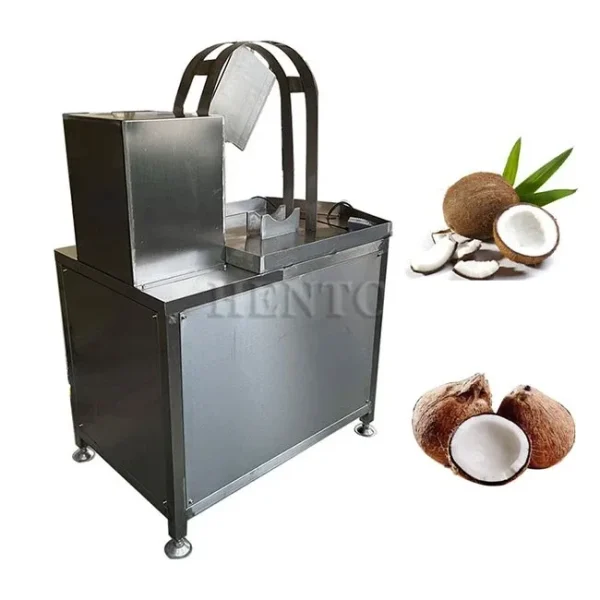
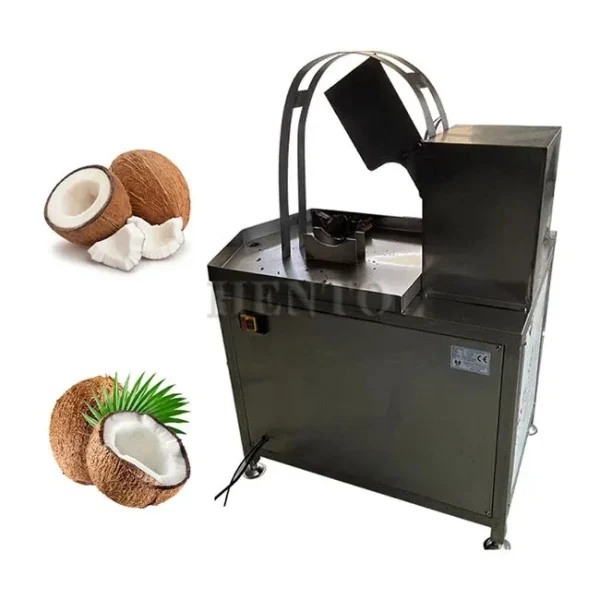

Coconut Cutting Machine 300 pcs/h
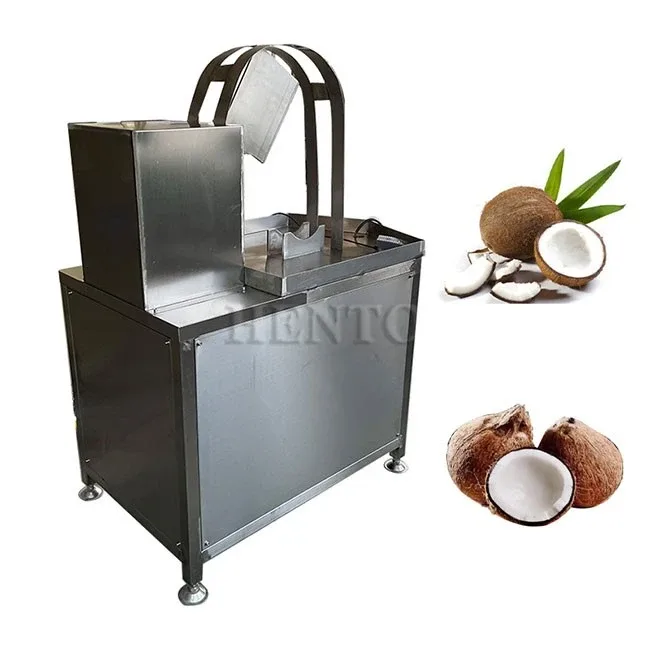
Opening a coconut by hand is a machete, a stump and a risk assessment that would fail any audit. A processing line opening two hundred nuts an hour needs the cut to be clamped, guided and repeatable — the same cut every time, through husk and shell, without launching shell fragments across the hall. The coconut cutting machine is that repeatability: a shaped cradle holds the nut, a powered blade makes the cut, and the operator’s hands never approach the edge.
How it works
The nut seats nose-down or sideways in a conforming cradle sized to the grade being processed. A pneumatic or electric ram drives the cutting head — a heavy blade for halving, a band or circular saw for ring cuts — through the husk and shell in a single controlled stroke, the cradle and guard defining the only path the blade can take. Halving exposes the meat for scooping or peeling lines; ring cutting serves the tender-coconut water trade and meat-extraction lines that need a capped opening. Cut depth and cradle size set across grades; larger plants run two machines in sequence — a dehusk-assist pass then the halving pass — because husked and unhusked nuts want different forces.
Suitable for
Coconut water packers opening tender coconuts at volume with a clean, controlled crown or ring cut; desiccated and virgin-oil processors halving mature nuts ahead of meat extraction; smallholder and estate operations upgrading from machete work to something an auditor will allow; food-service supply houses pre-cutting drinking coconuts; and any coconut line whose first station is currently the most dangerous one in the plant.
Not suitable for
Dehusking whole brown husks at volume — heavy dehusking is its own machine class; grating or milking, which happen after the meat leaves the shell; soft fruit of other kinds, whose flesh wants blades, not saws; and very low volumes, where a fixed machete station with proper guards and a trained hand remains the honest tool.
Material & compliance
Frame, cradle, guards and contact parts in SUS304 (EN 1.4301); blade food-grade stainless or tool steel; two-hand actuation, interlocked guards and blade containment are core safety equipment — document them as such. Cut-safety here is not decoration: this machine exists because the free-hand version injures people.
Supplied with CE declaration of conformity and DoC on request; material certificate EN 10204 3.1 available for contact parts.
Selection notes
Ask which nut grades the cradle set covers and what extra cradles cost — coconut size variation is wide and your supplier’s nut sets your spec. Ask cut configurations shipped: halve, ring, crown, or combinations, and what a changeover takes. Check the blade spec, sharpening service and spare price. Ask for cycle rate with husked versus unhusked nuts — husk doubles the work and halves the honest number. Inspect the guard and two-hand logic in the demonstration, not the brochure; this is the machine where safety hardware is the product.
When you should not buy this machine: If your volume is under fifty nuts a day, a properly built machete station with training and first-aid discipline remains the proportionate answer. And if your real bottleneck is dehusking, buy the dehusker first — cutting capacity ahead of a husk pile just reorders the queue.
Key specifications
| Parameter | Value |
| Capacity | 200-600 nuts/h by nut grade (TYPICAL, confirm with factory) |
| Cut types | Halve / ring / crown opening |
| Drive | Pneumatic or electric ram, guided blade |
| Nut size | Grade-specific cradles, changeover set |
| Safety | Two-hand actuation, interlocked blade guard |
| Contact material | SUS304 (EN 1.4301) |
| Power supply | 220-380V or compressed air supply |
Specification values are industry-typical ranges for this machine class and are not verified against a specific factory datasheet. Replace them with measured factory data before publication.
FAQ
Can it handle both young drinking coconuts and mature brown nuts?
With the right cradle and blade set, yes — tender nuts want a clean crown or ring cut, mature nuts want halving force. Confirm both grades on your own nuts during the factory test; cradle geometry that flatters one grade often struggles with the other.
Does it dehusk too?
Entry machines cut husked or lightly-husked nuts; full dehusking of fibrous brown husk is a separate machine. Ask the factory to quote the two stations as a sequence if your intake arrives unhusked — the honest line is dehusk, then cut.
Is it safe compared to manual opening?
Substantially — the blade moves in a guarded path and both of the operator’s hands are on controls, not near the cut. That is the entire reason the machine exists; treat the two-hand logic and interlocks as part of the purchase, not options.
Related equipment
This unit is one stage of a complete processing line. For the full range of cutting and slicing equipment, or to compare this model against the Fruit Halving Machine 1200 pcs/h, see the complete equipment catalogue. Capacity, material grade and utility requirements can be confirmed through a quote request.
Reviews
There are no reviews yet.