
Ginger Slicing Machine 400 kg/h
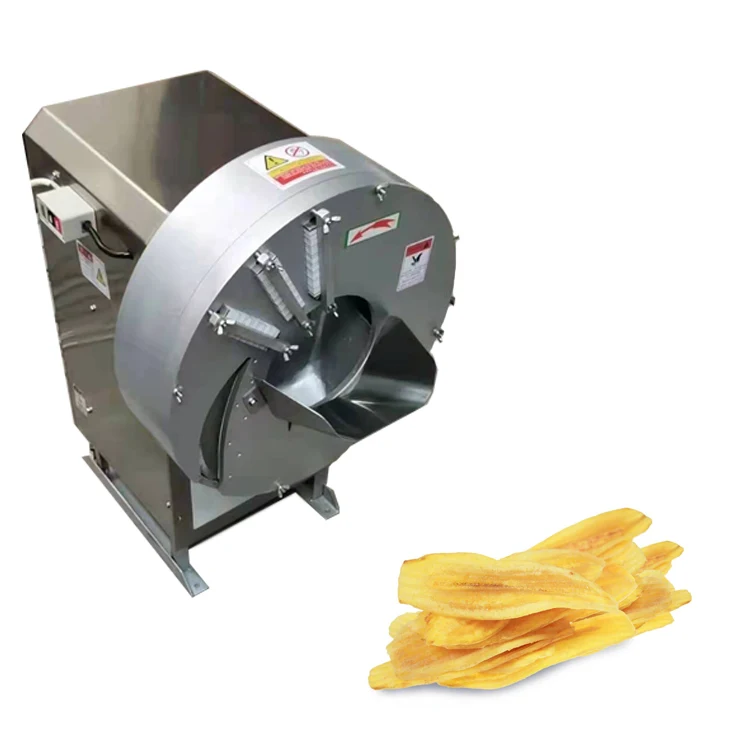
Ginger resists machines the way it resists knives at home: knotted, fibrous, wet, and different in every hand-sized piece. A general slicer either shreds the fibres or chokes on the knots, which is why ginger lines use a cutter built for rhizomes — a high-speed slicing head that takes clean, even cuts across the grain, holds thickness from the first kilo to the last, and feeds drying, pickling and extraction lines with slices that dry at the same rate instead of mixing leather and chips in one tray. For farms and processors adding value to fresh ginger, it is the machine that turns a commodity root into a product with a spec sheet.
How it works
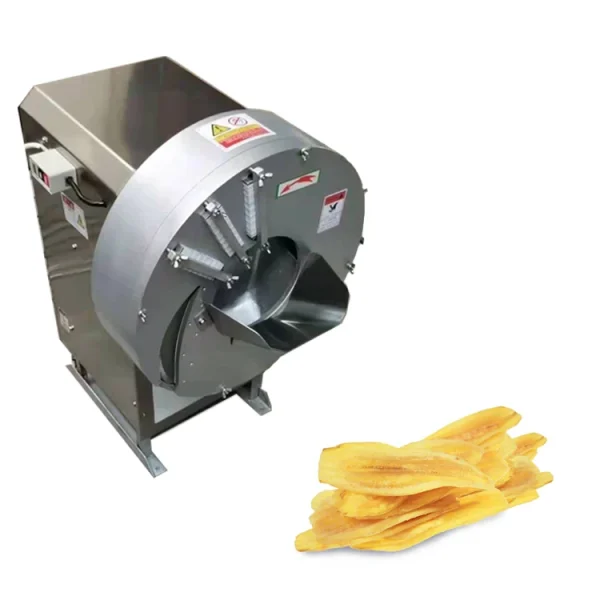
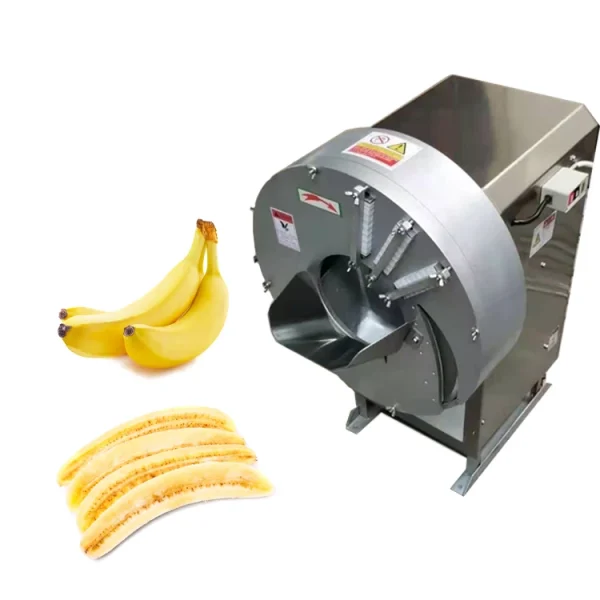
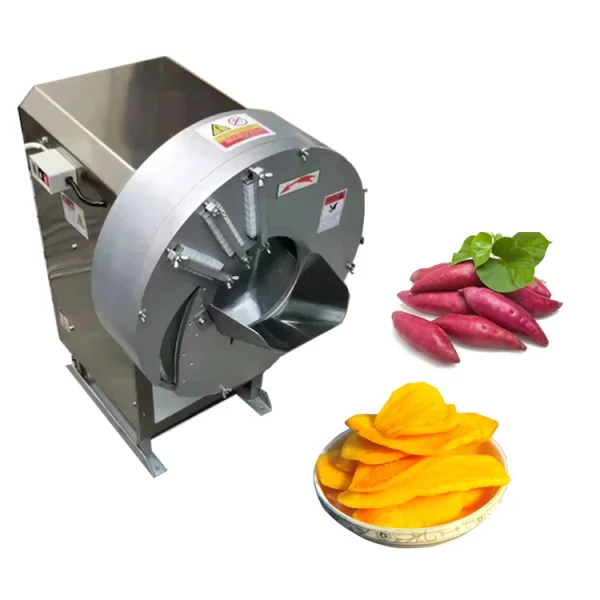
Washed rhizomes feed a vibratory or belt infeed that presents them to the cutting head roughly aligned. The head carries high-speed slice blades — centrifugal disc, knife-drum, or band configurations by model — that take a cut per pass as the rhizome advances against a hold-down; the fibre-aware geometry shears across the grain rather than tearing it, so the cut face is clean and the slices lie flat. Thickness is set by blade spacing or feed-step and holds across the batch because the machine does not care how irregular the input looks — the hold-down presses, the blade cuts, and a brush or air assist clears the deck. Slices discharge to inspection and straight to the dryer, pickling tank or extraction feed.
Suitable for
Dried-ginger producers feeding slice dryers with uniform cuts that finish at the same moisture; ginger-pickle and sushi-gar processors cutting consistent slices for brine and pack; extraction and oleoresin plants maximizing surface area per kilo with controlled thickness; turmeric, galangal and other rhizome spices on the same cutter family; farms and co-ops turning fresh ginger into a storable, sellable format with one machine and one operator.
Not suitable for
Ginger paste and mince — that is a grinding job, not a slicing one, and the paste line wants a different machine; soft peeled ginger that has already been brined, which deforms instead of cutting clean; and buyers expecting it to wash or peel — the rhizome arrives at this machine already cleaned, and the wash line upstream decides the cut quality more than the cutter does.
Material & compliance
Frame, deck, hold-downs and discharge contacts in SUS304 (EN 1.4301); blade tooling in food-rated stainless; belt and brush contacts food-grade; guard interlocks on the cutting head as standard.
Supplied with CE declaration of conformity and DoC on request; material certificate EN 10204 3.1 available for contact parts; spare blade sets and sharpening service quoted with the machine.
Selection notes
Bring your own ginger to the trial — rhizome maturity, fibre content and size spread vary by origin, and the honest test is slice quality and reject rate on your root, not the supplier’s. Ask how thickness is changed and how long a changeover takes if you run multiple specs. Check the infeed: hand-fed trays fine at small scale, but at half a ton an hour the feed rhythm becomes the bottleneck. Ask about blade life on fibrous root and what a spare set costs — on a slicing machine, blades are the consumable story. And match the discharge to the dryer infeed now, while the layout is on paper.
When you should not buy this machine: If your ginger all goes to paste, powder or juice, slicing is a step your product never needs — the grinding and pressing line skips it. And if volume is a few trays a day, a good hand slicer and an operator beat a machine’s payback; this tool earns its keep from roughly a hundred kilos an hour upward.
Key specifications
| Parameter | Value |
| Capacity | 200-800 kg/h by model and root size (TYPICAL, confirm with factory) |
| Slice thickness | 1-6 mm adjustable (TYPICAL) |
| Cutting head | High-speed disc / knife-drum, fibre-aware geometry |
| Feed | Vibratory or belt, hold-down guided |
| Contact material | SUS304 (EN 1.4301) |
| Power supply | 380V/3P/50Hz, 1.5-4 kW class |
Specification values are industry-typical ranges for this machine class and are not verified against a specific factory datasheet. Replace them with measured factory data before publication.
FAQ
Will it handle knotted, hand-shaped roots?
Yes — that is the design problem it exists to solve. The hold-down and feed present irregular rhizomes pass by pass, and the blade geometry shears fibre instead of tearing it. Very large, forked pieces may need a pre-split; ask at the trial with your own root.
How even is the slice thickness?
On a set machine, within a tight band across the batch — which is what dryers and picklers actually care about, because even slices finish even. Worn blades are the usual cause of drift, which is why blade rotation and sharpening belong on the maintenance calendar.
Can it cut turmeric and galangal too?
Generally yes on the same family — firm rhizomes share the cutting behaviour. Staining from turmeric is a cleaning question, not a machine one, and most plants dedicate blades or schedule the turmeric run last.
Related equipment
This unit is one stage of a complete processing line. For the full range of cutting and slicing equipment, or to compare this model against the Ginger Washing and Peeling Machine 1000 kg/h, see the complete equipment catalogue. Capacity, material grade and utility requirements can be confirmed through a quote request.

Reviews
There are no reviews yet.