Potato Grading Machine 5 t/h
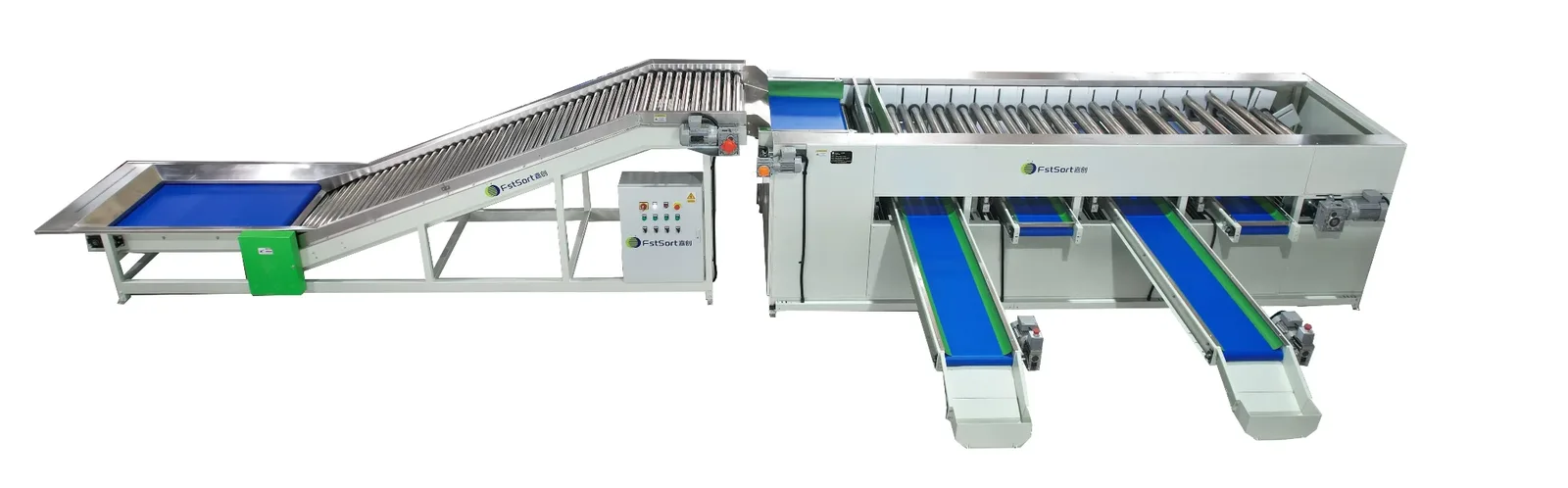
Potatoes are graded before anything else because everything after depends on size: chip plants want a diameter band, packers want count classes, seed lots want strict separation. Hand-sizing five tonnes an hour is not a plan; it is a bottleneck with a bad back. The potato grading machine sizes the crop mechanically — rollers or carriers presenting each tuber to a widening gap, dropping it into the class it belongs to, at the rate a harvester unloads and a line consumes.
How it works
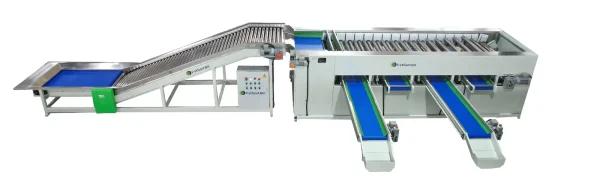
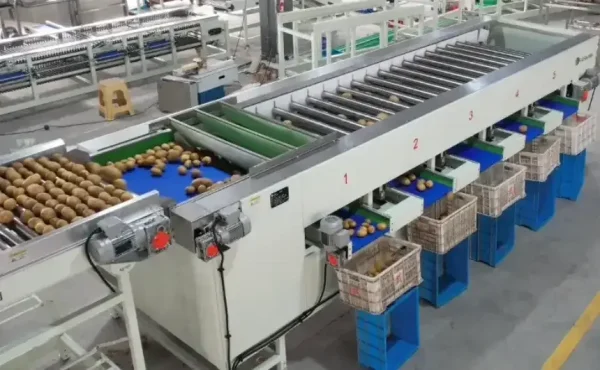
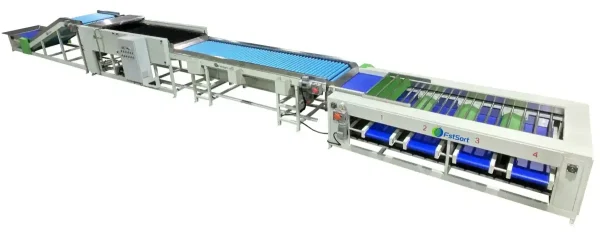
Field-run or washed potatoes feed in single layer onto a grading bed. Roller-grader designs rotate tubers between opposing rollers whose gap widens along the bed, dropping each through at its diameter; carrier designs ride tubers on belts or cups through staged gaps. Heavy crop changes the engineering more than the principle: beds are built for weight and impact,-fed from hopper elevators, with cushioned drops and debris escape paths for soil clods that always arrive with the crop. Classes discharge through chutes to bins or takeaway conveyors, and settings repeat per class with marked adjustment. Some layouts add weight-grading heads on the same frame for value contracts.
Suitable for
Potato packers sizing washed tubers into retail count classes; chip and fry suppliers grading to a processing diameter band before cutting lines; seed operations keeping size lots strictly separated; sweet-potato and root-crop packhouses grading similar geometry at similar tonnage; co-operatives consolidating member crop into uniform buyer lots.
Not suitable for
Unwashed, muddy crop straight from the field — clods and stones ride the bed and a destoner and washer upstream are part of the layout, not optional; delicate crops that bruise on roller contact at speed; grading by internal quality — green, rot and defects need an optic, and a sizer passes them faithfully; and small farm shops, where a hand grader over a sorting table is the honest tool.
Material & compliance
Frame, beds and chutes in SUS304 or heavy-duty food-grade finish rated for tuber impact; food-grade rollers and carriers with cushioning; sealed bearings and washdown motors; gap settings marked and repeatable per class, because class discipline is the product.
Supplied with CE declaration of conformity and DoC on request; food-contact declarations for roller and carrier materials.
Selection notes
Size the machine on your heaviest hour — harvester dump peaks, not average flow, and state your class plan explicitly because band count and bed length price the machine. Ask how the bed handles clods and oversize tubers without jamming, since the real world ships both. Confirm drop heights and cushioning against bruise tolerance, and ask for bruise-test references on potatoes specifically. Check the debris path: soil that falls through onto drive components is the classic failure of crop graders built too gently. And decide whether you want diameter or weight grading on the same frame — both exist, and retrofit choices are cheaper at purchase than in the shed.
When you should not buy this machine: If your grading is a packing-shed afterthought under a tonne an hour, manual grading is cheaper and more flexible. And if your crop arrives unclean, buy the washer and destoner first — a grader fed mud grades mud at five tonnes an hour.
Key specifications
| Parameter | Value |
| Capacity | 3000-8000 kg/h by bed width and class count (TYPICAL, confirm with factory) |
| Grading classes | 3-8 bands, adjustable and marked (TYPICAL) |
| Bed principle | Roller-gap or carrier, impact-rated for tubers |
| Tuber range | 30-120 mm by bed model (TYPICAL) |
| Options | Weight-grading heads, takeaway conveyors |
| Contact material | SUS304 / food-grade, cushioned fruit contact |
| Power supply | 380V/3P/50Hz, 3-8 kW class |
Specification values are industry-typical ranges for this machine class and are not verified against a specific factory datasheet. Replace them with measured factory data before publication.
FAQ
Diameter or weight grading for potatoes?
Processing contracts buy diameter bands and packing buys counts, so diameter beds carry most volume; weight heads appear on value-per-tuber contracts and seed lots. Check what your buyers’ specifications actually state — the machines are different purchases.
How much does it bruise the crop?
Well-set roller beds with cushioned drops bruise very little; speed, drop height and bed condition decide. Ask for bruise references on potato specifically, and walk the discharge points during the demo — that is where the damage lives.
Does it need washed crop?
For pack-out, yes — wash first, grade second. Processing lines that peel downstream sometimes grade unwashed crop, but then the bed’s debris handling is doing real work. State your crop condition honestly in the enquiry; it changes the machine more than the tonnage does.
Related equipment
This unit is one stage of a complete processing line. For the full range of sorting and grading equipment, or to compare this model against the Roller Size Grading Machine 3000 kg/h, see the complete equipment catalogue. Capacity, material grade and utility requirements can be confirmed through a quote request.
Reviews
There are no reviews yet.