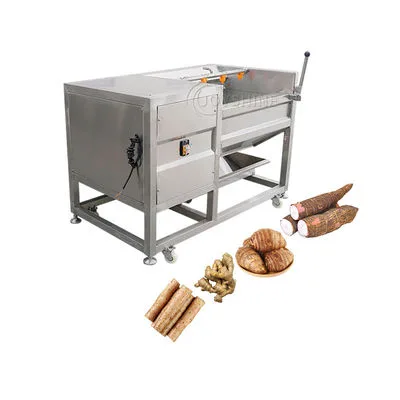
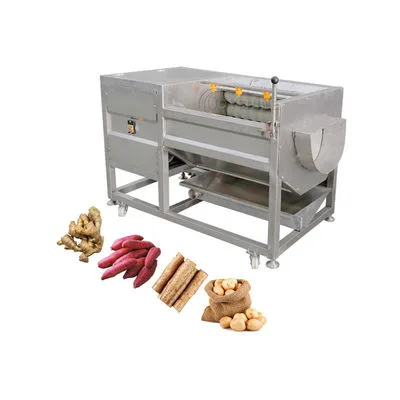
Abrasive Peeling Machine 1000 kg/h
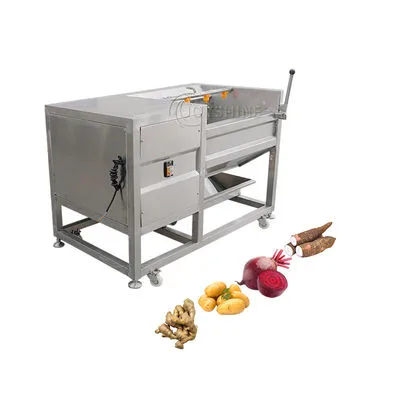
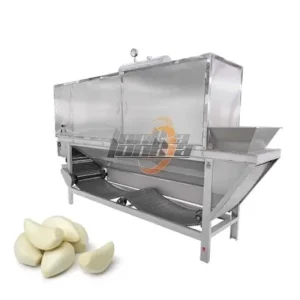
Dry peeling unit that takes skin off root crops by rubbing the product against abrasive surfaces. Because the process runs without a wash tank, it produces a dry peel waste stream instead of a wet sludge one, which is usually the reason a plant chooses it over a washing-and-peeling line.
How it works
Product is metered into a rotating drum or onto a bank of parallel rollers whose surface is either carborundum-coated or fitted with stiff brushes. As the pieces tumble and travel along the roller bed, the skin is worn away by friction. Peel fragments fall through gaps between the rollers or are carried off by a separate waste auger, so the abrasive debris does not stay in contact with the product.
After the peeling section, pieces pass a short rinse or an air blow-down to carry off loose skin, then go on to inspection. Machines are staged: a first aggressive pass removes most of the skin, and a second gentler pass cleans the eyes and crevices. Roll speed, roller gap and residence time are the three settings that decide both the peel removal and the flesh loss.
Suitable for
Potatoes where a dry peel waste stream is wanted for animal feed or for biogas rather than for effluent treatment; carrots, beetroot, celeriac and similar root crops with firm flesh; ginger and turmeric where the skin is thin and tightly bound; lines that want peeling without the water volume, the effluent load and the floor space of a steam peeler or a lye peeler.
Not suitable for
Soft or delicate product, where abrasion tears the surface and leaves ragged edges; fruit where appearance is the selling point, since abrasive peeling leaves a matte, scuffed finish that is visible after cooking; product with deep eyes or heavy surface damage, because reaching those areas costs a disproportionate amount of flesh; anyone who needs a perfectly uniform peeled surface, which is what steam or lye peeling is for.
Material & compliance
Product contact surfaces in SUS304 (EN 1.4301); roller shafts and the waste auger in the same grade, with food-grade bearing housings sealed against abrasive dust. Abrasive dust is a real contamination and wear problem, so the drive side should be sealed and the waste stream enclosed.
Supplied with CE declaration of conformity and DoC on request; material certificate EN 10204 3.1 available for contact parts.
Selection notes
Ask for the peeling loss measured on your own product, not the catalogue figure — the difference between 8 % and 18 % is the whole economics of the machine. Check how roller wear is compensated: a machine that cannot be adjusted as the abrasive surface wears will drift out of specification within a season. Check the dust extraction, because abrasive dust in the packing hall is a hygiene and maintenance problem.
When you should not buy this machine: If your peel currently goes to a wet effluent stream that you have already paid to handle, and you have no use for dry peel, this machine solves a problem you do not have. Also skip it if your product is sold on appearance — an abraded surface is honest but it is not pretty, and no amount of rinsing changes that.
Key specifications
| Parameter | Value |
| Capacity | 500-2000 kg/h by roller bank width (TYPICAL, confirm with factory) |
| Peeling method | Dry abrasion on carborundum or brush rollers |
| Peeling loss | 8-18 % by product and skin condition (TYPICAL) |
| Roller length | 1.5-3.0 m per stage (TYPICAL) |
| Water demand | Low; rinse stage only (TYPICAL) |
| Contact material | SUS304 (EN 1.4301) |
| Power supply | 380V/3P/50Hz or 415V/3P/50Hz, customizable |
Specification values are industry-typical ranges for this machine class and are not verified against a specific factory datasheet. Replace them with measured factory data before publication.
FAQ
How much water does abrasive peeling actually save?
Most of it. A wet peeling line runs a continuous wash tank; an abrasive peeler only needs a short rinse at the discharge. The saving is in water volume, in effluent load and in the cost of treating that effluent, not in the peeling itself.
Why does peeling loss vary so much between batches?
Because skin condition varies. Storage time, variety and field damage all change how tightly the skin is bound, and abrasion removes whatever it needs to remove. The same machine that gives 10 % on fresh potatoes can give 18 % on stored ones.
Can the rollers be changed for a different crop?
Yes, usually. Carborundum rollers suit hard root crops, brush rollers suit thin-skinned product. The roller set, the speed and the gap are changed together; a supplier who offers only one roller type is selling a narrower machine than you think.
Related equipment
This unit is one stage of a complete processing line. For the full range of washing and peeling equipment, or to compare this model against the Brush Roller Peeling Machine 800 kg/h, see the complete equipment catalogue. Capacity, material grade and utility requirements can be confirmed through a quote request.
Reviews
There are no reviews yet.