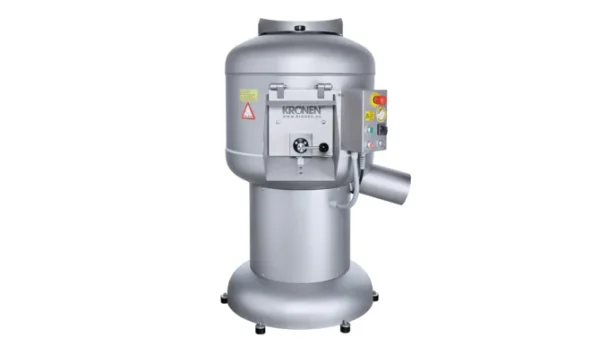
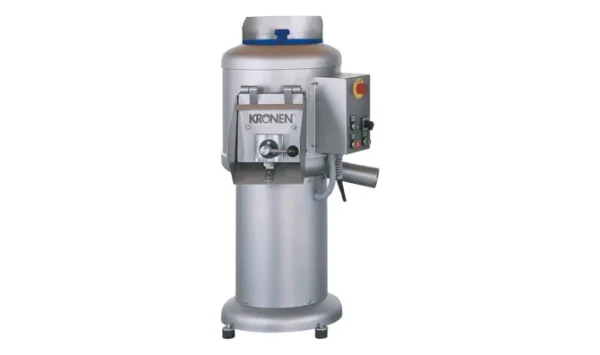
Brush Roller Peeling Machine
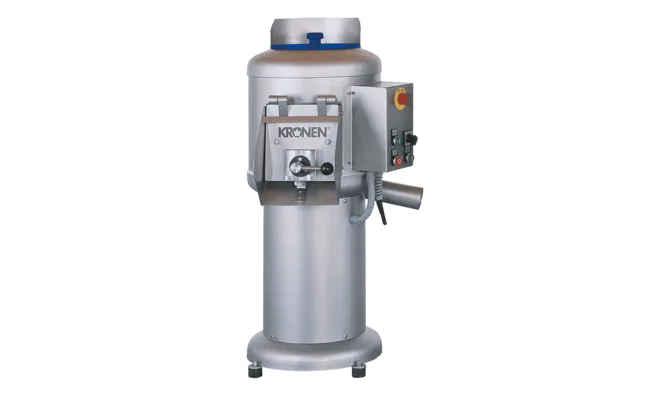
Continuous brush-roller peeler that removes skin from root vegetables and firm fruits by abrasion while washing the product at the same time.
How it works
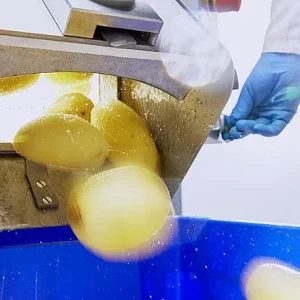
Product is conveyed through a bank of rotating brush rollers mounted in a stainless frame. Water sprays from above while the brushes abrade the skin. The peelings and dirty water fall through to a collection tray below. Brush hardness, roller speed and residence time are adjusted to the product.
Suitable for
Root vegetables (carrot, potato, sweet potato, radish), ginger, taro, firm fruits with thin skin.
Not suitable for
Thin-skinned or easily bruised produce (tomato, berries); products needing a precise peel depth; very irregular shapes that do not contact the brushes evenly.
Material & compliance
Frame and contact parts SUS304 (EN 1.4301); brush filaments food-grade nylon or abrasive filament, specified separately. Contact welds finished to Ra <= 0.8 um.
CE declaration on request; food-grade brush material declaration; EN 10204 3.1 for stainless contact parts; hygienic design with removable brush shafts for cleaning.
Selection notes
Peel loss is the number buyers underestimate — brush peeling is abrasive and typically removes more than steam or knife peeling. Ask the factory for a peel-loss figure measured on your product, not a generic percentage. Check how long brush replacement takes, because brushes are the main wear item.
When you should not buy this machine: Do not buy brush peeling if peel loss drives your margin — for high-value root crops, steam or abrasive-disc peeling usually gives better yield. Also avoid it where the product is already washed and you only need peel removal; a dedicated peeler avoids re-wetting.
Key specifications
| Parameter | Value |
|---|---|
| Capacity | 500-2000 kg/h (TYPICAL, confirm with factory) |
| Contact material | SUS304 (EN 1.4301) |
| Brush rollers | 6-12 rollers, food-grade filament (TYPICAL) |
| Drive power | 1.5-3.0 kW (TYPICAL) |
| Power supply | 380V/3P/50Hz or 415V/3P/50Hz, customizable |
| Automation | Semi-automatic |
Specification values are industry-typical ranges for this machine class and are not verified against a specific factory datasheet. Replace them with measured factory data before publication.
FAQ
How much peel loss should I expect?
It depends on product shape, maturity and brush hardness. Always ask the supplier for a measured figure on your specific product rather than accepting a generic range.
Are the brushes food-grade?
Brush filaments should be food-grade nylon or approved abrasive filament and should come with a material declaration. This is separate from the stainless steel certificate.
Can it peel and wash in one pass?
Yes — that is the main reason to choose brush peeling. The spray bar above the rollers washes while the brushes peel, which saves a separate washing step.
Related equipment
This unit is one stage of a complete processing line. For the full range of washing and peeling equipment, or to compare this model against bubble washing machine 2000 kg/h, see the complete equipment catalogue. Capacity, material grade and utility requirements can be confirmed through a quote request.
Reviews
There are no reviews yet.