Fruit Washing Machine 2000 kg/h
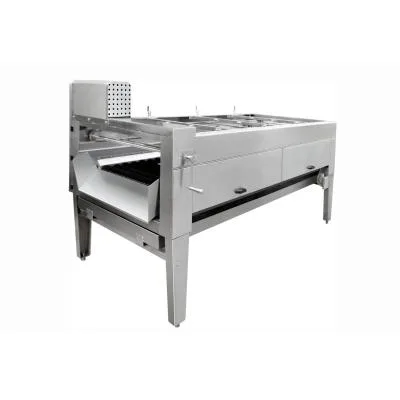
Washing unit for the step that decides how fruit looks when it reaches the buyer. Soil, spray residue, leaf litter and the natural bloom all arrive on the fruit, and a packing house has to remove the first three without destroying the fourth. That balance — clean enough to sell, gentle enough not to bruise — is what this machine is specified on.
How it works
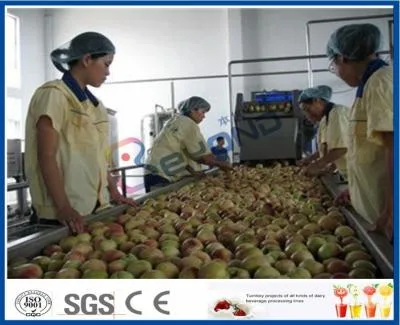
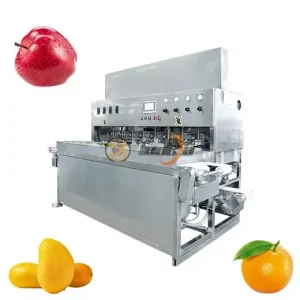
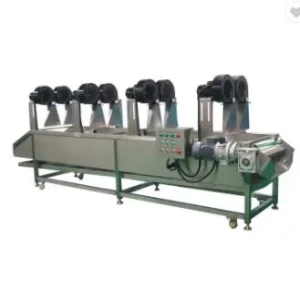
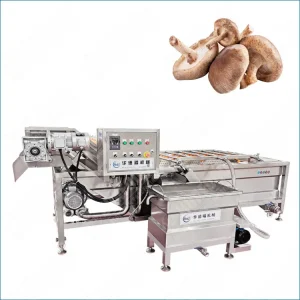
Fruit is fed onto a bed of rotating brush rollers and carried along its length. Spray bars above the bed wet the fruit, the brushes scrub the surface, and the product moves forward by roller rotation and a slight fall along the bed. At the discharge a rinse section applies fresh water, and many lines follow with an air-knife or sponge-roller section to take surface water off before grading or waxing.
The brushes are set by fruit, not by machine. Apples take a softer bristle and a longer bed than citrus; mango and avocado need gentler pressure still. Brush speed, spray flow and bed length are set together, and the operator’s three controls are brush speed, water flow and feed rate. Soil and debris fall through the bed into a catch tray below; water is filtered and recirculated with fresh top-up on the rinse.
Suitable for
Packing houses washing apples, citrus, pears and similar firm fruit before grading and waxing; mango and avocado lines where a gentle bed replaces hand wiping; operations where the washed surface is the finished appearance and brushing improves it; lines feeding cutters or juicers that must not receive soil; plants where wash water has to be recirculated because of drainage or supply limits.
Not suitable for
Soft, bruised or very ripe fruit, where brush pressure opens damage instead of removing soil — those go through a flotation or immersion washer; berries and other soft small fruit, which need a different machine entirely; product sold with bloom intact and unwashed, where washing actively removes what the market wants; anyone without drainage, because a brush washer moves a lot of dirty water.
Material & compliance
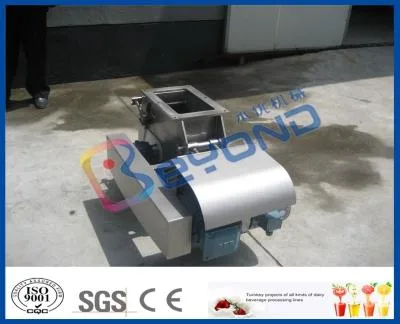
Trough, brush shafts, spray bars and catch tray in SUS304 (EN 1.4301); brushes on stainless shafts with sealed food-grade bearings, because sugar-laden fruit juice finds every unsealed bearing in a season. Rinse section separated from the wash section so clean fruit meets clean water. The bed opens for daily clean-out of the tray where juice and debris accumulate.
Supplied with CE declaration of conformity and DoC on request; material certificate EN 10204 3.1 available for contact parts.
Selection notes
Ask what the machine does with the water after the wash section — recirculation with filtration is standard, but the filter access and the tray clean-out are what determine whether it stays usable. Check the brush specification against your fruit: soft bristles wear faster, stiff bristles bruise, and the supplier should be able to say which their machine is set up for. Check bearing sealing and wash-down access; on this machine class, bearings and nozzles are what fail first. Ask for water consumption per tonne for both wash and rinse.
When you should not buy this machine: If your fruit arrives clean from a grower grading line, you are buying a machine for a problem already solved. And if your product is soft fruit or berries, a brush bed is the wrong tool — look at immersion or flotation washing instead, and do not let anyone sell you a brush bed by changing the bristle.
Key specifications
| Parameter | Value |
| Capacity | 1000-3000 kg/h by brush bed length (TYPICAL, confirm with factory) |
| Washing method | Brush bed with spray bars and separate rinse |
| Water circuit | Recirculated with filtration; fresh top-up at rinse |
| Brush type | Soft food-grade bristle set by fruit class |
| Drying section | Optional air-knife or sponge roller (TYPICAL) |
| Contact material | SUS304 (EN 1.4301) |
| Power supply | 380V/3P/50Hz or 415V/3P/50Hz, customizable |
Specification values are industry-typical ranges for this machine class and are not verified against a specific factory datasheet. Replace them with measured factory data before publication.
FAQ
Does washing remove the natural bloom?
Partly, and that is the design trade-off. Brushing polish removes soil and residue along with part of the bloom. Where a market wants bloom intact, the fruit is packed unwashed or washed by immersion only.
Why does my fruit come out bruised?
Brush pressure or bed depth. A bed loaded too deep presses fruit against fruit, and a stiff bristle on soft fruit does the rest. Reduce feed rate before you reduce brush speed — bed depth is the usual cause.
Can the same machine wash apples and citrus?
It can, with a brush change and pressure adjustment. Citrus takes a firmer bristle and higher pressure than apples. Treat it as a changeover with a defined setting, not a mixed feed.
Related equipment
This unit is one stage of a complete processing line. For the full range of washing and peeling equipment, or to compare this model against the Fruit Waxing Machine 3000 kg/h, see the complete equipment catalogue. Capacity, material grade and utility requirements can be confirmed through a quote request.
Reviews
There are no reviews yet.