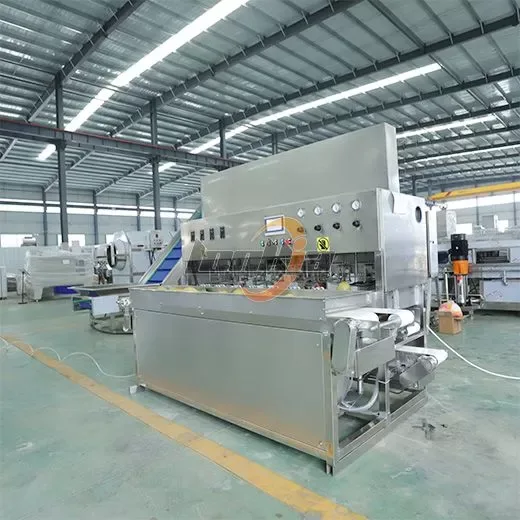

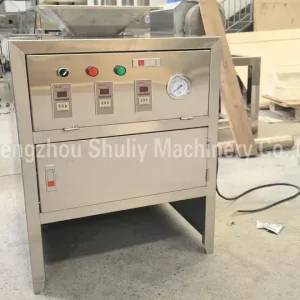
Mango Peeling Machine 800 kg/h
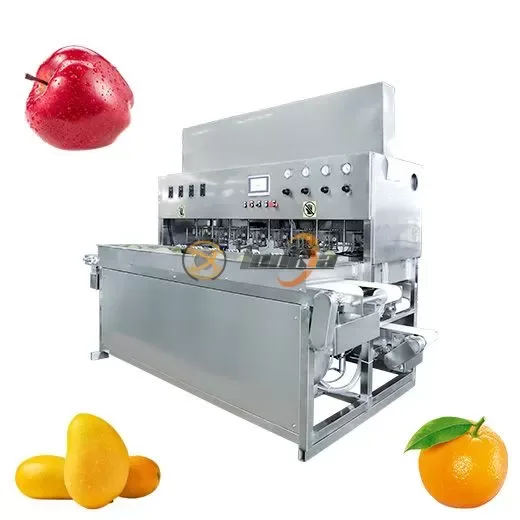
Peeling unit for a fruit that fights back. Mango skin clings tightly, the flesh is fibrous and slippery, and the stone is flat and off-centre — every one of those facts shapes the machine. Where a potato peeler is brute force, a mango peeler is contour-following precision, and the peeling loss figure is where the engineering shows.
How it works
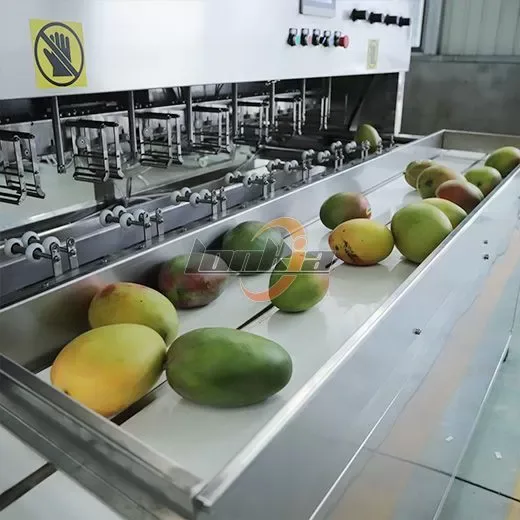
Fruit is seated in a cup or cradle, stem-end down, either by an operator or by a singulating feeder. A pair of self-orienting blades or a contour cutter descends and tracks the fruit surface, rotating the fruit as it strips the skin in a continuous ribbon or in overlapping passes. The blades follow the profile by mechanical contour or by sprung pressure, so an oval fruit peels as completely as a round one.
The residual work matters as much as the cut. No machine strips 100 % of mango skin, and lines follow the peeler with a trim table where operators touch up eyes and stem ends. Ripeness changes everything: a firm half-ripe mango peels cleanly, a soft ripe one deforms under the blade and loses flesh.
Suitable for
Mango processing lines feeding slicing, dicing or pulping; dried mango and fresh-cut operations where skin fragments are a defect; tropical fruit lines handling papaya and similar fruit with changeover cups; plants moving labour off hand peeling, which is slow and wastes flesh; pulp lines where skin contributes off-colour and fibre to the puree.
Not suitable for
Very soft, fully ripe fruit, which deforms and loses flesh — process those to pulp with a pulper-skinning route instead; ungraded fruit, because cup size and blade pressure are set per size class; very small or heavily fibrous varieties outside the machine’s range; anyone expecting peel-free output without a trim step — plan the trim table, it is part of the line.
Material & compliance
Frame, cups and product guides in SUS304 (EN 1.4301); blades in stainless blade steel, removable for sharpening and set as consumables. Blade mechanism guarded with interlocks, because the contour mechanism has moving parts close to the operator station; the machine opens for daily cleaning of the cup area where juice accumulates.
Supplied with CE declaration of conformity and DoC on request; material certificate EN 10204 3.1 available for contact parts.
Selection notes
Ask for the peeling loss and the residual-skin rate on your variety and ripeness — this is the machine class where demo fruit is most misleading, because a firm demo mango peels far better than a ripe production one. Check cup changeover between size classes and how long it takes. Check what the machine does with an off-spec fruit: jamming is the failure mode that stops the line. Plan the downstream trim table in the same purchase.
When you should not buy this machine: If your fruit is destined for pulp only, steam or mechanical pulping with skin separation is cheaper and loses less yield than peeling first. And if your volumes are small with mixed ripeness, hand peeling may remain honest economics — the machine pays at volume on graded fruit.
Key specifications
| Parameter | Value |
| Capacity | 400-1200 kg/h by model and fruit size (TYPICAL, confirm with factory) |
| Peeling method | Contour-following blades or self-orienting pairs |
| Fruit size range | Graded classes, by cup size (TYPICAL) |
| Peeling loss | 8-15 % by fruit shape and ripeness (TYPICAL) |
| Orientation | Manual placement or automatic singulation |
| Contact material | SUS304 (EN 1.4301) |
| Power supply | 380V/3P/50Hz or 415V/3P/50Hz, customizable |
Specification values are industry-typical ranges for this machine class and are not verified against a specific factory datasheet. Replace them with measured factory data before publication.
FAQ
Can it peel fully ripe mangoes?
Poorly, and every supplier will qualify the claim the same way. Ripe fruit deforms under the blade, flesh loss rises and the trim load grows. Lines that handle ripe fruit usually route it to pulping rather than peeling.
Why does variety matter so much?
Fibre content, stone shape and skin thickness all differ by variety, and the blade pressure and cup geometry are set for a profile. Ask the supplier for references on your specific variety before buying.
Is a trim table really necessary?
Yes, on this machine class. Residual skin at the eyes and stem end is normal, and a touch-up station turns that into a finished product instead of a quality complaint.
Related equipment
This unit is one stage of a complete processing line. For the full range of washing and peeling equipment, or to compare this model against the Steam Peeling Machine 1000 kg/h, see the complete equipment catalogue. Capacity, material grade and utility requirements can be confirmed through a quote request.
Reviews
There are no reviews yet.