
Nut Sizing Machine 2000 kg/h
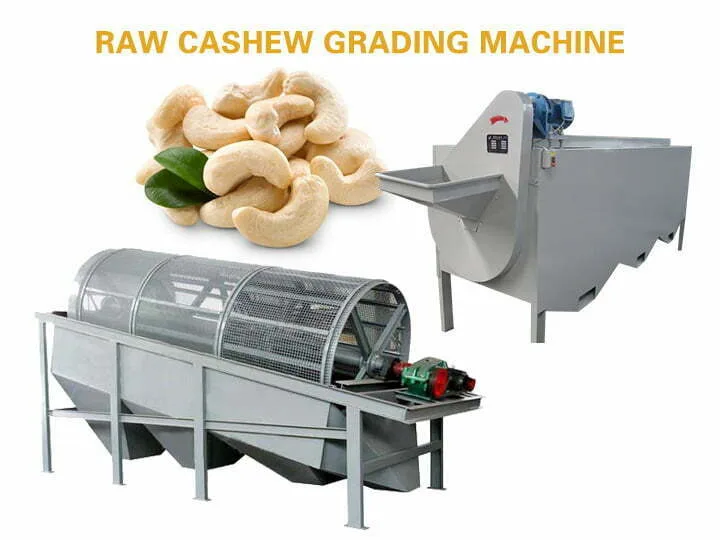
Nut buyers buy by size. Kernel size sets the price of walnut halves; shell size sets the crack setting of the cracking machine; uniform grades are what makes a nut consignment sellable rather than negotiable. A nut sizing machine is the step that turns orchard intake into commercial grades — mechanically simple, and judged entirely on how clean its grade boundaries are and how few kernels it cracks along the way.
How it works
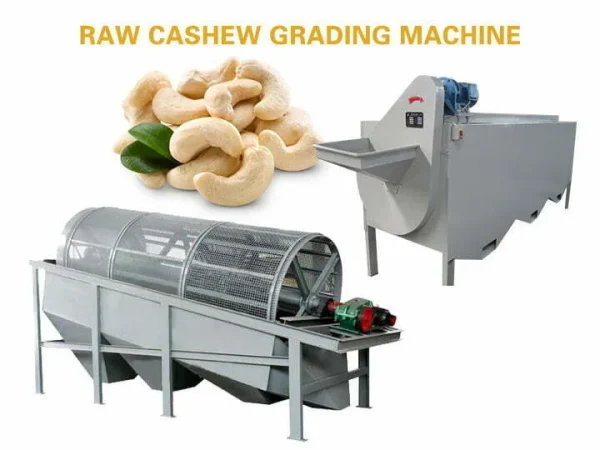
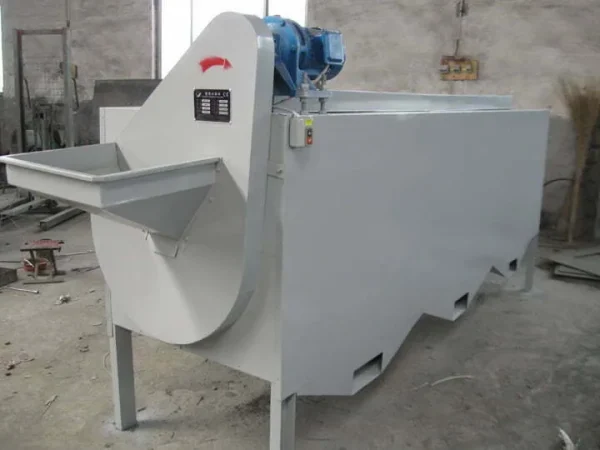
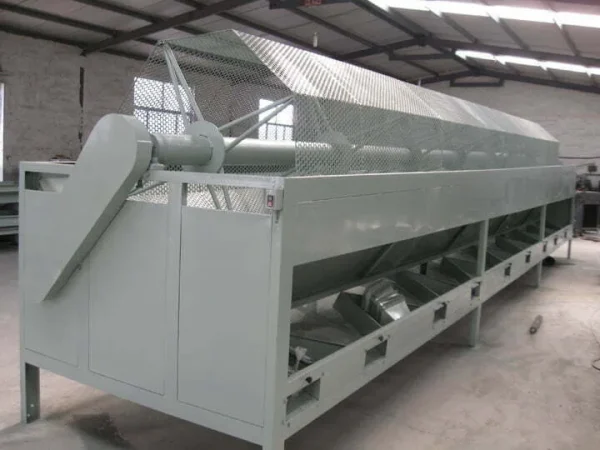
Two geometries cover the trade. Roller-gap graders run nuts down pairs of angled rollers whose gap widens along the bed: a nut rides until the gap exceeds its smallest dimension, then drops through to the grade conveyor beneath. Perforated drums work as on fruit: nuts tumble through enlarging holes, dropping through the first hole they fit. Roller gaps are gentler on kernels and immune to the end-on pass-through problem; drums are simpler and cheaper for in-shell product. Either way, feed is metered so nuts arrive single-file-ish rather than bridging, and drop heights to the grade conveyors are kept short because kernels crack on impact as readily as on pressure. Grades — typically four to six — leave at separate outlets sized to the downstream crack or pack line.
Suitable for
In-shell walnut, hazelnut, macadamia and pistachio grading before cracking or packing; kernel grading for retail packs where size uniformity is the price setter; pre-grading ahead of cracking machines, since a cracker set for one size destroys the sizes it was not set for; harvest co-operatives turning mixed orchard intake into sellable grades.
Not suitable for
Loose kernels with thin skins at high throughput, which need gentler handling than any mechanical grader gives — hand tables still have a place at the top end; mixed nuts and debris without upstream cleaning, where the grader becomes a very expensive sieve; anyone grading by weight specification, which is a weight grader’s job, not a sizer’s.
Material & compliance
Frame, rollers or drums, chutes and conveyors in SUS304 (EN 1.4301) on product-contact parts; roller surfaces food-grade, drum hole edges deburred. Drop heights and transfer points designed short and soft — kernel breakage is the quality metric of this machine class. Guards on rotating sections; grade outlets arranged for bagging or conveyor handoff.
Supplied with CE declaration of conformity and DoC on request; material certificate EN 10204 3.1 available for contact parts.
Selection notes
Ask for grade-boundary accuracy on your nut and size range, measured — boundary cleanliness is the product. Ask which geometry the supplier recommends for your product and why; in-shell and kernel answers differ. Check drop heights and transfer points for breakage risk, and ask for a breakage figure from a trial run. Check how sizes are changed and what the changeover honestly takes. Check the feed rate control, because overfeeding bridges rollers and blurs every boundary.
When you should not buy this machine: If your nuts go straight to oil pressing, size grades add nothing — the press does not care. And if your volumes are orchard-gate scale, a well-built static sieve bank may do the job until volume justifies a machine; buy the grader when the market pays for the grade.
Key specifications
| Parameter | Value |
| Capacity | 1000-5000 kg/h by model (TYPICAL, confirm with factory) |
| Grades | 4-6 by geometry length (TYPICAL) |
| Size range | 10-50 mm nut diameter by tooling (TYPICAL) |
| Geometry | Expanding roller gap or perforated drum |
| Boundary accuracy | 92-97 % within grade (TYPICAL) |
| Kernel breakage | Under 1 % in trial runs (TYPICAL) |
| Contact material | SUS304 (EN 1.4301) |
| Power supply | 380V/3P/50Hz or 415V/3P/50Hz, customizable |
Specification values are industry-typical ranges for this machine class and are not verified against a specific factory datasheet. Replace them with measured factory data before publication.
FAQ
Roller gap or perforated drum for in-shell walnuts?
Roller gaps handle the walnut’s shape better — a drum hole can pass a long nut end-on that a widening gap sorts properly. Drums win on simplicity and price for rounder nuts like macadamia. The trial with your product settles it.
Will it crack kernels?
Some, and the number matters more than the claim. Breakage comes from drop heights, roller speeds and overfeeding — all settings and design choices. Ask for the breakage figure from a trial run on your nut, and check the warranty position on kernel damage.
Can one machine grade both in-shell and kernels?
Usually yes with tooling and setting changes, but not at the same time — the two products want different geometry and different gentleness. Plan which product the machine is really for.
Related equipment
This unit is one stage of a complete processing line. For the full range of sorting and grading equipment, or to compare this model against the Roller Size Grading Machine 3000 kg/h, see the complete equipment catalogue. Capacity, material grade and utility requirements can be confirmed through a quote request.

Reviews
There are no reviews yet.