
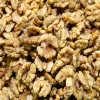
Walnut Cracking Machine 500 kg/h
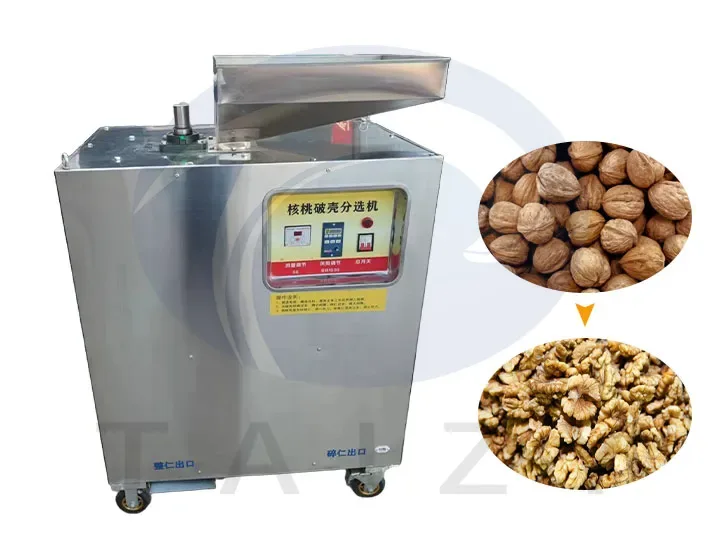
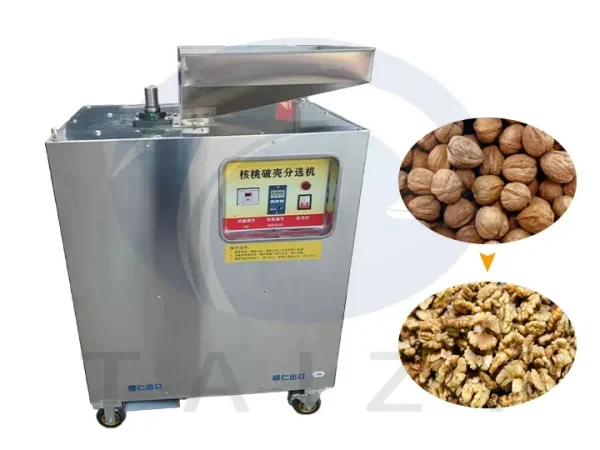
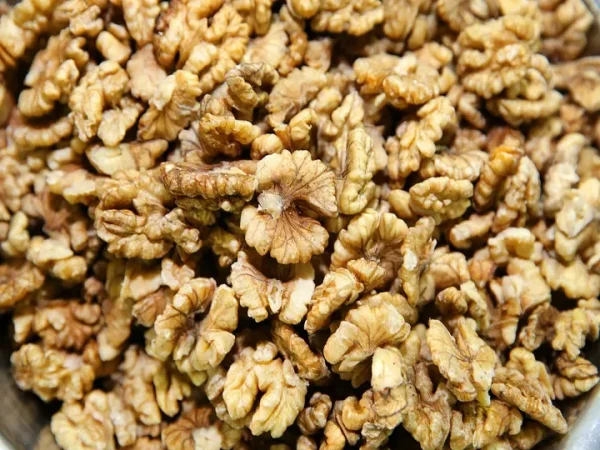
Crack a walnut wrong and you get fragments; crack it right and the kernel falls out in halves. The difference is controlled force, and a walnut cracking machine is simply a machine for applying exactly enough of it — after sizing has made every nut going into the gap the same thickness. Whole-kernel rate is the number that prices the machine, because halves sell for double what pieces do, and the machine’s whole job is defending that rate.
How it works
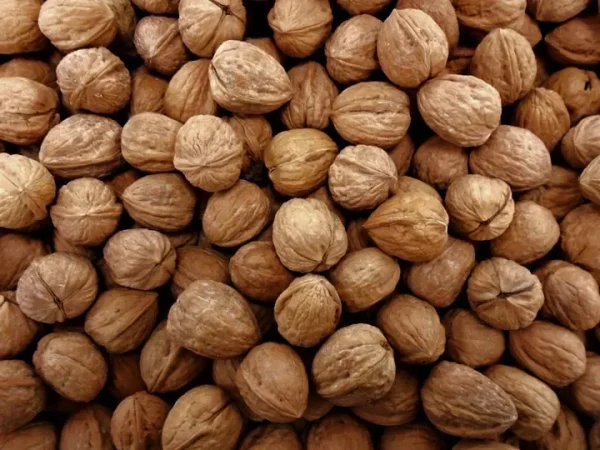
Walnuts are sized first — by roller grader or sieve — so the machine’s crack gap sees a narrow thickness band. Sized nuts feed single-file into the crack station: two hardened rollers or a roller-and-plate pair set to a gap just under shell thickness. The shell fractures along its natural suture; the kernel, elastic and unsupported, mostly survives as halves. Cracked output drops to a shaker or sizing screen that shakes loose shell past and kernel onward, often with an aspiration step lifting membrane. Gap adjustment is the operator’s main control — thicker nuts need a wider gap than naive setting, and the best lines crack two or three size grades through two or three gap settings rather than forcing one gap to serve all.
Suitable for
Walnut processors selling kernel halves, pieces and meal — the grade ladder that makes cracking economics work; lines feeding colour sorters and laser sorters downstream, which need kernel in large pieces to sort well; regional stations aggregating grower walnuts into tradeable kernel grades.
Not suitable for
Buyers wanting cracked shell-and-all feed product, which needs force, not finesse — a hammer mill is the honest machine; operations without sizing upstream, because an unsized walnut stream through one gap wastes both shell and kernel; anyone expecting the machine to shell every nut perfectly — variability in shell thickness means a re-crack loop for unbroken nuts is normal design, not a defect.
Material & compliance
Crack rollers in hardened food-safe steel; contact guides and chutes in SUS304 (EN 1.4301); hopper and shaker frames stainless where product flows. Dust extraction provision — dry walnut shell dust is a housekeeping and respiratory issue at throughput. No product contact with lubricated surfaces; bearings sealed outboard.
Supplied with CE declaration of conformity and DoC on request; material certificate EN 10204 3.1 available for contact parts.
Selection notes
Ask for the whole-kernel rate guarantee and what nut variety and moisture it assumes — moisture above or below the window swings the rate hard, and the seller’s number was earned on his nuts, not yours. Ask how gap adjustment works and whether multiple stations take different grades in parallel. Check the re-crack loop: unbroken nuts must come back, cleanly, without manual sorting of every cracked shell. Check the shaker and aspiration spec, because separating shell from kernel is half the machine.
When you should not buy this machine: If your walnuts are for oil pressing, whole-kernel rate buys you nothing — crack cheap, press fast. And if you cannot dry and store nuts at stable moisture, fix that first; the best cracker in the market cannot rescue kernels ruined in storage.
Key specifications
| Parameter | Value |
| Capacity | 300-1000 kg/h by model (TYPICAL, confirm with factory) |
| Whole kernel rate | 70-90% at proper moisture (TYPICAL) |
| Crack gap | Adjustable per station, ~2 stations typical |
| Sizing requirement | 2-3 thickness grades upstream |
| Kernel moisture window | ~8-12% for best rate (TYPICAL) |
| Contact material | Hardened rollers; SUS304 (EN 1.4301) guides |
| Power supply | 380V/3P/50Hz, 2.2-5.5 kW class |
Specification values are industry-typical ranges for this machine class and are not verified against a specific factory datasheet. Replace them with measured factory data before publication.
FAQ
Why is whole-kernel rate lower than the brochure says?
Moisture, variety and sizing discipline. The brochure rate was earned on dried, well-sized nuts of a known variety. Run wet or unsized nuts and the rate drops before the machine is at fault — which is why the trial should use your walnuts.
Does it also crack macadamia or hazelnut?
Not the same station. Macadamia needs far higher force with a different crack geometry; hazelnut is lighter. Some factories build family machines with interchangeable stations — ask, and insist on a trial nut lot.
What moisture should walnuts be at cracking?
Roughly 8-12% kernel moisture is the working window for high whole-kernel rates. Drier nuts shatter, wetter nuts smear; ask the factory for the window behind their guarantee and dry or condition to it.
Related equipment
This unit is one stage of a complete processing line. For the full range of sorting and grading equipment, or to compare this model against the Nut Sizing Machine 2000 kg/h, see the complete equipment catalogue. Capacity, material grade and utility requirements can be confirmed through a quote request.
Reviews
There are no reviews yet.