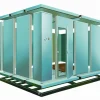
Cold Storage Room 50 m³
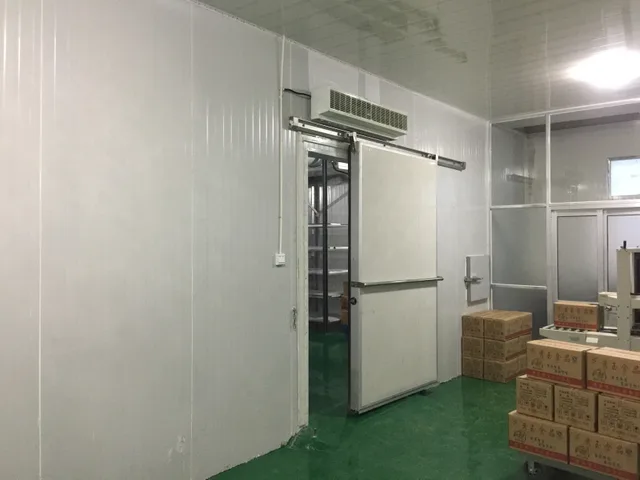
A processing line without a cold room is a plant that keeps explaining its losses. Cut product waits warm, frozen stock cycles thaw-and-refreeze through a household fridge, and every summer the complaints arrive in the same envelope. A modular cold storage room ends the improvisation: insulated panels bolt into a walk-in envelope in days, the refrigeration unit holds whatever the product needs from +4 °C chilling to -25 °C frozen storage, and shelving, doors and docks turn the box into the plant’s memory — everything the line produces has a place at the temperature it deserves. It is not one machine among others; it is the room the other machines work for.
How it works
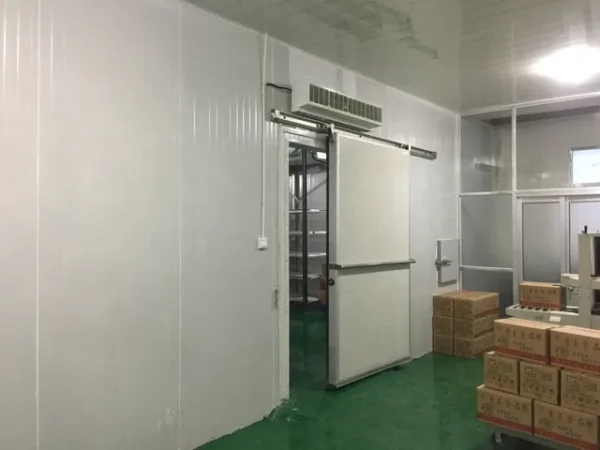
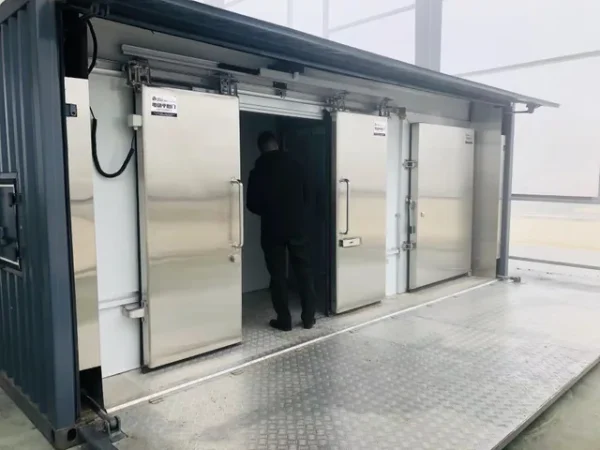
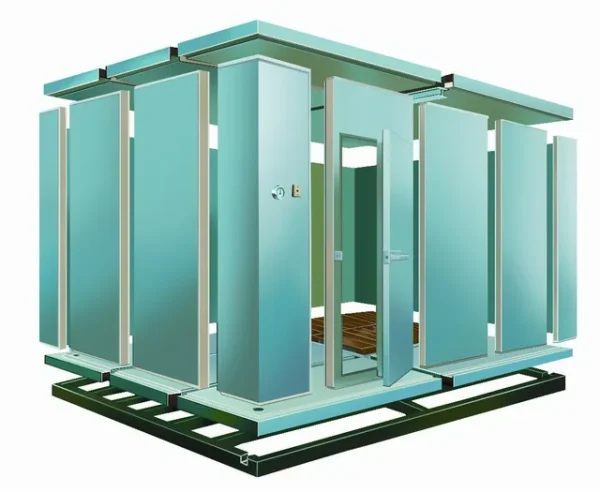
Prefabricated insulation panels — cam-locked, food-safe faced — assemble into floor, walls and ceiling of the required volume, with a door system matched to traffic: hinged swing doors for staff, sliding doors for pallets, strip curtains or air locks where the door opens often. A unit cooler inside the room exchanges heat with a condensing unit outside; controllers hold the setpoint and defrost on schedule, and the floor carries the forklift or trolley load the layout assumes. Temperature logging runs continuously for food-safety records; alarms call before the product knows there is a problem. The room’s physics do the rest — product at target temperature in, product held at target temperature out, shift after shift.
Suitable for
Processing plants holding chilled cut product between stages and finished packs before dispatch; freezer stores holding frozen stock at -18 to -25 °C with proper turnover; packing sheds adding chilled holding so harvest timing stops dictating sales timing; central kitchens and ready-meal plants separating raw chill, finished chill and frozen storage in three rooms; distribution points keeping cold chain intact between plant and market.
Not suitable for
Blast freezing — holding rooms are built to hold, and freezing warm product in one taxes the refrigeration beyond design and slows everything else in the room; the blast freezer is a different machine with a different coil. And tropical installs with power that fails weekly need generator integration planned first, because a cold room without power backup is a very expensive compost bin.
Material & compliance
Panels with food-safe facing and CFC-free insulation, cam-locked joints; floor loading rated for the intended traffic; door furniture, lights and controls rated for the temperature class; unit cooler and condensing unit matched to climate class; temperature logging and alarms as standard.
Supplied with CE declaration of conformity and DoC on request; panel and refrigeration component certificates per component suppliers; install and commissioning documentation part of delivery.
Selection notes
Size on turnover, not volume — the honest questions are what comes in per day, what leaves, and what the worst-week peak looks like, because a room sized on floor area alone either starves the line or pays to chill empty air. Decide the temperature split first: one combined room does both chill and frozen badly, and two smaller rooms usually beat one big compromise. Check the door traffic: every open minute costs, and dock curtains or air locks pay for themselves in busy plants. Ask about install time, floor requirements and power supply in the same breath — the room is a construction project, small but real. And confirm the alarm and logging story in writing; when the audit asks for the year’s curve, the logger is the whole answer.
When you should not buy this machine: If you lease premises with an existing cold room that inspection passes, add shelving, not a second room. And if your need is genuinely blast freezing or display, that is a different product — a holding room does holding, and the wrong room bought cheap becomes the right room bought twice.
Key specifications
| Parameter | Value |
| Volume | 20-200 m³ modular by layout (TYPICAL, confirm with factory) |
| Temperature | +4 °C chill to -25 °C freezer classes |
| Panels | 100-200 mm insulated, cam-locked, food-safe facing |
| Doors | Swing / sliding, strip-curtain or air-lock options |
| Controls | Digital setpoint, defrost schedule, logging + alarm |
| Contact material | SUS304 fittings, food-safe panel facing |
| Power supply | 380V/3P/50Hz, 3-20 kW class by volume and class |
Specification values are industry-typical ranges for this machine class and are not verified against a specific factory datasheet. Replace them with measured factory data before publication.
FAQ
Can one room work as both chiller and freezer?
It can switch, but not serve both at once — product sets and recovery times mean a room swinging between +4 and -20 °C is bad at each. Two rooms, or a chill room plus a freezer, is the standard answer for plants doing both.
How fast can it be installed?
A modular room of typical processing-plant size assembles in days once the slab, power and drainage are ready — that speed against conventional construction is most of its appeal. Site readiness decides the calendar more than the room does.
What happens during a power cut?
Doors stay closed and a well-insulated room buys hours, not minutes — which is why logging and alarm matter, and why sites with unreliable power integrate a generator from day one. Product value in the room is the argument; do the arithmetic before the summer does.
Related equipment
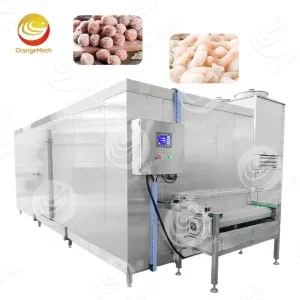
This unit is one stage of a complete processing line. For the full range of freezing equipment, or to compare this model against the Blast Freezer 1000 kg/h, see the complete equipment catalogue. Capacity, material grade and utility requirements can be confirmed through a quote request.

Reviews
There are no reviews yet.