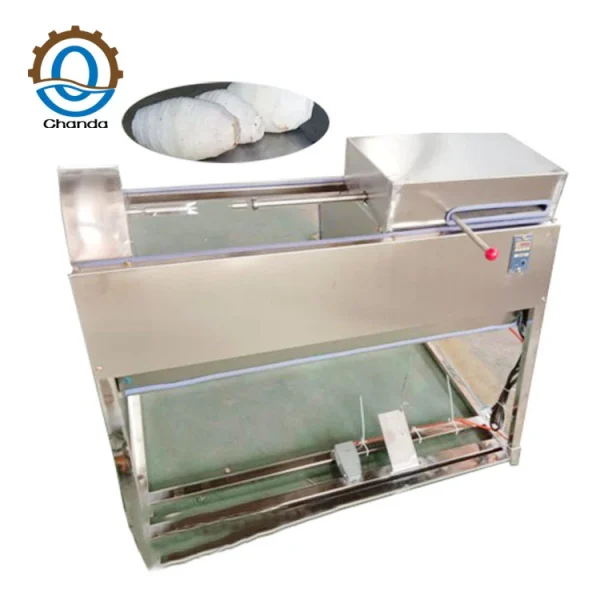
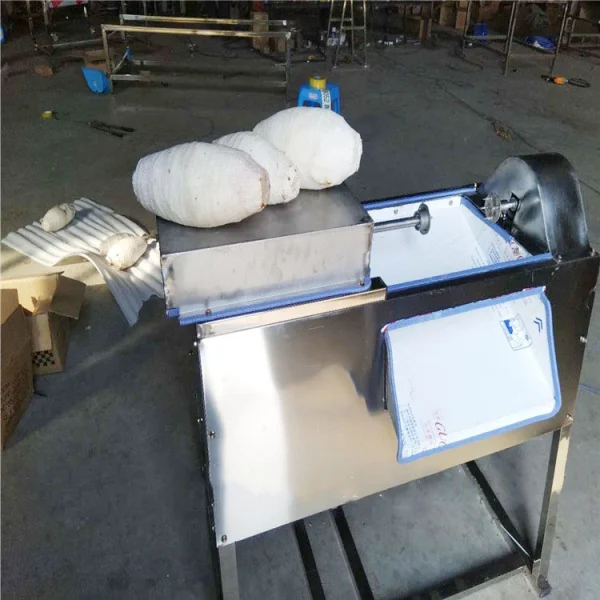
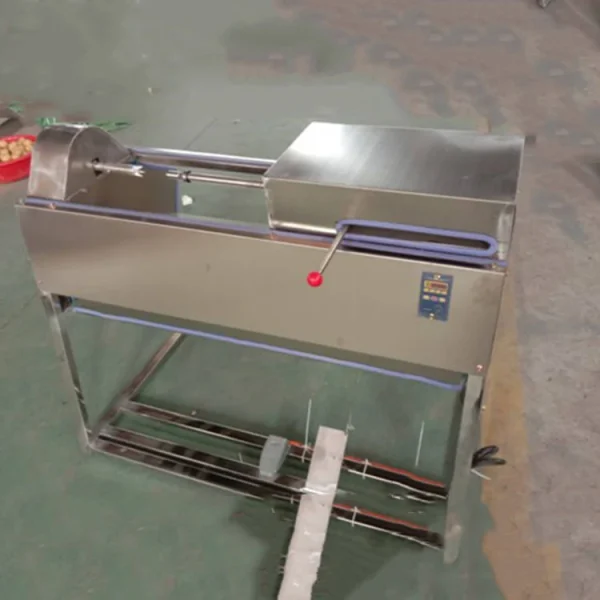
Taro Peeling Machine 600 kg/h
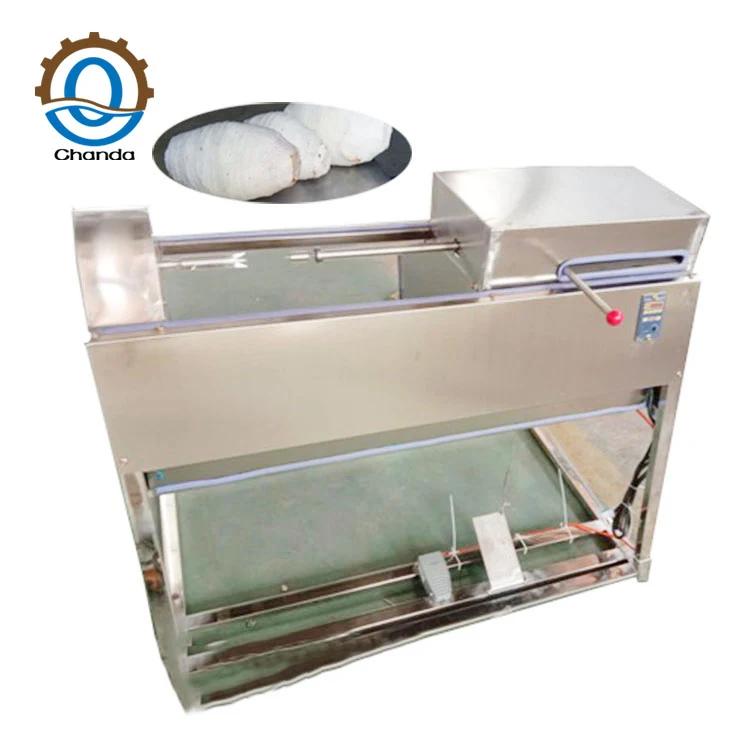
Taro resists lazy peeling twice over: a coarse, hairy skin that clings in patches, and a sap that itches bare hands within minutes of knife work. Processors who peel by hand pay twice — labour and irritation — while yielding unevenly peeled corms that下游 rejects. A taro peeling machine answers with abrasive drum peeling: tumbling contact that wears the skin off irregular corms in minutes, flush water that carries sap and skin away from hands entirely, and a throughput that keeps a washing-peeling-cutting taro line fed.
How it works
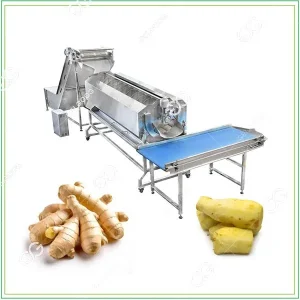
Washed corms load into a rotating abrasive drum lined with food-safe carborundum. As the drum turns, corms tumble against the grit and each other, wearing skin and hair away by friction; water spray flushes loosened skin and sap out continuously so surfaces cut clean rather than smear. Dwell — drum speed and time — is the quality control: enough contact removes the last skin patches, too much eats yield and rounds off corm edges. Batch drums discharge by reversal; continuous screw-fed models advance corms through the drum for line duty. Output rinses to remove residual grit before cutting or packing.
Suitable for
Taro chip and snack producers feeding slicing lines; frozen taro and taro-ball factories needing peeled corms at line rate; fresh-cut processors peeling for retail cubes and sticks; starch plants peeling ahead of rasping; co-operatives adding value to member taro at intake.
Not suitable for
Potato-volume root peeling, where drum peelers built for round roots outrun it; mixed-vegetable peeling without changeover thought — taro’s size and hair set it apart; farm-gate volumes where gloves and knives remain honest; and buyers without drain capacity — peeling slurry is heavy with skin and starch.
Material & compliance
Drum, hopper, chutes and frame in SUS304 (EN 1.4301) food-grade finish; abrasive liner food-safe bonded grit with documented replacement interval; flush plumbing and sealed washdown drives; interlocked drum access.
Supplied with CE declaration of conformity and DoC on request; material certificate EN 10204 3.1 available for contact parts.
Selection notes
Bring corms, not tonnage: taro ranges from egg-sized to rugby-ball sized by variety, and drum geometry that tumbles one jams on the other. Ask for the yield number at your corm size — abrasive peeling takes skin plus flesh, and a point of yield across the season is the business case. Confirm liner life and price; it is the consumable that sets cost per tonne. Check flush water and drain sizing for sap and starch, which coat undersized drains fast. And verify batch-to-batch peel consistency on mixed sizes, since graded taro is the exception in real intake.
When you should not buy this machine: If your taro volume is tens of kilos a day, gloves and knives hold quality at negligible capital. And if taro is a minor line in a potato plant, run it through the existing drum peeler gently instead of buying a machine that works one day a week.
Key specifications
| Parameter | Value |
| Capacity | 300-1000 kg/h by corm size and dwell (TYPICAL, confirm with factory) |
| Corm range | 40-150 mm by drum set (TYPICAL) |
| Peeling | Abrasive drum with water flush |
| Yield | Dwell-set; typical peel loss 10-18% (TYPICAL) |
| Contact material | SUS304 (EN 1.4301) |
| Power supply | 380V/3P/50Hz, 2-5 kW class |
Specification values are industry-typical ranges for this machine class and are not verified against a specific factory datasheet. Replace them with measured factory data before publication.
FAQ
Does it remove the hairy outer layer completely?
Abrasive action removes skin and most hair; stubborn patches at corm crevices may need a short second pass or a brush finish downstream. Ask the factory for peeled photos at your corm size and decide whether one pass meets your spec.
How is the itch-causing sap handled?
Water flush carries sap away continuously, and operators never handle raw corm — loading is by hopper or elevator. Drain routes still need regular rinse-down, since dried sap is stubborn and slippery.
Can it peel potato or ginger too?
Many abrasive drums run multiple roots with dwell changes, but hair and size differences matter — confirm the drum geometry covers your range at trial, and get yield numbers per crop before promising mixed duty.
Related equipment
This unit is one stage of a complete processing line. For the full range of washing and peeling equipment, or to compare this model against the Brush Roller Peeling Machine 800 kg/h, see the complete equipment catalogue. Capacity, material grade and utility requirements can be confirmed through a quote request.
Reviews
There are no reviews yet.