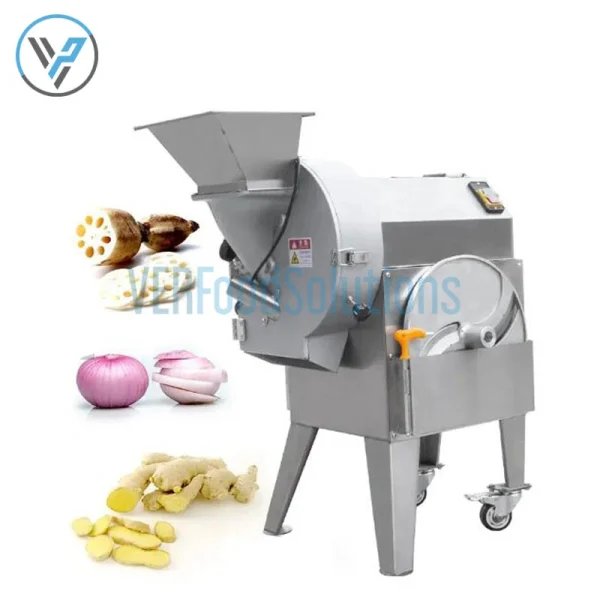
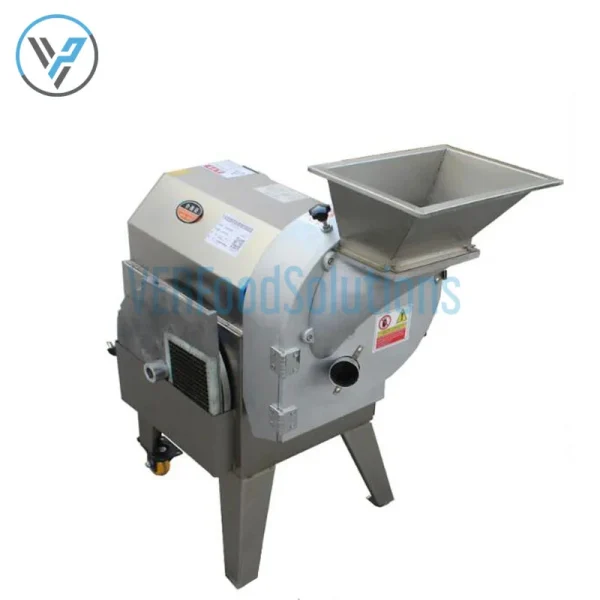
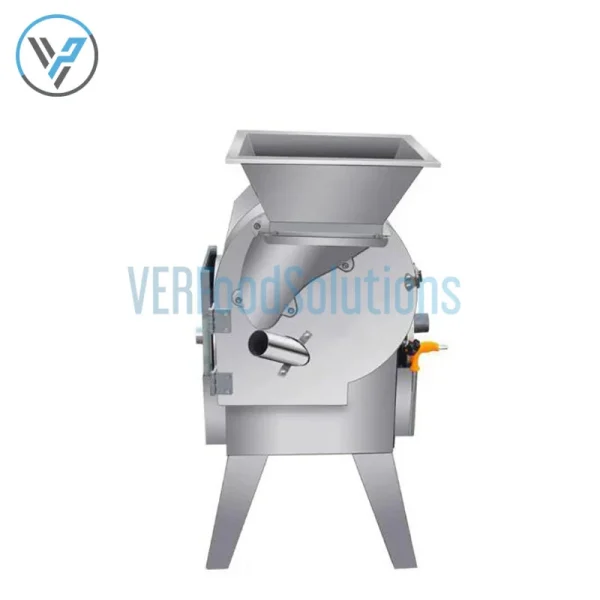
Eggplant Slicing Machine 500 kg/h
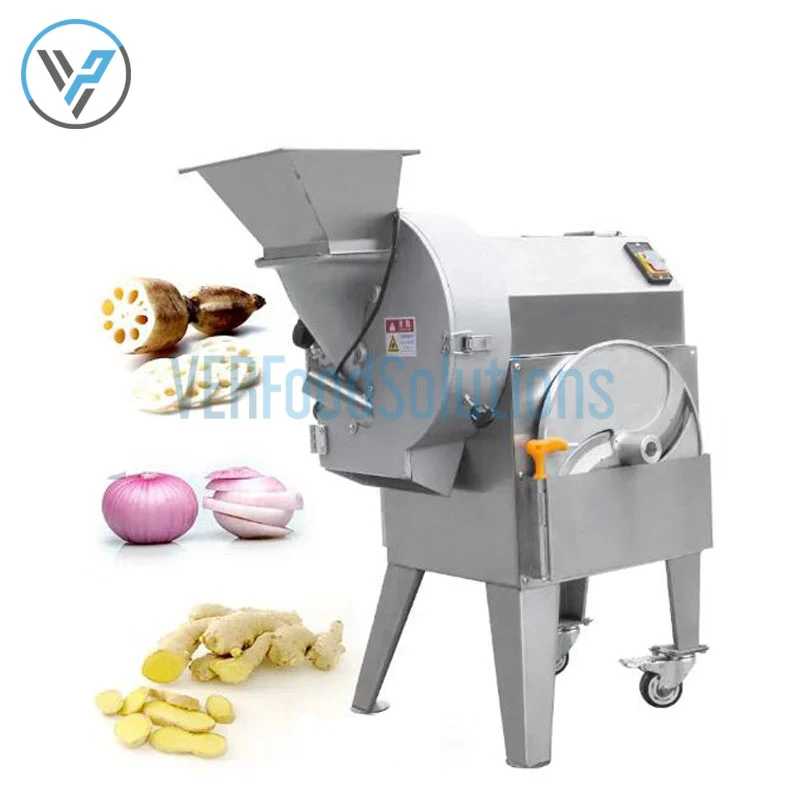
Eggplant punishes generic slicers. The flesh is a sponge — compress it against a slow blade and it crushes, weeps and tears instead of cutting, and the slice that looked perfect at the blade is a ragged mess at the fryer. An eggplant slicing machine is built around that cellular structure: sharp, fast blades with positive feed that shear the flesh before it compresses, producing slices and strips with intact faces that hold oil, batter and sauce the way the recipe intends.
How it works
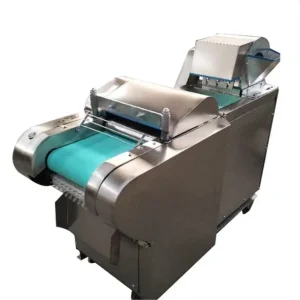
Fruit feeds into a positive-feed intake — a belt or roller set that grips the spongy flesh without bruising — and crosses a high-speed blade assembly. Slice configurations run a circular blade at set thickness; strip and dice configurations add cross-cut knives downstream. The engineering is in the speed match: blade and feed velocities are set so the cut completes before the flesh deforms, the same principle that makes bread slice cleanly when the knife moves fast. Cut surfaces rinse or oil lightly in some lines to slow oxidation — eggplant browns within minutes — so layout places the washer or fryer close to the discharge.
Suitable for
Frozen eggplant lines slicing before blanching and freezing; fried-eggplant and cutlet producers feeding batter lines with uniform slices; dried eggplant chip makers cutting even pieces; fresh-cut processors producing stir-fry strips; sauce and paste plants cutting pre-cut input for cooking.
Not suitable for
Mixed-vegetable dicing at scale, where a general dicer covers more products; whole-fruit roasting lines that need no slicing; small restaurant volumes where a sharp knife wins; and buyers who cannot place the washer or fryer adjacent — slices that sit brown before the next stage waste the machine’s quality.
Material & compliance
Frame, feed and chutes in SUS304 (EN 1.4301) food-grade finish; blades hardened food-safe stainless with documented sharpening interval; positive-feed drives with interlocked access; washdown construction for the oil-and-juice environment.
Supplied with CE declaration of conformity and DoC on request; material certificate EN 10204 3.1 available for contact parts.
Selection notes
Test on your variety: globe eggplant, long Asian types and small round fruit present differently, and the feed geometry that centres one slips on another. Ask for the crush test — a factory trial should show slice faces intact, no torn edges, at your throughput. Confirm thickness range and changeover time between slices and strips if you run both. Check the discharge-to-next-stage layout with your line drawing; oxidation timing is part of the machine’s real spec. And price blade sharpening into running cost — spongy flesh dulls edges faster than firm vegetables.
When you should not buy this machine: If your eggplant volume is tens of kilos a shift, a mandoline and speed peel hold quality at negligible cost. And if your product is baba-ganoush or paste, skip slicing — a crusher or pulper is the right tool for a product that gets mashed anyway.
Key specifications
| Parameter | Value |
| Capacity | 300-800 kg/h by fruit size and cut (TYPICAL, confirm with factory) |
| Slice thickness | 3-15 mm adjustable (TYPICAL) |
| Cuts | Slices, strips, dices by blade set |
| Feed | Positive-feed belt / rollers |
| Contact material | SUS304 (EN 1.4301) |
| Power supply | 380V/3P/50Hz, 1-3 kW class |
Specification values are industry-typical ranges for this machine class and are not verified against a specific factory datasheet. Replace them with measured factory data before publication.
FAQ
Why do slices brown so fast after cutting?
Eggplant flesh oxidises within minutes. The machine’s job is a clean cut; the process must move slices to washing, oiling or frying immediately. Layout the line so discharge feeds the next stage within a minute or two — that timing matters more than any blade setting.
One machine for globe and long Asian eggplant?
Often yes with feed changeover, but diameter and length ranges decide it. Long thin types may need a different feed orientation. Trial both varieties and confirm the tested range in writing.
How does it handle seeds?
The blade cuts through seed zones cleanly at speed; seeds do not separate unless a pulper follows. For products where seed texture matters, place inspection or pulping downstream per your spec.
Related equipment
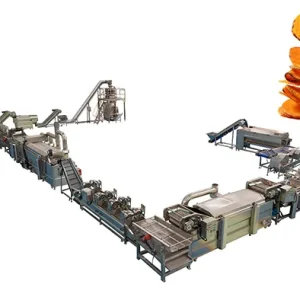
This unit is one stage of a complete processing line. For the full range of cutting and slicing equipment, or to compare this model against the Vegetable Slicing Machine 1200 kg/h, see the complete equipment catalogue. Capacity, material grade and utility requirements can be confirmed through a quote request.
Reviews
There are no reviews yet.