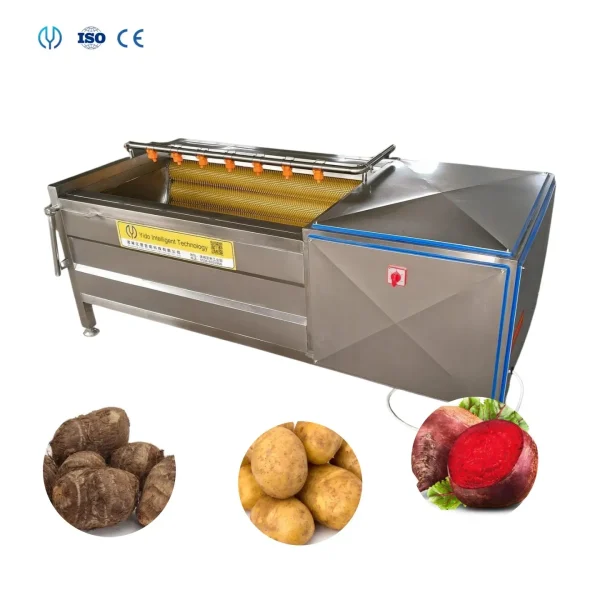
Beetroot Peeling Machine 800 kg/h
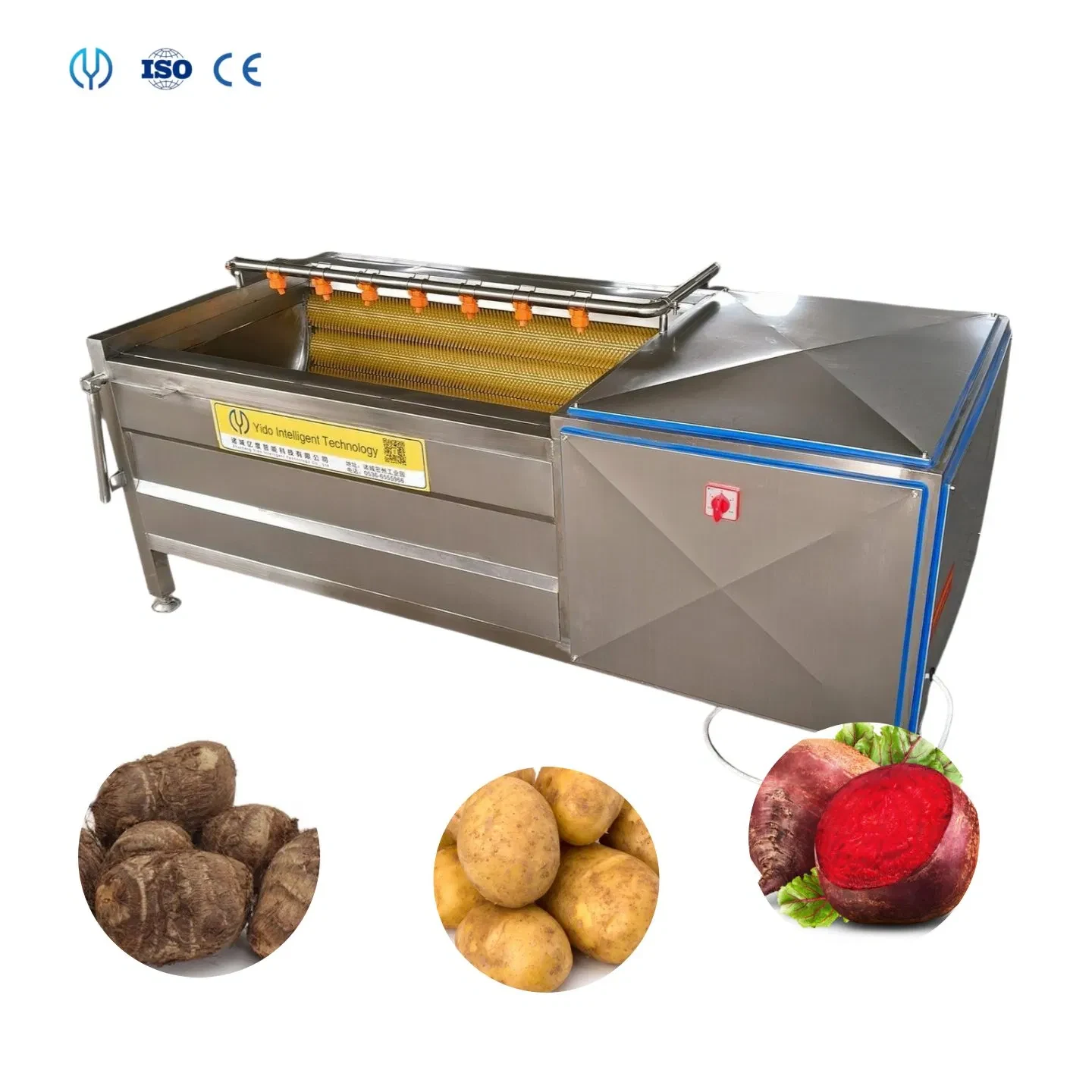
Beetroot punishes sloppy peeling twice. Its skin is thin — the goal is to strip soil, rootlets and the parchment-thin outer layer, not to mill away flesh — and its pigment bleeds into everything: cut hands, wooden boards, under-dimensioned drains. Hand peeling is slow, stained work, and steam peeling overshoots on a root this soft-fleshed. A beetroot peeling machine splits the difference: gentle abrasive tumbling that wears skin and dirt off round roots, wash water that carries the pigment and soil away in a controlled stream, and a peel loss figure thin enough to protect juice and fresh-cut yields.
How it works
Graded roots load into a drum lined with food-safe abrasive or stiff brush rows. As the drum rotates, beets tumble and roll against the lining, shearing skin, root hairs and caked soil; a metered water spray flushes the deep-red slurry out continuously so it never dries onto the machine or the fruit. Dwell time is set short on purpose — beet flesh bruises and bleeds faster than potato — and discharge is by drum reversal or continuous screw advance. Output rinses over a second spray bar before moving to slicing, dicing or cooking, and the peel stream leaves separately for by-product handling.
Suitable for
Fresh-cut beet processors feeding dicing and spiral-cut lines; juice and smoothie plants peeling ahead of pressing; vacuum-packed cooked-beet producers needing clean skin removal before cooking; pickle and fermenting operations preparing uniform roots; co-operatives aggregating member beet for retail-ready packs.
Not suitable for
Potato plants expecting potato-scale throughput from the same drum settings — beet dwell and yield behave differently; sugar-beet industrial lines, which run dedicated flail and wash trains at tonnages far beyond this class; dirty-field beet straight from harvest without a pre-wash, since abrasive liners clog in mud; and kitchens where a hand peeler and gloves remain the honest answer at 20 kg a day.
Material & compliance
Drum, hopper, discharge chutes and frame in SUS304 (EN 1.4301) food-grade finish; abrasive or brush liner food-safe with documented replacement interval; sealed washdown drives and sloped peel-drain routing; interlocked drum access for liner service.
Supplied with CE declaration of conformity and DoC on request; material certificate EN 10204 3.1 available for contact parts.
Selection notes
Bring roots, not claims: beet varies from golf-ball to softball across varieties, and drum geometry that polishes one size bruises the other. Ask for the yield number at your root size — beet tolerance for aggressive peeling is low, and a point of peel loss across a season is the whole business case. Confirm the pigment story: flush water volume, drain slope and a CIP path for the red slurry, which stains and dries hard. Check liner life in hours against your volume, since it is the consumable that sets cost per tonne. And if you run beet, carrot and potato on one line, get the changeover procedure in writing — dwell, liner and flush settings all move.
When you should not buy this machine: If beet is a seasonal side crop of a few tonnes, run it through a hired or existing potato drum peeler gently and accept the compromise. And if your process cooks beet before peeling — as some juice plants do — thermal shock and a rinse do the job without capital.
Key specifications
| Parameter | Value |
| Capacity | 500-1500 kg/h by root size and dwell (TYPICAL, confirm with factory) |
| Root range | 40-110 mm by drum set (TYPICAL) |
| Peeling | Abrasive or brush drum with water flush |
| Yield | Dwell-set; typical peel loss 6-12% (TYPICAL) |
| Contact material | SUS304 (EN 1.4301) |
| Power supply | 380V/3P/50Hz, 2-5 kW class |
Specification values are industry-typical ranges for this machine class and are not verified against a specific factory datasheet. Replace them with measured factory data before publication.
FAQ
Will the flesh bleed heavily during peeling?
Some pigment loss into flush water is normal and unavoidable; the meter is dwell time. Short, gentle cycles keep bleed marginal, and the rinse bar restores a clean surface. Ask the factory for peel-loss and colour-retention photos at your root size before committing.
Can it also peel carrot or potato?
Abrasive drums run multiple round roots with dwell changes, but skin thickness and firmness differ — beet wants the gentlest setting. Confirm per-crop yield numbers at trial rather than accepting one combined figure.
How messy is the peel waste stream?
It is a thin red slurry heavy with soil — easier to pump than potato peel but staining if it dries. Route it to a screened drain with daily rinse-down, and pair the machine with your existing wash-water treatment if juice production already handles beet effluent.
Related equipment
This unit is one stage of a complete processing line. For the full range of washing and peeling equipment, or to compare this model against the Brush Roller Peeling Machine 800 kg/h, see the complete equipment catalogue. Capacity, material grade and utility requirements can be confirmed through a quote request.
Reviews
There are no reviews yet.