Celery Cutting Machine 500 kg/h
Celery looks easy to cut and punishes careless cutting. The stalk is crisp but stringy — a dull or wrong-angle blade drags the fibres into strings instead of severing them — and bruised celery browns within hours, turning a fresh-cut pack grey at the edges. Buyers reject on both counts. A celery cutting machine gets the physics right once and repeats it all shift: stalks aligned and held flat, a sharp blade crossing at matched speed so fibres are sheared, not torn, and piece lengths that hold from first stick to last, at a rate suited to fresh-cut lines where celery is a component of nearly every mixed pack.
How it works
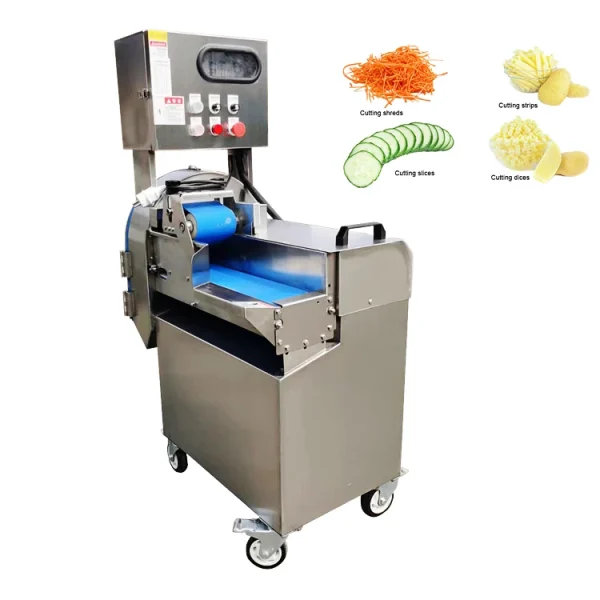
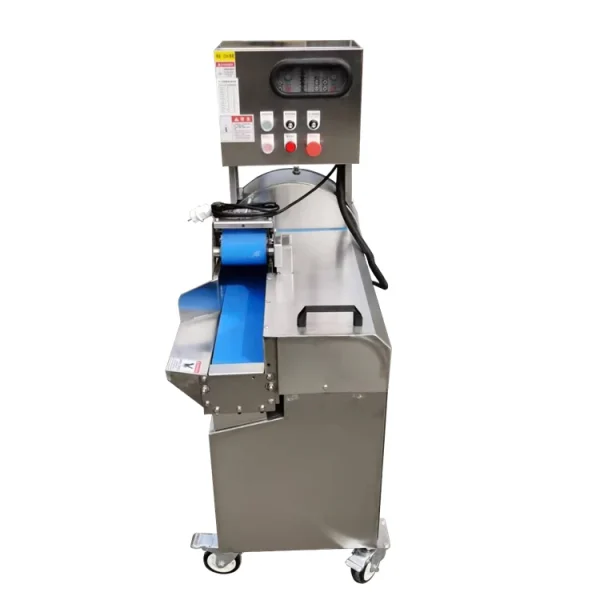
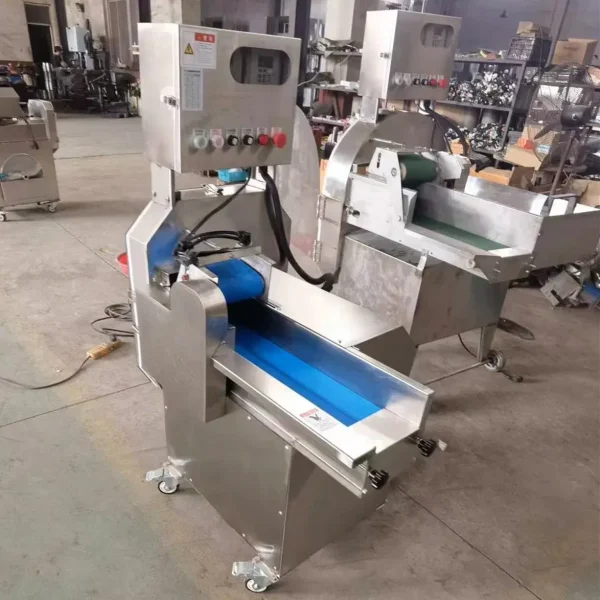
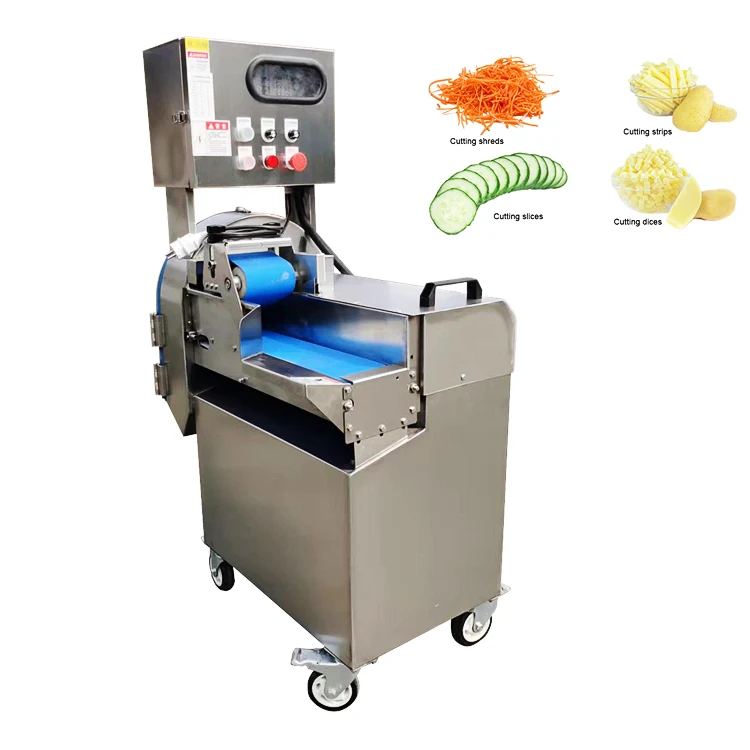
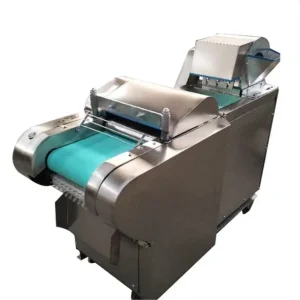
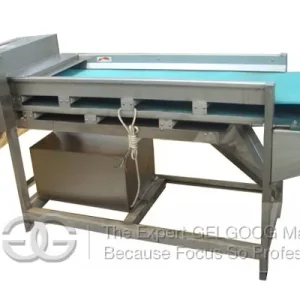
Trimmed stalks feed onto a belt that aligns them in the cutting plane, hold-down rollers keeping the crisp ribs flat so they cannot ride or pivot into the blade. A rotating knife crosses the belt at a speed ratio to the feed — that ratio sets slice thickness or segment length. Shear cut is the design point: blade edge geometry and speed are chosen so the stringy fibres part cleanly rather than drag. Pieces discharge to a belt or chute, and dicing models add a cross-cut stage for soup cubes. Length and thickness remain speed settings for most formats.
Suitable for
Fresh-cut processors putting celery into stir-fry, soup and snack packs; ready-meal and soup factories cutting dice at line rate; celery-juice producers feeding pressing lines with even segments; foodservice preppers portioning sticks and slices; dehydration lines cutting uniform pieces that dry at even rates.
Not suitable for
Whole-stick retail packs, which a trim-and-size line serves better; leafy-herb cutting where gentler blades and slower speeds are the requirement; plants feeding unwashed celery — embedded grit costs blade life and shows up in the pack; and very small kitchens where a mandoline holds the spec at trivial volume.
Material & compliance
Frame, belt, hold-down rollers, blades and chutes in SUS304 (EN 1.4301) food-grade finish; blades hardened food-safe stainless with documented sharpening and change procedure; guarded cutting head with interlocked access; belt removal without tools for daily sanitation.
Supplied with CE declaration of conformity and DoC on request; material certificate EN 10204 3.1 available for contact parts.
Selection notes
Bring your pack spec, not a brochure: slice thickness, segment length and dice size should each be a setting the factory demonstrates on your stalks. Ask about the string-drag test — a supplier who cuts celery daily will show you clean faces; one who does not will talk about throughput. Confirm bruise handling: hold-down pressure and drop heights are where fresh-cut shelf life is won or lost, and every drop onto a hard surface browns ribs. Verify dual-head versus single-head economics against your SKU mix — celery plus leafy herbs may justify both. And check sanitation access: celery fibre packs belts and rollers fast.
When you should not buy this machine: If celery is one ingredient among dozens in a mixed salad plant, your existing multipurpose cutter with a celery head may cover it — audit the cut quality first. And if your volume is under 50 kg a day, knife work at a prep table remains the honest answer.
Key specifications
| Parameter | Value |
| Capacity | 300-800 kg/h by stalk size (TYPICAL, confirm with factory) |
| Slice thickness | 2-12 mm (TYPICAL) |
| Segment length | 10-50 mm by belt/blade ratio (TYPICAL) |
| Cutting | Rotating shear blade over feed belt |
| Contact material | SUS304 (EN 1.4301) |
| Power supply | 380V/3P/50Hz, 1-2 kW class |
Specification values are industry-typical ranges for this machine class and are not verified against a specific factory datasheet. Replace them with measured factory data before publication.
FAQ
How do you avoid the stringy, dragged cut?
Blade sharpness and speed matching — the strings come from torn fibre, not from the vegetable. Ask the factory for a cut-face test on celery at your thickness settings, and set a sharpening interval from their data rather than waiting for quality complaints.
Does it dice as well as slice?
Dual-head models add a cross-cut stage for dice; single-head machines slice and segment only. If soup dice is a core SKU, price the dual head against a separate dicer — the answer differs by volume, and the factory demo on your mix decides it.
Can it cut leek or fennel?
Stalk vegetables of similar geometry cut well with speed and hold-down changes. Confirm per-crop settings with the factory and note that layered vegetables like leek want different blade geometry than celery’s solid ribs.
Related equipment
This unit is one stage of a complete processing line. For the full range of cutting and slicing equipment, or to compare this model against the Leafy Vegetable Cutting Machine 800 kg/h, see the complete equipment catalogue. Capacity, material grade and utility requirements can be confirmed through a quote request.
Reviews
There are no reviews yet.