


Ginger Drying Machine 500 kg/h

Ginger’s value is volatile in both senses — the aroma compounds that buyers pay for are exactly what careless drying drives off, and fresh rhizome is a crop with weeks of shelf life, not months. Sun-drying answers neither quality nor hygiene: it is weather-dependent, slow, and open to contamination. A ginger drying machine dries washed, sliced ginger on mesh belts through staged hot-air zones — higher heat to strip surface water fast, lower heat to finish the dense fibre without toasting the volatile oils — producing the uniform, pale, aromatic dried ginger that powder mills and spice buyers grade highly.
How it works
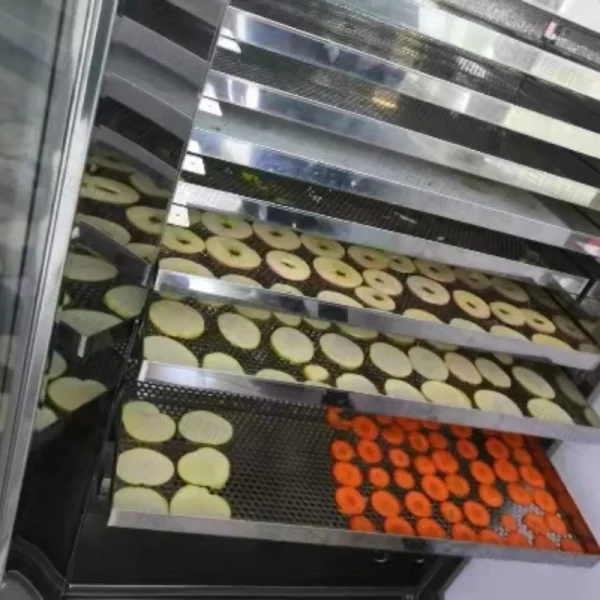
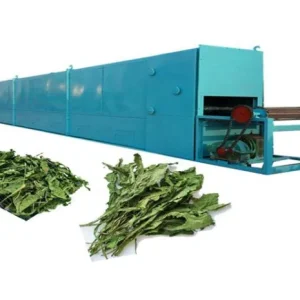
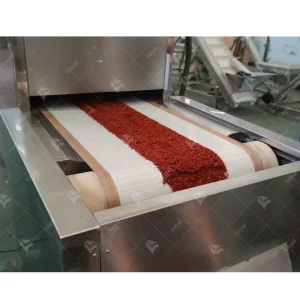
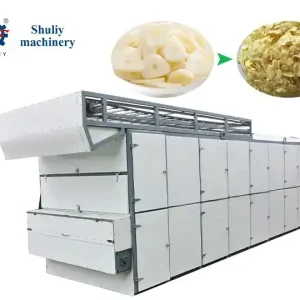
Washed ginger is sliced to 2-4 mm — thickness is the first quality decision, since thick slices case-harden — and spread evenly on the infeed mesh belt. The belt carries slices through multi-zone drying chambers: an initial hotter zone removes surface moisture, middle zones bring internal water to the surface at controlled rates, and a finishing zone lands the slice at 10-12% moisture without over-heating. Belt speed and zone temperatures are the two setting groups; air flows through, not around, the product layer, and exhaust vents carry moisture out. Dried slices cool on the exit conveyor before milling or packing.
Suitable for
Dried-ginger and ginger-powder producers feeding mills; spice processors building ginger into blends and tea cuts; health-product makers drying ginger for extracts and capsules; export consolidators drying member rhizome to uniform standard; fresh-cut plants drying ginger waste slices into saleable by-product.
Not suitable for
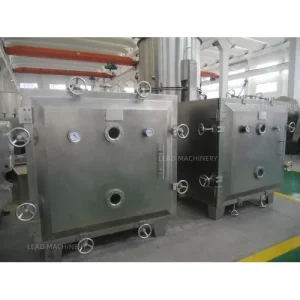
Whole-rhizome drying, whose dense core and thick skin want long low-heat or dedicated tunnel duty — slices are what belt dryers do well; vacuum or freeze-drying quality targets, where aroma retention justifies the capital; growers without washing and slicing upstream, since dirty ginger dries its soil into the product; and operations under about 100 kg of fresh root a day, where cabinet dryers and sun with racks cover the need.
Material & compliance
Belt frame, chambers, plenums and chutes in SUS304 (EN 1.4301) food-grade finish; food-grade mesh belts; insulated chamber panels; sealed drives; temperature and belt-speed controls with logging; guarded heater section with over-temperature protection.
Supplied with CE declaration of conformity and DoC on request; material certificate EN 10204 3.1 available for contact parts.
Selection notes
Slice first, then buy: bring your slicer’s output to the dryer trial, because zone temperatures that suit 2 mm slices scorch 5 mm ones. Ask for the aroma-retention story in numbers — volatile-oil content before and after drying on your variety — since that figure is what powder buyers test. Confirm moisture uniformity across the belt width, not just the average; edge drying differences become mill complaints. Check energy options against your site: electric, gas and biomass heaters change the cost per kilo of water removed materially. And verify cleaning access — ginger fibre and sugar load the belt and plenums, and a dryer that cannot be washed grows problems.
When you should not buy this machine: If your ginger dries a few dozen kilos a day for local sale, a cabinet dryer on racks does the same chemistry at a fraction of the capital. And if your buyers want freeze-dried-grade aroma for extracts, price the freeze dryer against the price premium it earns — belt drying will undersell your product.
Key specifications
| Parameter | Value |
| Capacity | 300-1000 kg/h sliced input by layer depth (TYPICAL, confirm with factory) |
| Slice range | 2-6 mm (TYPICAL) |
| Zone temperatures | 50-80 °C staged (TYPICAL) |
| Final moisture | 10-12% (TYPICAL) |
| Contact material | SUS304 (EN 1.4301) |
| Power supply | 380V/3P/50Hz, 12-40 kW class |
Specification values are industry-typical ranges for this machine class and are not verified against a specific factory datasheet. Replace them with measured factory data before publication.
FAQ
Slice thickness — does it really matter that much?
It matters more than any dryer setting: thick slices case-harden, trapping moisture that later blooms as mould, while uneven slices dry unevenly and mill badly. Set the slicer to the dryer’s validated range and hold it there.
How is the pungency and aroma retained?
By staged temperatures — surface water comes off fast, then lower finishing heat protects gingerol and volatile oils. Ask the factory for before-and-after volatile-oil analysis on your variety; that number, not throughput, is the quality spec.
Can it dry garlic, turmeric or chili too?
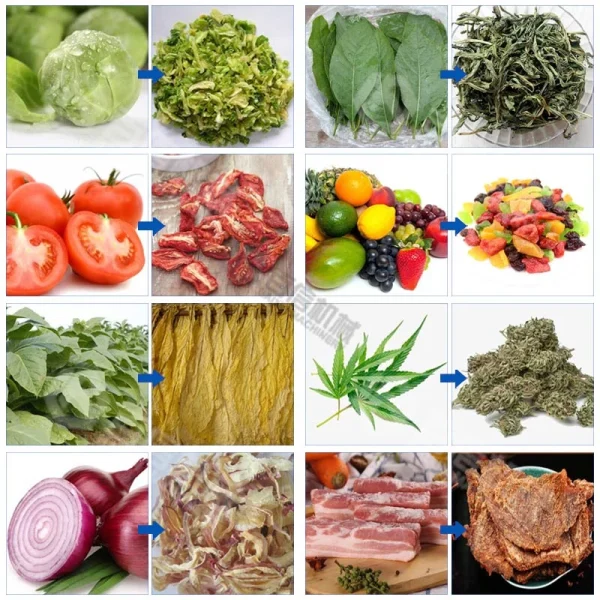
Belt dryers run multiple crops with zone and speed changes, and many processors do exactly that between seasons. Get per-crop curves and changeover procedures from the factory, and watch cross-flavour carry-over between pungent crops on shared belts.
Related equipment
This unit is one stage of a complete processing line. For the full range of drying and dehydration equipment, or to compare this model against the Belt Hot Air Dryer 1 t/h 30 kW, see the complete equipment catalogue. Capacity, material grade and utility requirements can be confirmed through a quote request.
Reviews
There are no reviews yet.