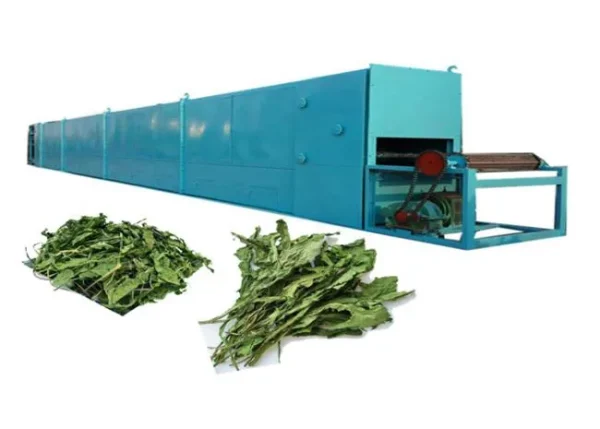
Belt Hot Air Dryer
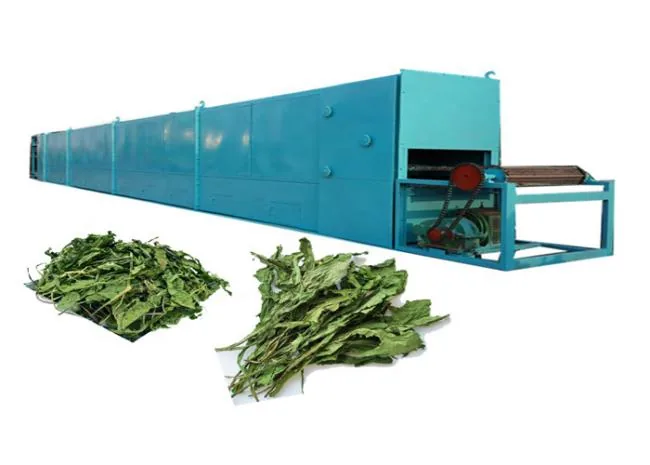
Multi-belt hot air dryer for continuous dehydration of sliced vegetables and fruits, with zoned temperature and airflow control.
How it works
Product is spread evenly on a perforated belt and passes through a series of temperature zones while heated air is forced through and across the bed. As moisture is removed the product moves to the next belt, usually with a reversal that re-orients the bed for even drying. Zone temperatures, airflow and belt speed are set to the product’s drying curve.
Suitable for
Sliced vegetables (carrot, onion, cabbage, pepper), fruit slices, herbs, and products for soup mixes or snacks.
Not suitable for
Heat-sensitive products needing low-temperature drying (consider heat pump or vacuum drying); liquids or purees; products that must retain fresh colour and shape.
Material & compliance
Belt and contact surfaces SUS304 (EN 1.4301); chamber panels insulated stainless; contact welds Ra <= 0.8 um. Mesh belt specified to product size.
CE declaration and DoC; EN 10204 3.1 for contact parts; thermal insulation for operator safety; hygienic design with access for cleaning.
Selection notes
Energy per kg of water removed is the number to compare between suppliers, not installed power. Ask for zoned temperature control because most products need a hot initial zone and cooler finishing zone to avoid case hardening. Check how the belt is cleaned.
When you should not buy this machine: Do not buy a hot air dryer if your product loses colour or aroma at high temperature — you need heat pump or vacuum drying. Also avoid it for very low volumes where a batch dryer costs far less.
Key specifications
| Parameter | Value |
|---|---|
| Capacity | 200-2000 kg/h wet feed depending on product (TYPICAL) |
| Temperature zones | multiple, independently set (TYPICAL) |
| Contact material | SUS304 (EN 1.4301) |
| Heating source | Steam, electric or gas (TYPICAL) |
| Power supply | 380V/3P/50Hz or 415V/3P/50Hz, customizable |
| Automation | Fully automatic with PLC |
Specification values are industry-typical ranges for this machine class and are not verified against a specific factory datasheet. Replace them with measured factory data before publication.
FAQ
How much energy does drying use?
Ask suppliers for energy per kg of water removed rather than installed kW — it is the only comparable figure across machines of different sizes.
Why zone the temperatures?
Most products can take high heat while wet but scorch as they dry. Independent zones let you drop temperature in later stages and avoid case hardening.
When should I choose heat pump instead?
When the product is heat sensitive or when colour and aroma retention drive the selling price. Heat pump drying runs cooler and is more efficient but has higher capital cost.
Related equipment
This unit is one stage of a complete processing line. For the full range of drying and dehydration equipment, or to compare this model against vegetable slicing machine 1200 kg/h, see the complete equipment catalogue. Capacity, material grade and utility requirements can be confirmed through a quote request.

Reviews
There are no reviews yet.