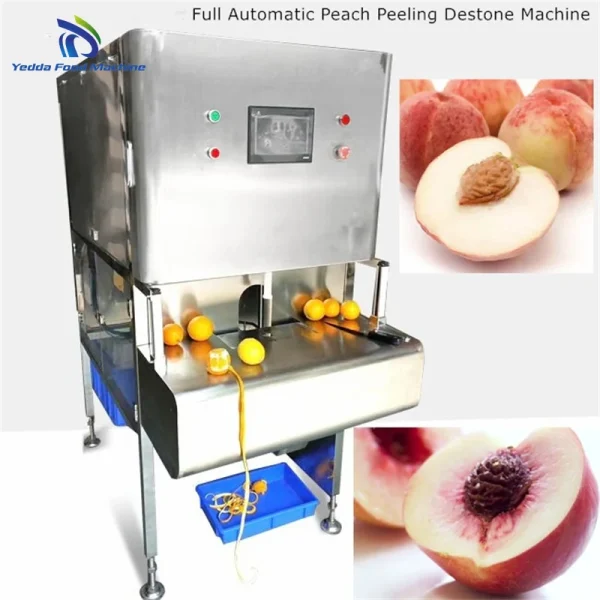
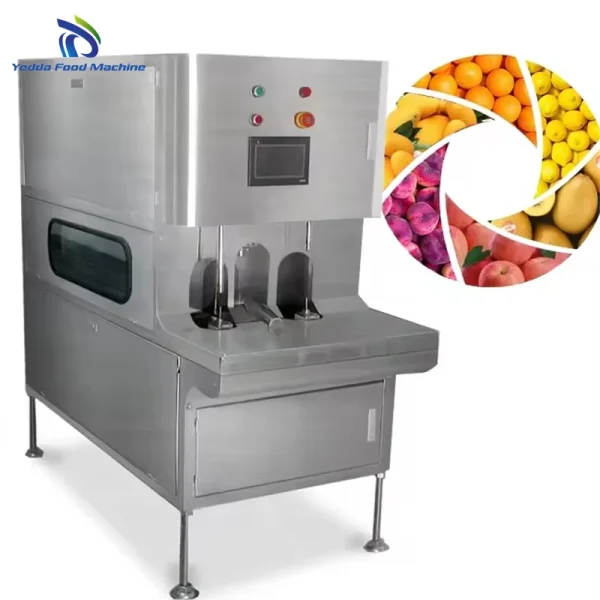
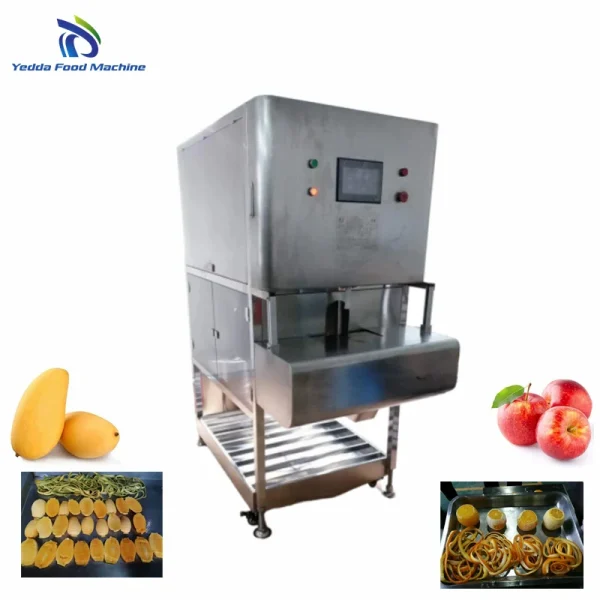
Papaya Cutting Machine 1000 kg/h
Papaya fights every attempt to process it quickly. The flesh is soft and slippery, the seed cavity runs the length of the fruit and the seeds are loose in a gel that squirts under pressure — halve it carelessly and you crush the flesh, scatter seed across the belt and grow a sanitation problem within the hour. Hand-cutting papaya for fresh-cut is slow, inconsistent and genuinely hard to keep clean. A papaya cutting machine sequences the job instead of rushing it: fruit are oriented, split lengthwise by long blades that shear rather than press, and the seed cavity is scooped or scraped in a controlled pass, delivering clean halves or sections ready for slicing, dicing or freezing.
How it works
Fruit feed onto an orienting conveyor that aligns them lengthwise — some machines add singulating rollers for mixed sizes. A long-blade halving station splits each fruit along its axis in a guided pass, the two halves carried onward flesh-up. At the seed station, rotating scoop or brush heads sweep the seed cavity clean in one or two passes; seed and gel discharge to a waste auger while the halves continue to a sectioning or slicing head, or straight to the outfeed for fresh-cut packing. Blade depth and scoop pressure are the two settings that decide whether flesh survives the pass.
Suitable for
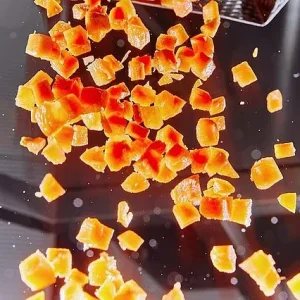
Fresh-cut processors supplying retail papaya chunks and spears; frozen papaya-dice operations feeding dicing lines; dried-papaya producers preparing uniform sections; juice and purée plants halving and seeding ahead of pulping; tropical-fruit packers consolidating hand-cut lines into supervised machine stations.
Not suitable for
Green papaya for salad processing — firm flesh and different cut geometry want a different setup; overripe fruit that slumps under the halving blades and should be culled to pulping; whole-fruit peeling, which is a separate machine or upstream step; and volumes under 100 kg a day, where two knives and scoops at a table remain honest.
Material & compliance
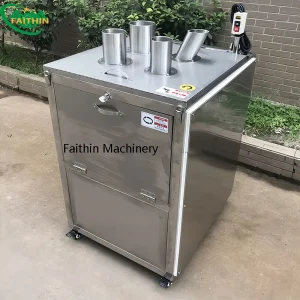
Orienting conveyor, halving blades, scoop heads, waste auger, chutes and frame in SUS304 (EN 1.4301) food-grade finish; blades and scoops food-grade stainless with documented service interval; sealed washdown drives; guarded blade access; tool-free scoop removal for the frequent sanitation papaya demands.
Supplied with CE declaration of conformity and DoC on request; material certificate EN 10204 3.1 available for contact parts.
Selection notes
Bring fruit at your real ripeness window: halving quality collapses on soft fruit if blade depth and feed are tuned for firmer lots, so the demo matters more here than on almost any other cutter. Ask how seed and gel are handled — they are slippery, sticky and voluminous, and the waste path decides your sanitation load. Confirm the orientation step honestly, since mixed-size deliveries defeat machines that assume uniform fruit. Check the downstream cut options: if you sell both halves-and-dice, the sectioning head should be in the quote. And verify washdown access around the seed station, because gel residue dries fast and hides.
When you should not buy this machine: If papaya is a small side crop for a juice blend, a halving jig and hand scooping at two stations covers the volume. And if your product is purée only, a crusher-pulper line skips the gentle-cut problem entirely and costs less.
Key specifications
| Parameter | Value |
| Capacity | 500-1500 kg/h by fruit size (TYPICAL, confirm with factory) |
| Fruit range | 0.4-2.5 kg per fruit (TYPICAL) |
| Cut sequence | Orient, halve, seed-scoop, optional section (TYPICAL) |
| Seed removal | Rotating scoop or brush heads (TYPICAL) |
| Contact material | SUS304 (EN 1.4301) |
| Power supply | 380V/3P/50Hz, 1.5-4 kW class |
Specification values are industry-typical ranges for this machine class and are not verified against a specific factory datasheet. Replace them with measured factory data before publication.
FAQ
How ripe can the fruit be when processed?
Firm-ripe fruit processes cleanly; soft, fully slipping fruit needs slower feed and shallower scoop pressure, and the very softest lots belong in pulping. Run the demonstration at your actual ripeness spread — acceptability at a single perfect ripeness proves nothing about your daily deliveries.
Does the machine peel the papaya too?
No — halving and seeding assume peel-on fruit; peeling is a separate upstream step or done after cutting depending on the product. Fresh-cut lines typically peel, halve and dice in sequence. Confirm what the quote includes so the peeling step does not arrive as a surprise purchase.
How messy is the seed and gel waste stream?
It is slippery, sticky and ferments fast — the single biggest sanitation driver on the machine. Good designs discharge it via a dedicated auger to a sealed container with washdown access around the station. Ask to see that path running during the demo, and plan a mid-shift clean as standard practice rather than end-of-day only.
Related equipment
This unit is one stage of a complete processing line. For the full range of cutting and slicing equipment, or to compare this model against the Fruit Halving Machine 1200 pcs/h, see the complete equipment catalogue. Capacity, material grade and utility requirements can be confirmed through a quote request.
Reviews
There are no reviews yet.