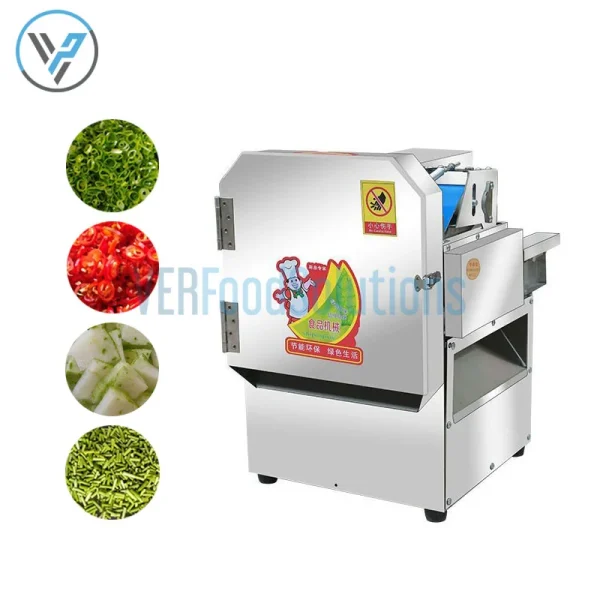
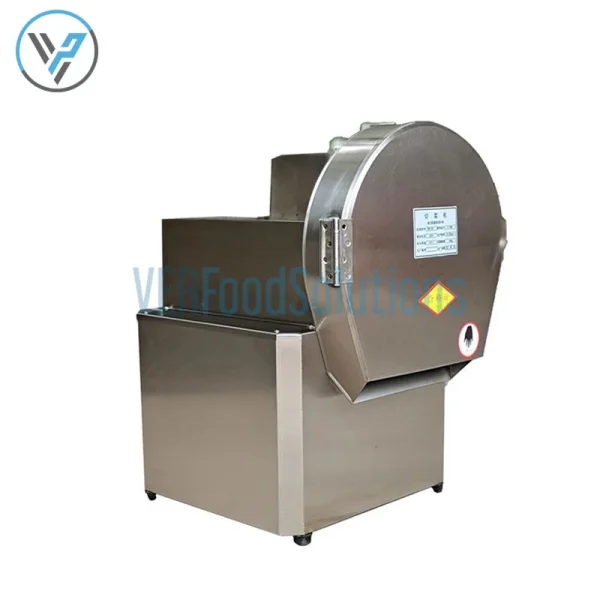
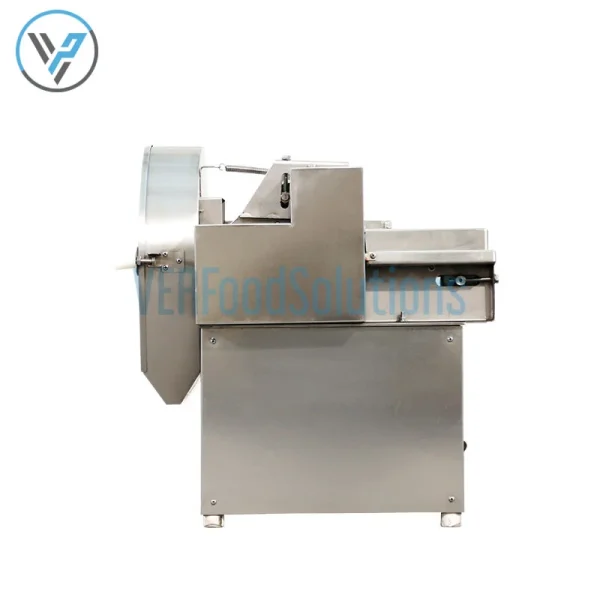
Asparagus Cutting Machine 300 kg/h
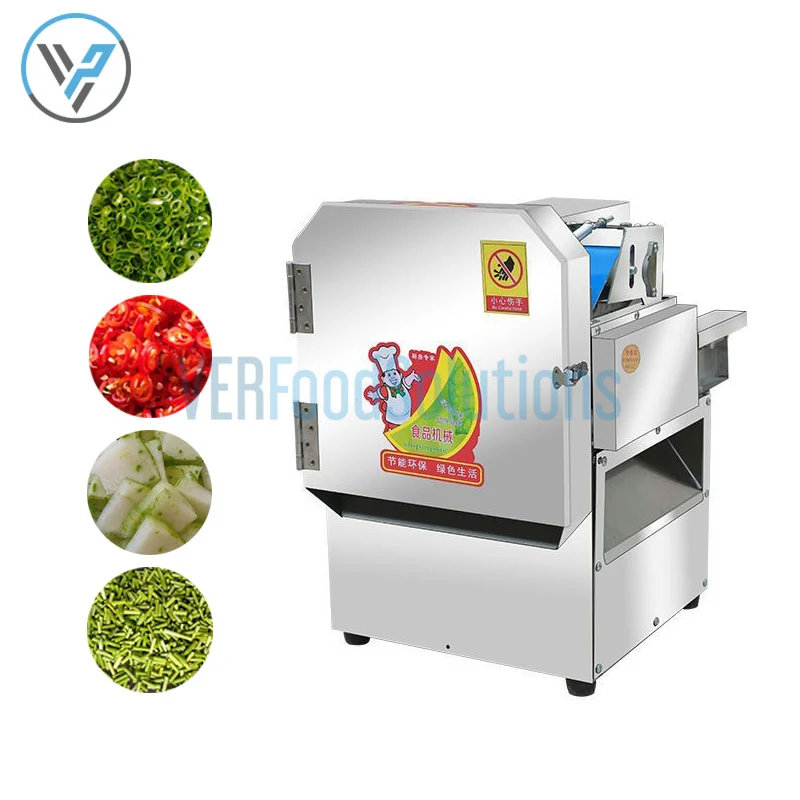
Asparagus is the awkward crop on any cutting line: spears of different lengths and thicknesses, fibrous woody butts, and a snap-point that varies spear by spear. Cut them carelessly and the pack carries woody ends — the single most common retail complaint. An asparagus cutting machine solves the alignment and the length in one pass: spears present butt-first, align against a reference, and blades cut at set positions so every piece in the pack is the length and tenderness the buyer paid for.
How it works
Spears feed onto a carriage or belt that aligns them in a single row, butts against a stop. Cutting runs a guillotine or circular blade assembly across the aligned row at set intervals — one cut severs the woody butt, further cuts divide the spear into pieces of specification length. Designs vary between snap-cutting, which mimics the hand-snap at the natural fibre break, and straight blade cutting at fixed positions; snap-action units score higher on eating quality, fixed blades on throughput. Cut pieces fall to a takeaway belt while butts discharge separately to by-product. Length settings and blade count adjust per pack spec.
Suitable for
Frozen asparagus lines cutting uniform pieces before blanching; canned and jarred asparagus packers needing spears and cuts by grade; fresh-cut processors producing stirred-in lengths for retail; dried and powder producers cutting even pieces for drying; co-operative intake lines consolidating member spears.
Not suitable for
Whole-spear premium packs, which hand-grade better than any machine cuts; mixed-vegetable cutting where a general cutter covers more SKUs; very small volumes where a knife and jig hold the spec; and lines without upstream washing — grit in spears costs blade life and pack cleanliness.
Material & compliance
Frame, aligning fixtures, blades and chutes in SUS304 (EN 1.4301) food-grade finish; blades hardened food-safe stainless with documented change procedure; separate butt discharge; interlocked access to the blade carriage.
Supplied with CE declaration of conformity and DoC on request; material certificate EN 10204 3.1 available for contact parts.
Selection notes
Ask how the machine handles length variance — align-and-cut models need reasonable uniformity, and wildly mixed spear lengths belong in grading first. Confirm the cut catalogue: butt sever, spear segments and piece lengths should each be a setting, not a modification. Get the woody-butt detection story: fixed-position cuts remove a set length, while snap-action cuts follow the fibre — buyers taste the difference, and the price difference follows. Verify throughput on your spear thickness range, since thick autumn spears cut slower than spring thin ones. And check blade access for daily sanitation — asparagus fibre packs blades fast.
When you should not buy this machine: If your asparagus volume is a few hundred bunches a season for whole-spear retail, hand snapping at a trimming table remains the quality answer at trivial cost. And if your real bottleneck is grading and bunching, buy that capacity first — the cutter only speeds the stage that is already fed.
Key specifications
| Parameter | Value |
| Capacity | 150-500 kg/h by spear size (TYPICAL, confirm with factory) |
| Cut lengths | Set per pack spec, 20-100 mm typical (TYPICAL) |
| Cutting | Align-and-cut blade row or snap-action (TYPICAL) |
| Butt handling | Separate discharge |
| Contact material | SUS304 (EN 1.4301) |
| Power supply | 380V/3P/50Hz, 1-2 kW class |
Specification values are industry-typical ranges for this machine class and are not verified against a specific factory datasheet. Replace them with measured factory data before publication.
FAQ
Fixed cut or snap cut — which should we buy?
Snap-action cuts follow the natural fibre break, so pieces eat tender; fixed cuts are faster and simpler but may include fibrous sections from thick spears. Premium frozen and fresh-cut buyers usually justify snap; commodity cans tolerate fixed. Decide by your buyer’s complaint history.
Does it grade spear thickness?
No — alignment assumes a workable range. Run a sizing pass upstream or accept lower throughput on mixed lots. The machine cuts length, not quality, and quality grading stays an inspection-table job.
What happens to the woody butts?
They discharge separately as wet waste — saleable to soup and powder processors who cook them down. Plan the waste path at layout; at line rate the butt stream is a real fraction of intake.
Related equipment
This unit is one stage of a complete processing line. For the full range of cutting and slicing equipment, or to compare this model against the Vegetable Slicing Machine 1200 kg/h, see the complete equipment catalogue. Capacity, material grade and utility requirements can be confirmed through a quote request.
Reviews
There are no reviews yet.