
Broccoli Cutting Machine 1500 kg/h
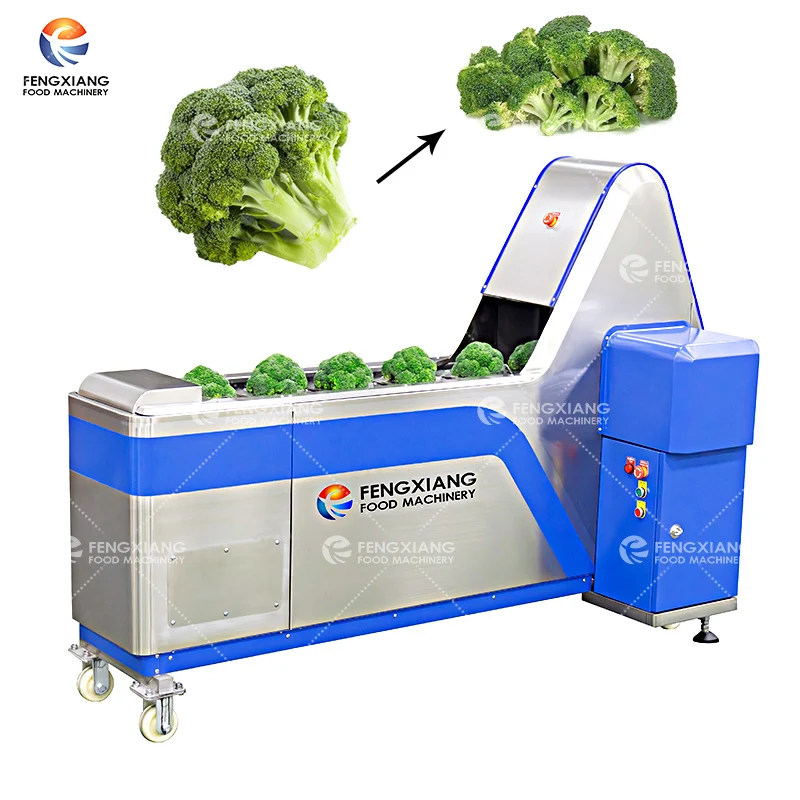
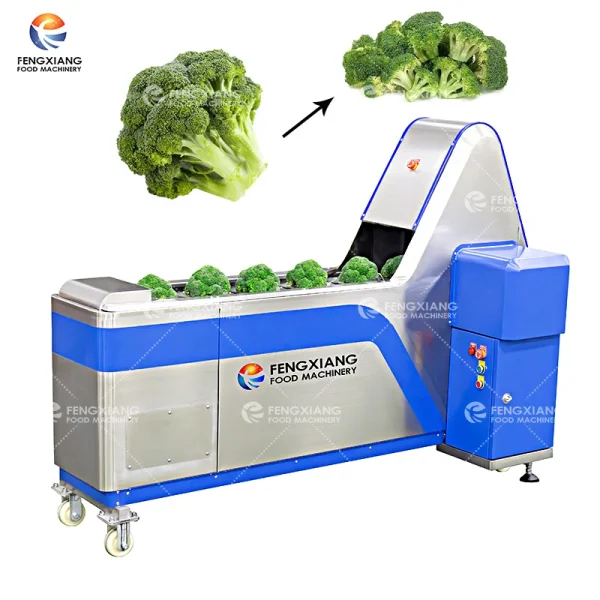
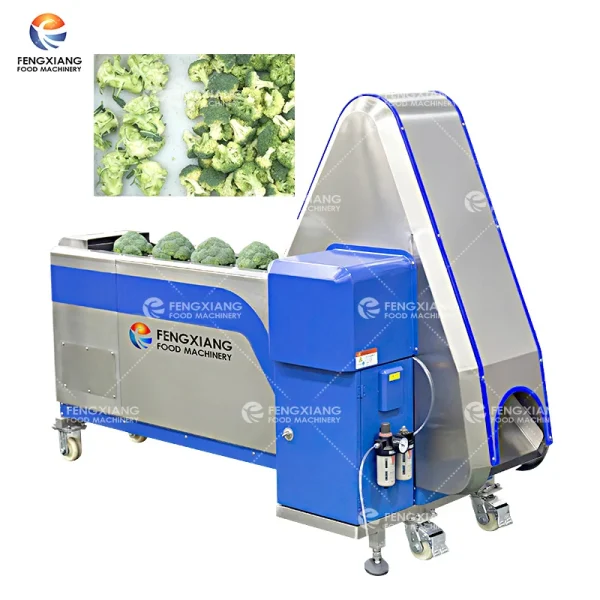
Broccoli refuses to behave like a vegetable with a blade-friendly geometry. It is a tree: a thick trunk fanning into branches that end in fragile bud clusters, and the money is in those clusters. Hack a head with a straight-blade cutter and you shave buds into the waste stream, crack stems and grow the trim bin. Hand-crown work is accurate but slow, and florets cut carelessly shed florets — literally — all the way to the freezer. A broccoli cutting machine cuts with the head’s anatomy instead of against it: heads are centred, divided radially into crown segments along their natural branch lines, and the stems are trimmed and optionally sliced, so what lands on the outfeed is marketable floret, not confetti.
How it works
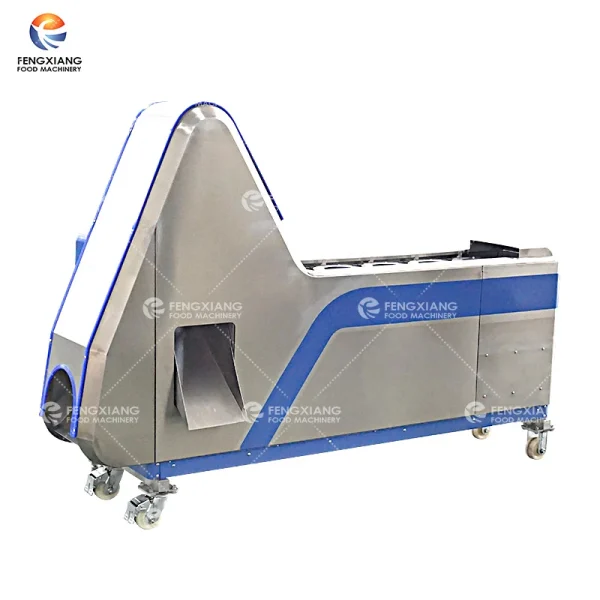
Cored or uncored heads feed crown-down onto a centring station that positions them over a radial knife set. The knives descend or the head rises into the blade field, splitting the head into wedge segments that follow branch structure — typically four to eight cuts depending on head size and target floret size. A separate stem knife trims the butt and, on dual-purpose models, slices the peeled stem for dice or sticks. Florets drop gently onto an outfeed conveyor with an inspection belt alongside; loose buds and fragments are screened off for the trim bin or the purée line. Changeover is a blade count and guide adjustment, not a rebuild.
Suitable for
Fresh-cut processors feeding floret packs and vegetable trays; frozen-vegetable plants cutting ahead of blanching and IQF; food-service suppliers producing stir-fry mixes and restaurant-ready florets; purée and powder operations that want clean first-cut florets and a controlled fragment stream; growers packing their own harvest without a room full of crown cutters.
Not suitable for
Cauliflower without a guide change — its curd structure cuts differently and the knife set wants adjustment; heads with woody or hollow stems straight from stressed fields, which jam centring; volumes under 50 kg a day, where two knives and a board are still the honest answer; and lines that need true diced broccoli, which is a stem job after floret separation, not a single-machine output.
Material & compliance
Cutting chamber, knife sets, chutes, conveyors and frame in SUS304 (EN 1.4301) food-grade finish; blades food-grade stainless with documented sharpening interval; sealed washdown drives; interlocked blade access; tool-free belt removal for sanitation.
Supplied with CE declaration of conformity and DoC on request; material certificate EN 10204 3.1 available for contact parts.
Selection notes
Define floret size before you shop: retail punnets, food-service bags and freezing lines each want a different cut, and the radial knife count is the lever. Ask for the fragment rate at your head size — the share of buds shaved into the trim bin is where yield dies quietly. Check head-size tolerance honestly, since early and late season broccoli differs more than buyers expect; centring that handles one range may not cover both. Confirm the stem output story: if you intend to sell stem dice or sticks, the slicing attachment must be part of the quote, not a promise. And inspect the outfeed transfer, because florets that drop 40 cm onto a belt bruise their buds and brown by the second day.
When you should not buy this machine: If broccoli is a seasonal side crop of a few tonnes, keep the cutting table and hire hands for the peak. And if your product is purée or powder where floret appearance does not sell, a coarser chopping machine at half the price does the work.
Key specifications
| Parameter | Value |
| Capacity | 800-2000 kg/h by head size (TYPICAL, confirm with factory) |
| Head range | 250-800 g heads (TYPICAL) |
| Cut division | 4-8 radial segments per head (TYPICAL) |
| Stem handling | Butt trim, optional slicing (TYPICAL) |
| Contact material | SUS304 (EN 1.4301) |
| Power supply | 380V/3P/50Hz, 2-5 kW class |
Specification values are industry-typical ranges for this machine class and are not verified against a specific factory datasheet. Replace them with measured factory data before publication.
FAQ
Does the machine core the heads first?
Most installations core or trim by hand or a separate coring station ahead of the cutter, though some models integrate a butt-trim. Automatic coring in the same machine exists at the top of the class — confirm what is included rather than assuming, and budget the upstream step if it is not.
Can it also cut cauliflower?
With a guide and knife adjustment, usually yes — cauliflower curd is denser and the cut pattern differs slightly. Ask for a demo with both crops at your sizes; the changeover time is the number that matters if you alternate crops daily.
What happens to the loose bud fragments?
They are screened at the outfeed and collected as trim. Good plants sell trim into purée, soup or powder lines rather than treating it as waste — which is why the fragment rate matters less than knowing where it goes. Confirm the collection arrangement and your trim outlet before sizing the machine.
Related equipment
This unit is one stage of a complete processing line. For the full range of cutting and slicing equipment, or to compare this model against the Vegetable Chopping Machine 1200 kg/h, see the complete equipment catalogue. Capacity, material grade and utility requirements can be confirmed through a quote request.
Reviews
There are no reviews yet.