Ice Glazing Machine 1500 kg/h
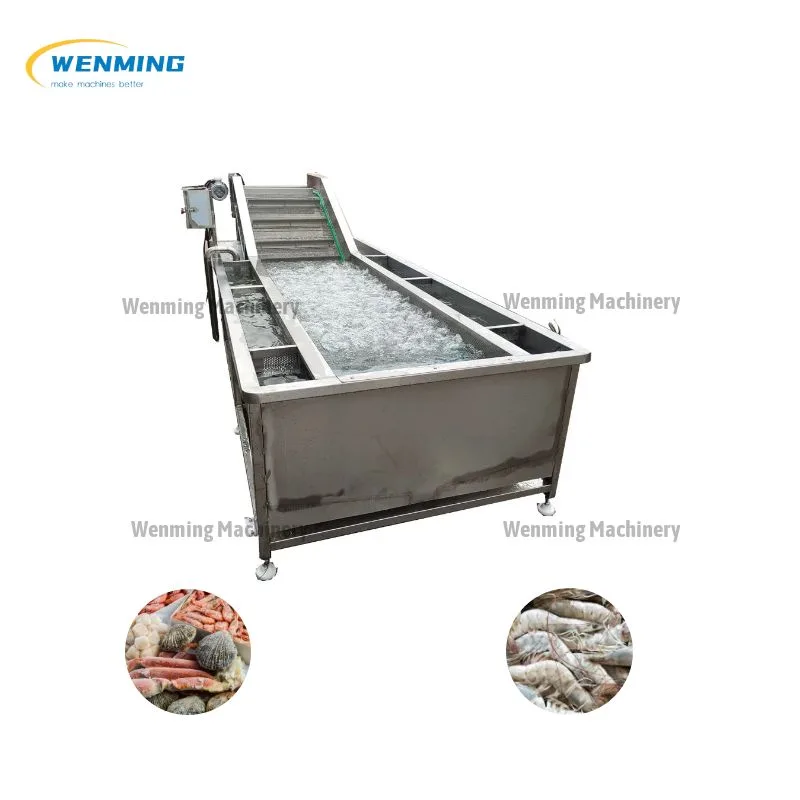
Glazing unit for the step that protects everything a freezer just achieved. IQF product leaves the freezer at minus eighteen degrees with every surface exposed, and an exposed frozen surface loses moisture to the air, oxidises, and turns into freezer burn in weeks. A thin ice glaze covers that surface with the same water that is already there, and the difference in shelf life is measured in months.
How it works
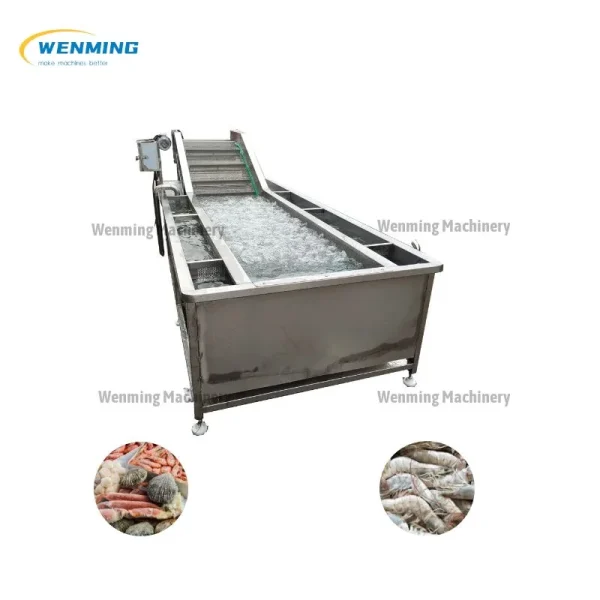
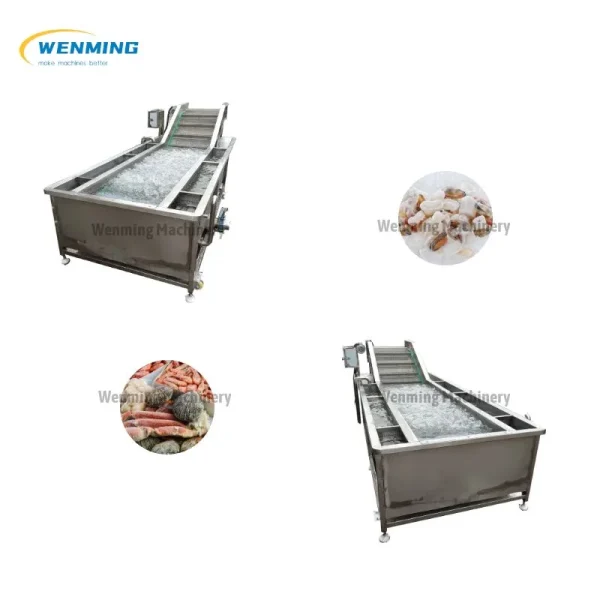
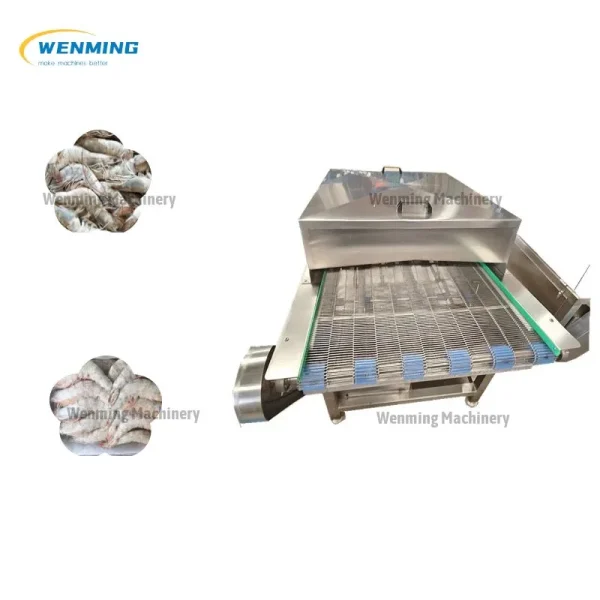
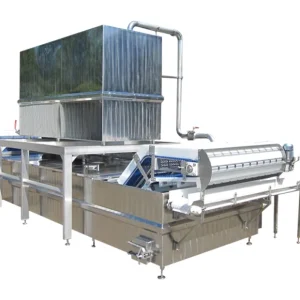
Frozen product enters the glazing section, either through a chilled immersion bath or under a set of spray nozzles applying chilled water. The water freezes onto the product surface as a thin, uniform ice layer; the glazed product discharges onto a conveyor to packing or to a re-freezing section if the glaze needs setting before it leaves. Dwell time is seconds, set by conveyor speed, and pickup is controlled by water temperature, application method and time in the section.
The economics of glazing are unusual and worth stating plainly: the glaze is water, and water is added to the product’s weight. Pickup of a few percent is normal and is accounted for in the product specification, but a machine that applies double the intended pickup is giving away product at every kilo. Conversely, too little glaze and the surface is not protected, which shows up as freezer burn in storage rather than as a problem on the glazing line — the failure arrives late, which is exactly why the pickup has to be measured, not estimated.
Suitable for
IQF fruit and vegetable lines where the product holds in frozen storage or transport; frozen product with a declared shelf life, where glaze integrity is part of that declaration; operations where dehydration and oxidation have been identified as the real shelf-life limit; lines exporting by sea or long haul, where transit time makes glaze a requirement rather than an option; plants needing glaze pickup measured and consistent rather than variable by operator.
Not suitable for
Fresh or unfrozen product, which glazing does not apply to; products that must be sold strictly dry-frozen, where the added water weight is not permitted by the specification; operations without chilled water supply, because the glaze needs cold water to freeze onto the product; anyone wanting to solve a packaging or storage problem with glaze, which protects the surface and does nothing for a bad cold chain.
Material & compliance
Bath, spray bar, conveyor frames and chutes in SUS304 (EN 1.4301); conveyor in a food-grade belt designed for frozen service and clean-out. Water supply chilled, filtered and potable where the product is food, with the filtration before the glaze rather than after. Drainage arranged so glaze water does not pool on the conveyor or in the discharge area, where it refreezes into an ice build-up that jams equipment. Interior cleanable because frozen product debris and ice build-up collect in every corner.
Supplied with CE declaration of conformity and DoC on request; material certificate EN 10204 3.1 available for contact parts.
Selection notes
Ask for glaze pickup as a measured percentage on your product, and ask how it is verified in production — pickup that is claimed but not measured is where this machine class loses money. Check whether the method is immersion or spray against your product’s fragility, because a bath carries more pickup but also more handling. Check the chilled water supply and its capacity, since the water has to be cold before it meets frozen product. Check the ice build-up behaviour on the conveyor and how the machine is cleaned between runs.
When you should not buy this machine: If your product is not frozen when it reaches this machine, glazing does not apply — the glaze freezes onto a frozen surface, and anything else is a wet product leaving the line. And if your product specification forbids added water, the glaze is not an option regardless of the shelf-life argument.
Key specifications
| Parameter | Value |
| Glazing capacity | 500-3000 kg/h by belt width and product (TYPICAL, confirm with factory) |
| Glazing method | Immersion bath or spray, by design |
| Glaze pickup | 2-8 % by product and setting (TYPICAL) |
| Water temperature | 0-4 °C chilled (TYPICAL) |
| Dwell time | Seconds, set by conveyor speed |
| Downstream | Conveyor to packing or re-freezing |
| Contact material | SUS304 (EN 1.4301) |
| Power supply | 380V/3P/50Hz or 415V/3P/50Hz, customizable |
Specification values are industry-typical ranges for this machine class and are not verified against a specific factory datasheet. Replace them with measured factory data before publication.
FAQ
How much water does the glaze actually add?
Commonly a few percent of product weight, set by the machine and the product. That weight is in your specification or it should be — pickup that is not measured is weight given away, and it is invisible on the glazing line itself.
Why does glazed product still get freezer burn?
Either the pickup was too low, the glaze was damaged in handling, or the storage temperature fluctuated. Glaze protects a sealed frozen surface; it does not survive a warm gap in the cold chain, and it does nothing for temperature abuse after packing.
Immersion or spray — which is better?
Immersion gives higher and more even pickup and suits robust product; spray gives lower pickup and gentler handling and suits fragile pieces. The choice follows your product’s fragility and the pickup your specification demands, not the machine’s price.
Related equipment
This unit is one stage of a complete processing line. For the full range of freezing equipment, or to compare this model against the Immersion Freezer 1500 kg/h, see the complete equipment catalogue. Capacity, material grade and utility requirements can be confirmed through a quote request.
Reviews
There are no reviews yet.