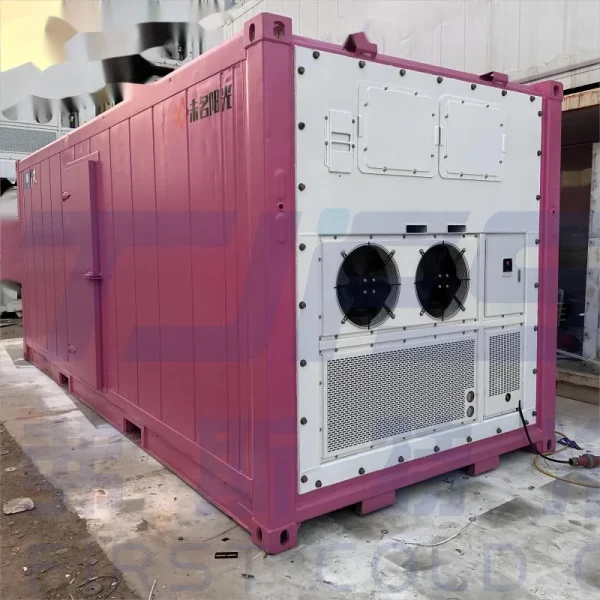
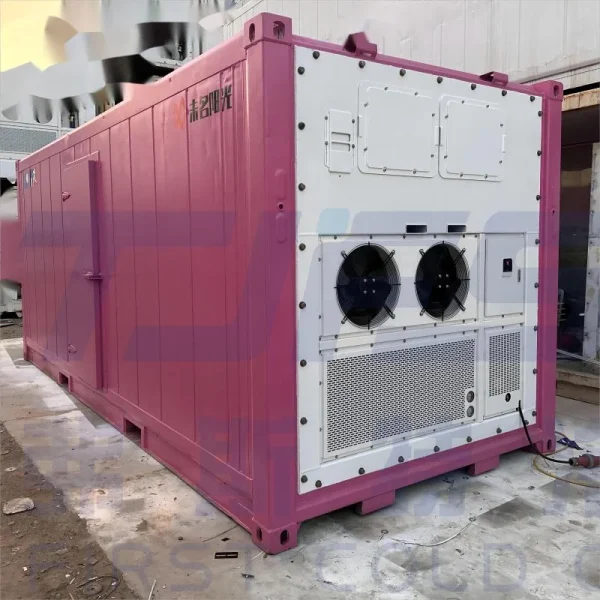
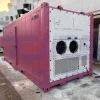
Container Blast Freezer 2 t/h
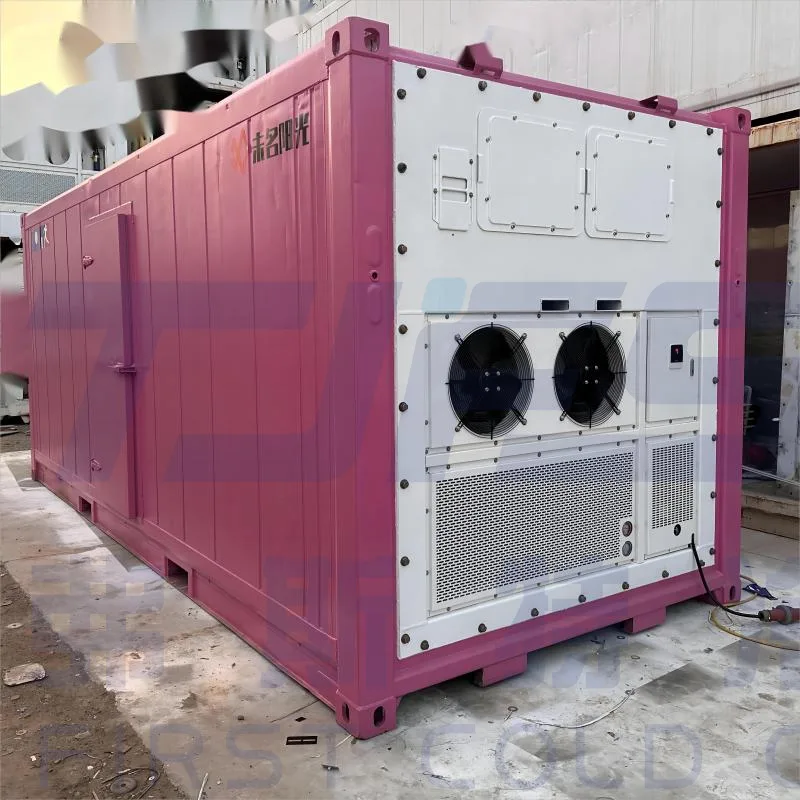
Some freezing problems are buildings. The harvest is in one yard this month and another next; the processing shed has power but no freezer room; the customer’s volume arrives before the construction does. The container blast freezer answers with logistics hardware: a complete blast or IQF freezing tunnel engineered inside a standard 20 or 40-foot container, powered from a plug, freezing at tunnel temperatures from the day it arrives on site. It freezes like a tunnel because it is one — it just does not need to live anywhere.
How it works
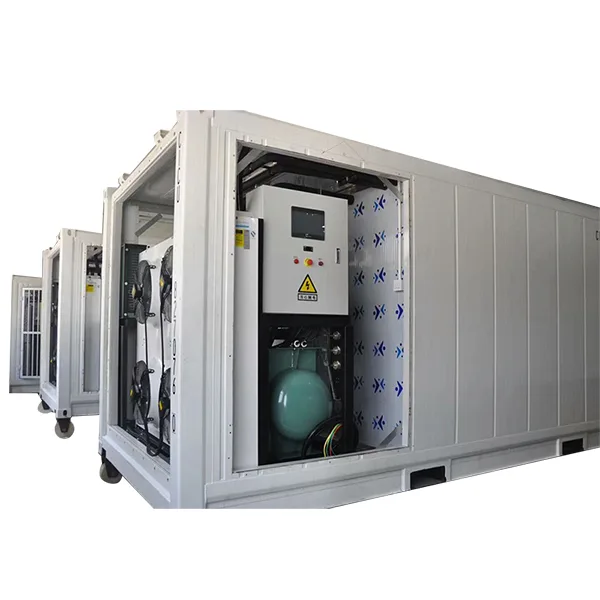
Inside the insulated container shell sits a conveyor — flat belt for trays and packaged product, or a fluidized section for loose berries and dice — through which high-velocity air at -35 °C class washes the product from evaporator coils. Product loads at one end and exits frozen at the other; residence is recipe-set by belt speed, typically 20 to 60 minutes by product and target core. The refrigeration plant is integral: compressor, condenser and controls mounted in the container’s technical section, running from a three-phase supply or a generator. Monitoring records air and product temperature for the cold-chain file, and the whole unit trucks, ships and sites like the box it is.
Suitable for
Seasonal harvest sites freezing berries and vegetables at the source, then relocating the unit; growing processors who need freezing capacity months before a building project lands; co-packers and rental freezing capacity moved between client sites; overload freezing beside an existing line when the main tunnel is full; export-packing operations freezing at the port-side warehouse before container loading.
Not suitable for
Permanent high-volume plants, where a built tunnel or spiral integrates better with lines, hygiene zones and utilities; products needing cryogenic speed; sites without three-phase power or generator capacity for the refrigeration load; and buyers expecting container convenience without container logistics — the unit still needs a truck, a pad and an electrician to site.
Material & compliance
Container shell insulated for freezer duty; internal frame, belt and product zones in SUS304 (EN 1.4301) food-grade finish; integral refrigeration plant with documented duty at the quoted product load; temperature logging and alarm as standard; door and belt-entry design manages frost and air leakage per container practice.
Supplied with CE declaration of conformity and DoC on request; material certificate EN 10204 3.1 available for contact parts; refrigeration performance documentation for the integral plant.
Selection notes
Size on your worst product: the loosest berry you freeze individually sets the belt type, and your densest tray sets the residence — both belong in the quote. Ask for freezing curves at your entry temperature and target core, not capacity headlines. Confirm the utilities: three-phase supply rating, generator option, and what site preparation the container actually needs. Check the frost and defrost strategy for your climate — a container freezing in tropical humidity lives a different life than one in a dry shed. And verify the relocation story: lifting points, transport ties and re-commissioning support, because moving the freezer is the whole point of buying one.
When you should not buy this machine: If your freezing runs in one permanent building at constant volume, build the tunnel — the container’s premium buys mobility you will not use. And if your volumes are small and batch-like, a blast cabinet freezes the same trays without the logistics and the refrigeration plant.
Key specifications
| Parameter | Value |
| Capacity | 1000-3000 kg/h by product and belt type (TYPICAL, confirm with factory) |
| Freezing air | -35 °C class across the belt (TYPICAL) |
| Container | 20 or 40 ft insulated, road and sea transportable |
| Belt | Flat tray belt or fluidized IQF section |
| Power supply | 380V/3P/50Hz, 30-80 kW class integral plant |
| Contact material | SUS304 (EN 1.4301) product zones |
Specification values are industry-typical ranges for this machine class and are not verified against a specific factory datasheet. Replace them with measured factory data before publication.
FAQ
What does siting a container freezer actually need?
A level pad, three-phase power at the rated load, and clearance for airflow and door access — plus someone qualified to connect and commission the refrigeration. The unit arrives as a box; the site checklist is short but real, and the supplier’s commissioning visit closes it.
Can it do true IQF for berries?
With the fluidized belt option, yes — loose berries freeze individually in the air stream the same as in a fixed tunnel. Tray products and packaged portions run the flat belt. State your loosest product in the enquiry; it decides the internal layout.
How does it handle relocation between sites?
Lift by the corner castings, secure per the transport spec, and recommission with a refrigeration check at the new site. Units designed for relocation document all three; ask for the procedure in writing before the first move, not during it.
Related equipment
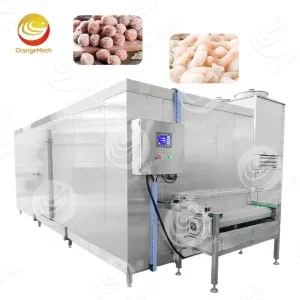
This unit is one stage of a complete processing line. For the full range of freezing equipment, or to compare this model against the Blast Freezer 1000 kg/h, see the complete equipment catalogue. Capacity, material grade and utility requirements can be confirmed through a quote request.
Reviews
There are no reviews yet.