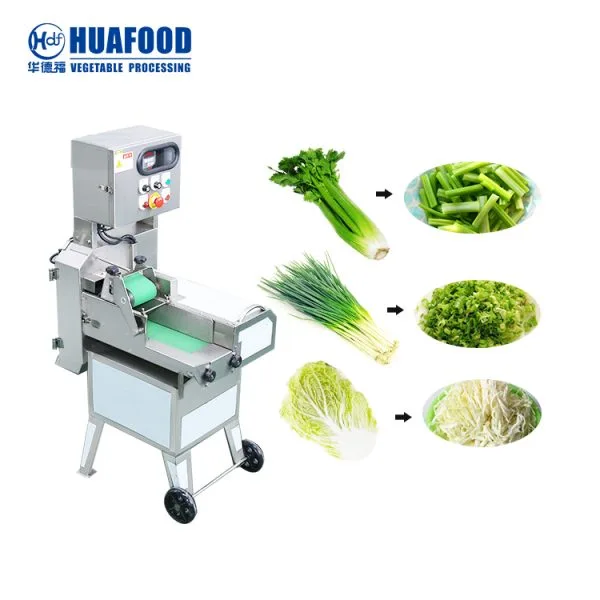
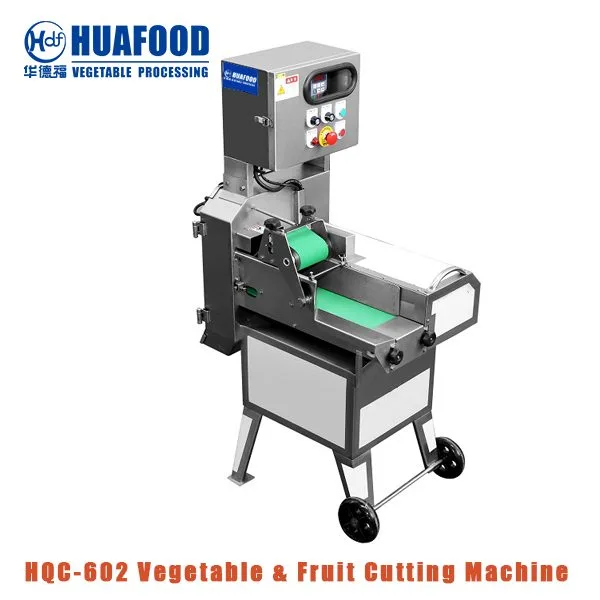

Leek Cutting Machine 400 kg/h
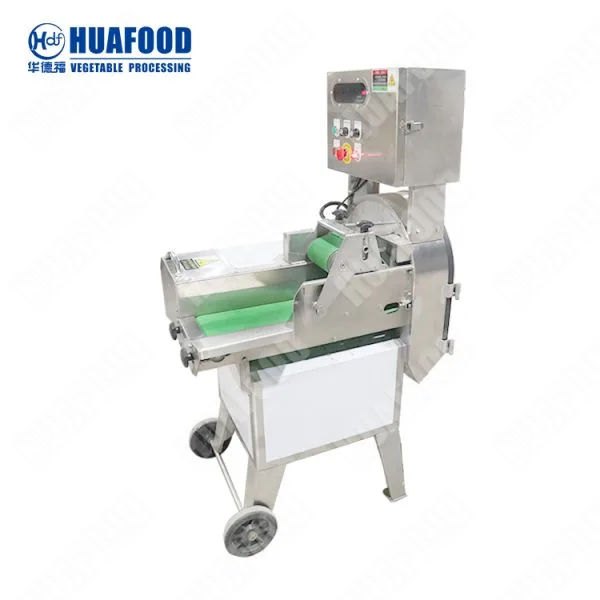
Leek is a cutter’s headache in vegetable form: stalks a metre long, leaf layers wrapped tight enough to hold field grit between them, and a texture that tears ragged under dull or wrong-speed blades. Cut roughly and the rings separate into shreds; miss the grit and it lands in the pack. A leek cutting machine pairs an even feed with a blade running true at matched speed — rings and segments with clean faces at whatever length the pack spec demands, at a rate that keeps washing lines and blanchers fed through leek season’s short window.
How it works
Washed stalks lie on an infeed belt that presents them flat and evenly tensioned to the cutting head. A rotating or reciprocating blade crosses the belt at a speed ratio to the belt feed — that ratio, not blade sharpness alone, sets piece length from thin rings to soup segments. Layer flattening rollers ahead of the blade keep the stacked leaf sheaths from riding up, so the cut passes through all layers at once. Rings drop to a takeaway belt or chute, and second passes can split thick stalks before the main cut. Length changes are a speed setting, not a blade change, for most models.
Suitable for
Frozen leek-ring producers feeding blanching and IQF lines; fresh-cut suppliers packing stir-fry and soup mixes; soup and ready-meal factories processing leek at season peak; dried-vegetable producers cutting even rings for dehydration; wholesale preppers splitting and segmenting for foodservice packs.
Not suitable for
Whole-leek retail packs, which a trim table serves better than any ring cutter; soft-herb cutting, where blade speed that suits leek bruises chives and parsley; operations without upstream washing — the grit between leaf layers is exactly what dulls blades fastest; and plants whose real bottleneck is leek washing rather than cutting.
Material & compliance
Frame, belt, flattening rollers, blades and chutes in SUS304 (EN 1.4301) food-grade finish; blades hardened food-safe stainless with documented change and sharpening procedure; belt tension and tracking guards; interlocked access to the cutting head.
Supplied with CE declaration of conformity and DoC on request; material certificate EN 10204 3.1 available for contact parts.
Selection notes
Cut length range decides the machine: confirm the ratio setting reaches your thinnest ring and longest segment without blade swaps. Ask how the head handles thick, mature winter stalks — flattening roller gap and blade stroke matter more there than peak throughput. Get the wash-coordination story: leek should arrive washed and drained, and a cutting rate the washer cannot feed just moves the bottleneck. Check blade access and sharpening interval against your volume — layered vegetables dull blades faster than diced roots. And if you also cut celery or cabbage, verify the changeover is a speed and belt change, not a rebuild.
When you should not buy this machine: If leek is a few weeks a year in a general vegetable plant, a multipurpose cutter with a leek-capable head covers it. And if your packs are whole or halved leeks, a trimming line — not a ring cutter — is the purchase that matches the product.
Key specifications
| Parameter | Value |
| Capacity | 200-600 kg/h by stalk size (TYPICAL, confirm with factory) |
| Cut lengths | 5-60 mm by belt/blade ratio (TYPICAL) |
| Cutting | Rotating or reciprocating blade over feed belt |
| Stalk range | To 60 mm diameter (TYPICAL) |
| Contact material | SUS304 (EN 1.4301) |
| Power supply | 380V/3P/50Hz, 1-2 kW class |
Specification values are industry-typical ranges for this machine class and are not verified against a specific factory datasheet. Replace them with measured factory data before publication.
FAQ
Does it handle the grit between leaf layers?
The machine cuts; it does not wash. Run leek through a split-and-wash pass first — most leek lines halve stalks before washing precisely to flush the layers — and feed the cutter clean, or blade life and pack hygiene both suffer.
Can it cut celery or cabbage too?
Belt-and-blade heads are inherently multipurpose across stalk and leaf vegetables with speed changes. Confirm the changeover list with the factory and time it on your floor — minutes per change decide whether one machine serves the season or sits idle between crops.
Why do my rings shred instead of cutting clean?
Shredding is a speed-ratio or blade-sharpness symptom, not a machine limit. Blades in layered vegetables need sharpening more often than root duty, and the belt-to-blade ratio must match the stalk firmness of the season. Ask the factory for the setup sheet per crop.
Related equipment
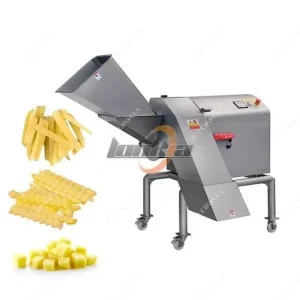
This unit is one stage of a complete processing line. For the full range of cutting and slicing equipment, or to compare this model against the Vegetable Slicing Machine 1200 kg/h, see the complete equipment catalogue. Capacity, material grade and utility requirements can be confirmed through a quote request.

Reviews
There are no reviews yet.