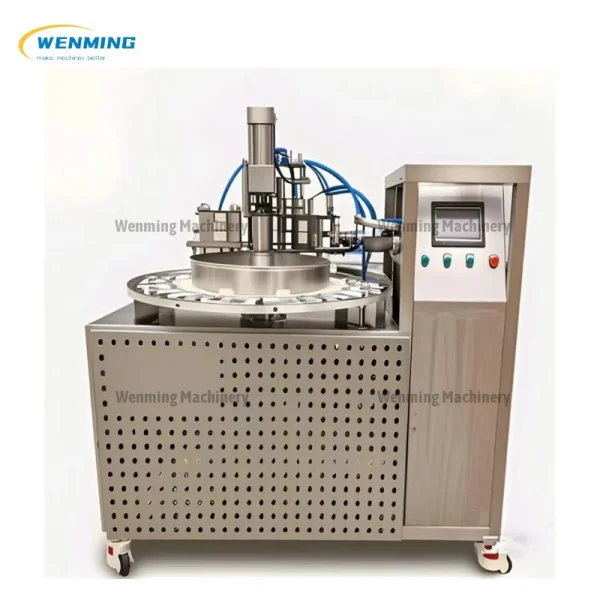
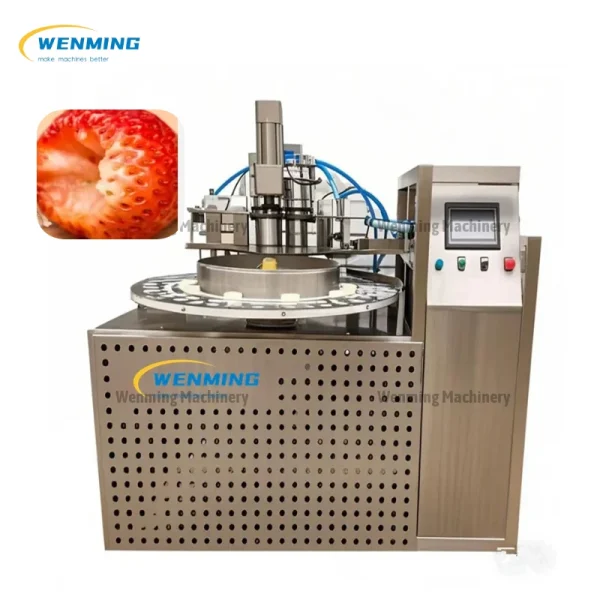
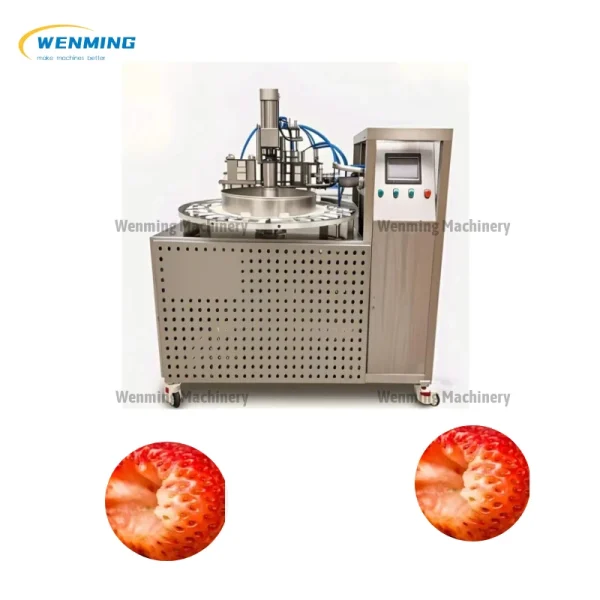
Strawberry Stem Cutting Machine 200 kg/h
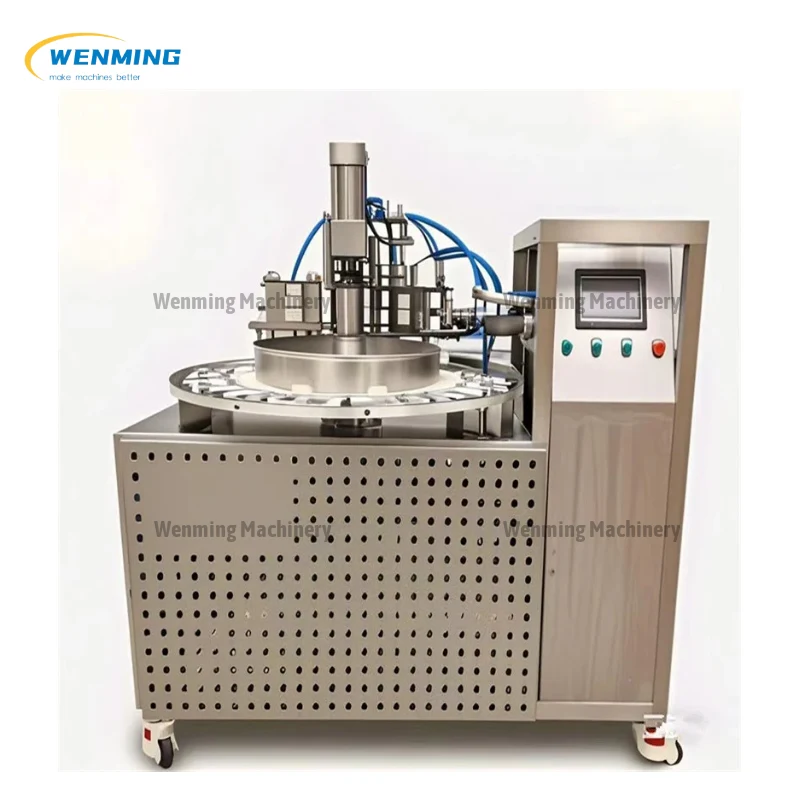
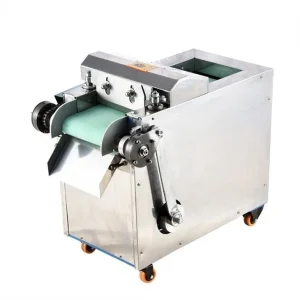
A strawberry loses value from the stem end first. Buyers of frozen whole berries, jam fruit and fresh-cut punnets all specify ‘capped’ fruit — calyx and stem removed clean, shoulders intact, no gouged flesh — and hand-capping at volume costs more per hour than the machine that does it by the hundredweight. The strawberry stem cutting machine holds each berry in a soft cup and shears the green top off with a blade stroke set exactly to the fruit’s shoulder line.
How it works
Graded berries feed crown-up into elastic or silicone cups on an indexed chain or rotary carrier. Each station presents the fruit under a punching blade; the blade descends to a height set for the cup size and shears calyx and stem cleanly away, the cap falling to a waste channel while the capped berry lifts out or drops to an inspection discharge. Cup sizes match the berry grade — one machine serves a size band with changeover cups — and because the cut is a shear against a cup that conforms to the fruit, the berry leaves unmarked. Some models add calyx-verification vision or a manual check position, since one missed cap in a retail punnet travels further than any bruise.
Suitable for
Frozen strawberry lines capping whole fruit before IQF; jam and preserve processors who need capped, whole or halved fruit at feeding rate; fresh-cut punnet operations topping berries for retail; chocolate-covering and candied-fruit producers whose format demands intact capped berries; and any packer currently paying a table of hand-cappers per kilo and ready to redeploy them to inspection instead.
Not suitable for
Berries destined for puree, pulp or juice — capping intact fruit for a crusher is paid-for work nobody needs; mixed-size ungraded fruit, because cup geometry punishes out-of-band berries; soft over-ripe fruit that slumps in the cup; and micro-volumes, where a good paring knife and a seated capper remain the honest setup.
Material & compliance
Frame, cups, blades and discharge in SUS304 (EN 1.4301) with food-grade silicone or elastic cup inserts; blades food-grade and quick-change, since cap height is adjusted per grade; washdown design that sheds leaf and cap debris from the cup track.
Supplied with CE declaration of conformity and DoC on request; material certificate EN 10204 3.1 available for contact parts.
Selection notes
Ask for a capping trial on your own berries at your grade — variety, firmness and size band decide the unmarked-berry rate, and the trial is the only honest quotation. Ask what the miss rate is — caps missed or flesh nicked — on the trial sample, and whether verification is included. Check cup sets and changeover time across your size range. Ask how the machine handles rain-split or soft fruit honestly; a machine that only works on showroom berries will disappoint in June. Price blade and cup consumables up front.
When you should not buy this machine: If your strawberries go to the blender, sort the caps out after crushing and keep the money. And if your daily volume runs under twenty kilos, hand-capping remains cheaper than machinery — the purchase pays at throughput, not at craft.
Key specifications
| Parameter | Value |
| Capacity | 150-400 kg/h by carrier width (TYPICAL, confirm with factory) |
| Berry size band | Grade-specific cups, changeover set |
| Cut | Calyx + stem shear at shoulder line |
| Unmarked rate | ≥90% on graded fruit per trial (TYPICAL) |
| Verification | Vision or manual check station option |
| Contact material | SUS304 (EN 1.4301), food-grade cups |
| Power supply | 220-380V, 0.75-1.5 kW class |
Specification values are industry-typical ranges for this machine class and are not verified against a specific factory datasheet. Replace them with measured factory data before publication.
FAQ
Will it damage soft or rain-split berries?
Soft berries slump in the cup and cap badly — grading upstream is part of the machine’s contract, not an optional extra. Firm, graded fruit caps clean; the trial on your own fruit is where this becomes a number instead of a hope.
Does it remove the stem completely?
The shear takes calyx and the short stem in one cut at the shoulder line. Long-stemmed varieties may want a height adjustment or a second pass — state your variety at quotation and let the trial answer it.
What is the honest capacity?
Trials on graded fruit at your size band give the real figure; brochure numbers assume perfect fruit at ideal feed. Plan inspection labour behind the machine regardless — an uncapped berry in a punnet costs more goodwill than the labour ever will.
Related equipment
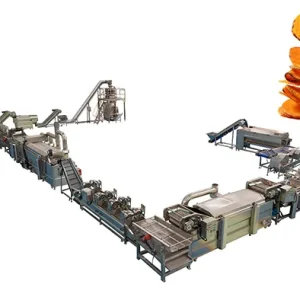
This unit is one stage of a complete processing line. For the full range of cutting and slicing equipment, or to compare this model against the Vegetable Trimming Machine 1500 kg/h, see the complete equipment catalogue. Capacity, material grade and utility requirements can be confirmed through a quote request.
Reviews
There are no reviews yet.