Kimchi Fermentation Tank 2000 L
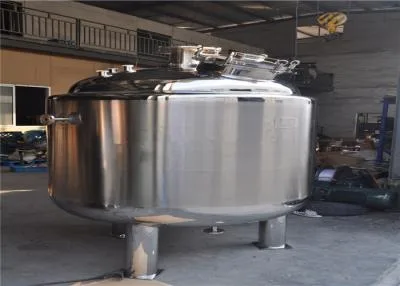
Kimchi is a controlled spoilage, and control is the whole craft. In the traditional jar, fermentation runs on whatever temperature the room gives it: sour in summer, slow in winter, different every batch. A fermentation tank fixes the one variable that governs everything — temperature — and with it fixes the acidity curve, the crunch retention and the flavour the brand is sold on. It is less a cooking machine than a climate chamber for bacteria you want.
How it works
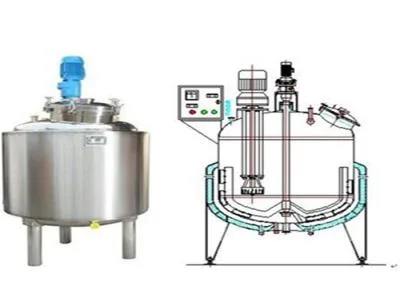
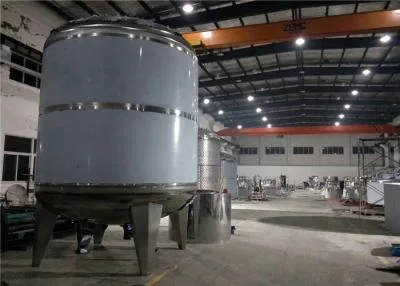
Salted, seasoned vegetable is packed into the vessel — a jacketed stainless tank with a sealed or water-sealed lid that lets CO2 out and keeps air and contaminants out. A jacket circulates chilled or warmed water to hold the vessel’s contents at the recipe’s temperature curve: cool early fermentation, a controlled rise or hold through peak acid production, then chilling to slow the culture down at the target acidity. The lid’s airlock vents fermentation gas; some tanks add a small headspace purge. Temperature is logged continuously, because the log is the batch record — when a buyer audits your process or a batch tastes wrong, the temperature history is the first document anyone opens. At target acidity the tank discharges to packing, chilled or direct.
Suitable for
Kimchi production at industrial scale, where batch-to-batch consistency is a contract requirement; pickled and fermented vegetable products — paocai, sauerkraut, fermented greens — needing the same temperature discipline; producers upgrading from crock or open-vat fermentation, where seasonality and variance are the growth ceiling; export-oriented lines, where a fermentation log supports food-safety documentation.
Not suitable for
Products whose identity is wild fermentation — some traditional markets want the variance; operations without chilling capacity, because temperature control implies a cold water source at minimum; very small artisan volumes, where crocks and cellars remain honest economics; anyone expecting the tank to make the recipe — it holds the environment; salt level, packing density and starter culture are still process decisions.
Material & compliance
Vessel, jacket, lid and discharge valve in SUS304 (EN 1.4301), with SUS316L (EN 1.4404) specified where high-salt or high-acid brine makes pitting the concern — fermented vegetable brine is exactly that. Interior finish smooth and drainable; lid with airlock or water seal designed for CO2 venting. Instrumentation: temperature probe, logging, optional acidity sampling port. Cleaning-in-place provision strongly recommended, since fermentation residue in a badly drained vessel is the fastest way to infect every future batch.
Supplied with CE declaration of conformity and DoC on request; material certificate EN 10204 3.1 available for contact parts.
Selection notes
Ask what temperature range the jacket system actually holds across seasons, with your ambient — cooling capacity in a hot summer plant is the spec that matters, not the number on the panel. Ask how temperature is logged and exported; the log is your batch record. Check the lid seal and venting design, because pressure from active fermentation is real. Check drainability and CIP honestly — open the drain yourself. Check vessel size against your batch rhythm: one tank per batch in steady rotation, or your packing line waits.
When you should not buy this machine: If your product sells on handmade character, industrial consistency may cost the very variance your customers pay for — know which product you are making. And if you cannot guarantee chilled water or refrigeration for the jacket, buy a well-made non-jacketed vat instead; a temperature control you cannot deliver is worse than one you never promised.
Key specifications
| Parameter | Value |
| Working volume | 500-5000 L by model (TYPICAL, confirm with factory) |
| Temperature control | Jacketed, chilled/warmed water circulation |
| Temperature range | 0-30 °C hold, profile programmable (TYPICAL) |
| Lid | Sealed with airlock or water-seal CO2 vent |
| Logging | Continuous temperature record, exportable (TYPICAL) |
| Contact material | SUS304 (EN 1.4301); SUS316L for high-salt brine |
| Cleaning | Drainable design; CIP provision |
| Power supply | 380V/3P/50Hz or 415V/3P/50Hz, customizable |
Specification values are industry-typical ranges for this machine class and are not verified against a specific factory datasheet. Replace them with measured factory data before publication.
FAQ
Why does temperature control matter so much in kimchi?
Because lactic-acid bacteria run on temperature. The same recipe ferments to different acidity, different crunch and different flavour at 5 °C versus 20 °C. Controlling temperature is the difference between a product and a gamble — and the temperature log is the record that proves which one you made.
Can one tank run kimchi and other fermented vegetables?
Yes, with cleaning between products and recipe changes for salt level and temperature curve. The tank is a climate chamber; the culture and recipe are process decisions.
How is CO2 handled?
Through the lid’s airlock or water seal, which vents fermentation gas while blocking air and contaminants. Active ferments produce real gas volume, so the venting design is a specification item, not a detail — check it at purchase.
Related equipment
This unit is one stage of a complete processing line. For the full range of cooking and blanching equipment, or to compare this model against the Jacketed Cooking Kettle 500 L, see the complete equipment catalogue. Capacity, material grade and utility requirements can be confirmed through a quote request.

Reviews
There are no reviews yet.