Vibrating Feeder 3 t/h
Nobody buys a vibrating feeder for itself; they buy it because the grader downstream is starved on the left, swamped on the right, and quoting its datasheet capacity to nobody. Product arriving in a dump-fed heap cannot be inspected, sorted or graded — it must be spread into one even, metered layer first, and the vibrating feeder is the machine that turns a hopper drop into a traffic flow every downstream machine can actually use.
How it works
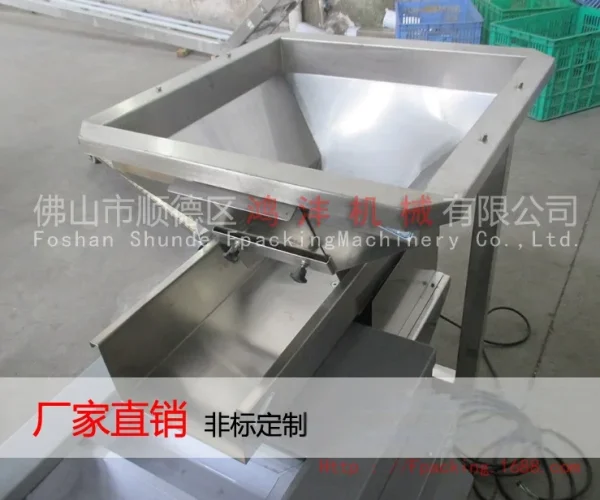
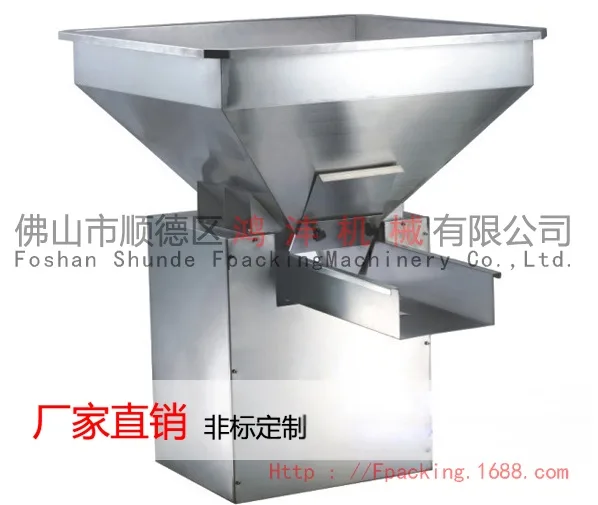
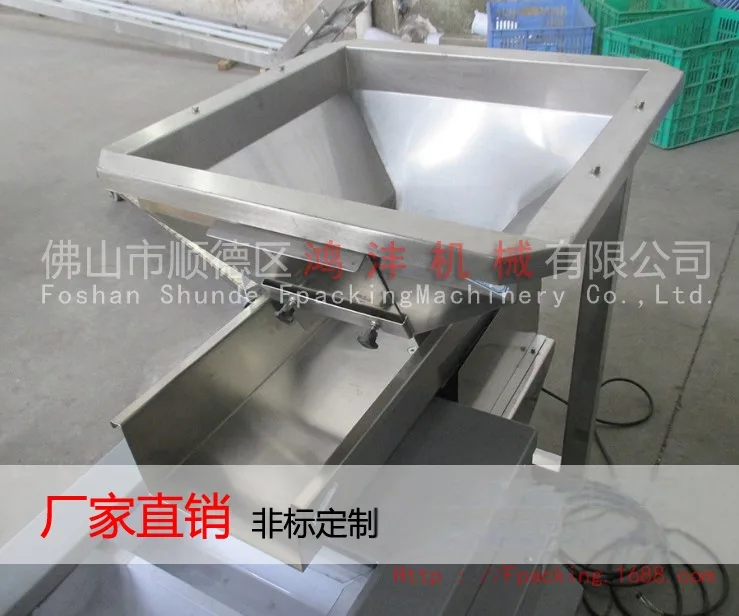
Product discharges from a hopper or bin onto a trough or pan driven by electromagnetic coils or eccentric motor drives. The vibration — tuned amplitude and frequency, angled to throw product forward in micro-hops — meters material along the pan while spreading it across the full working width; optional stepped or perforated deck sections pre-screen fines and drop them through before the main flow leaves the pan. Flow rate is set by amplitude or by a gate at the hopper interface, and because the drive responds instantly, a feeder pairs naturally with level sensors or checkweighers downstream: when the sorter’s infeed thins, the feeder opens up; when it floods, the feeder throttles back. Linear pans handle delicate berries; tubular or enclosed pans handle dusty dehydrated product.
Suitable for
Feeding optical sorters and graders that require single-layer presentation to hit their rated accuracy; levelling flow into washing, waxing and inspection lines after dump hoppers; pre-screening fines from dehydrated vegetables and snack products ahead of packing; dosing product onto belts, elevators and processing vessels at a controlled rate; and any line where operators currently stand at a hopper gate adjusting flow by hand.
Not suitable for
Products that stick, cake or aerate unpredictably — wet pomace and sticky pulps bridge and smear on a vibrating pan; crushing or conveying across rooms, which belong to belts and elevators; precise batching by weight, where a weigher does the metering and the feeder merely assists; and washdown-wet environments without the correct IP-rated drive, because water kills cheap coils fast.
Material & compliance
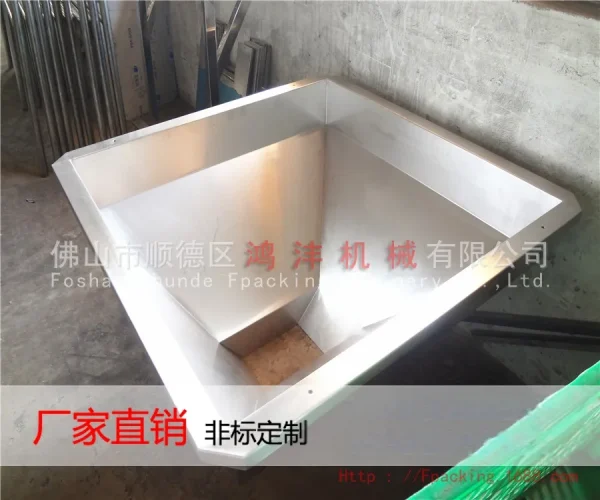
Pan, deck and contact surfaces in SUS304 (EN 1.4301); drives and coils sealed to the environment the pan actually lives in — dusty dehydrated halls and washdown zones are different machines; perforated decks food-grade with rolled edges. Amplitude control panel with emergency stop and interlock to downstream machine stop states.
Supplied with CE declaration of conformity and DoC on request; material certificate EN 10204 3.1 available for contact parts.
Selection notes
Ask for pan width and layer-depth figures at your product and rate — single-layer presentation is the whole point, and a pan too narrow sells the downstream sorter short. Ask which drive suits your duty: electromagnetic for fine dosing and dry product, motor-driven for heavy wet loads. Check the deck options — solid, perforated, stepped — against your pre-screening need. Confirm IP rating and insulation class for your hall, and ask what spare drive parts cost and how fast they arrive. Ask how the feeder syncs with downstream sensors, because the automation value lives in that handshake.
When you should not buy this machine: If your line already meters gently from a gated hopper and the downstream machine is satisfied, skip the feeder. And if your problem is really upstream surging — a bin that ratholes or floods — fix the bin and the feeder becomes a nice-to-have, not a cure.
Key specifications
| Parameter | Value |
| Capacity | 0.5-10 t/h by pan size (TYPICAL, confirm with factory) |
| Drive | Electromagnetic or eccentric motor, variable |
| Pan width | 400-1600 mm by model |
| Deck | Solid / perforated / stepped options |
| Flow control | Amplitude + hopper gate, sensor-sync capable |
| Contact material | SUS304 (EN 1.4301), food-grade decks |
| Power supply | 220-380V, 0.2-1.5 kW class |
Specification values are industry-typical ranges for this machine class and are not verified against a specific factory datasheet. Replace them with measured factory data before publication.
FAQ
Electromagnetic or motor-driven — which do I need?
Electromagnetic drives modulate finely and suit dry, light product where dosing precision matters; motor drives push heavier, wetter loads with fewer electronics. If your product is dusty dehydrated dice, either works — ask the factory which spare philosophy your region supports.
Does the feeder really improve sorter accuracy?
It does, and measurably: optical sorters quote their accuracy at single-layer presentation, and a heap-fed sorter delivers a fraction of it. The feeder is usually the cheapest upgrade that makes an existing expensive machine perform to its name.
Can it pre-screen fines at the same time?
Yes — perforated or stepped decks drop fines through before the main flow exits, which is a common pairing ahead of packing lines. Specify the aperture against your fines definition, and remember the under-pan needs a collection spout or it becomes a cleaning chore.
Related equipment
This unit is one stage of a complete processing line. For the full range of sorting and grading equipment, or to compare this model against the Bucket Elevator 3 m Discharge Height, see the complete equipment catalogue. Capacity, material grade and utility requirements can be confirmed through a quote request.
Reviews
There are no reviews yet.