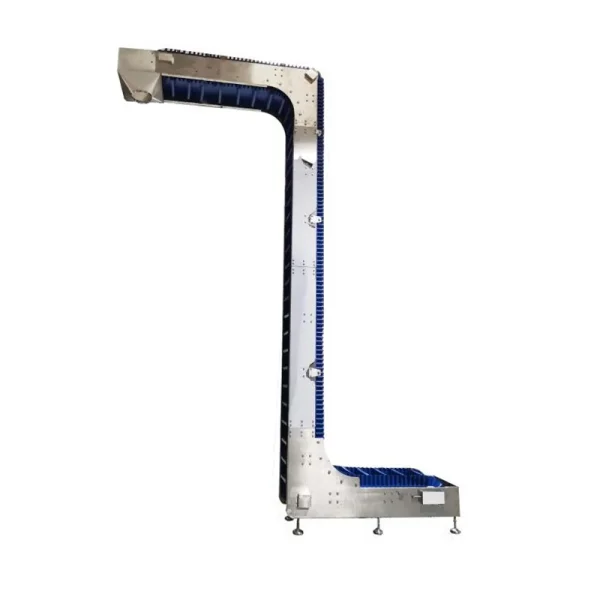
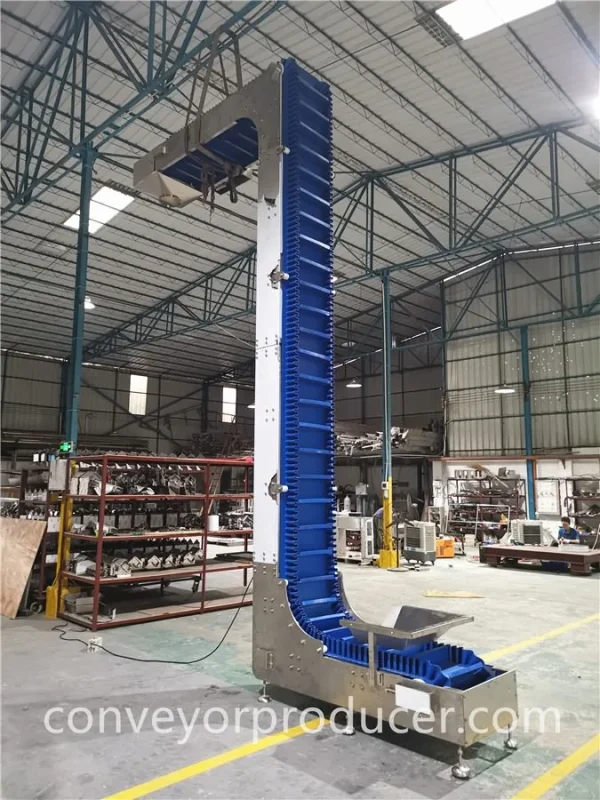
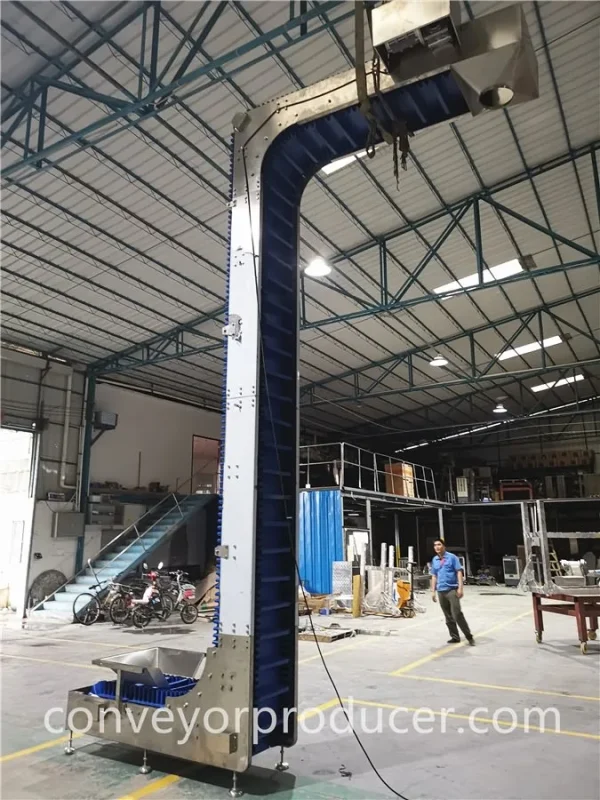
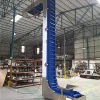
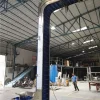
Bucket Elevator 3 m Discharge Height
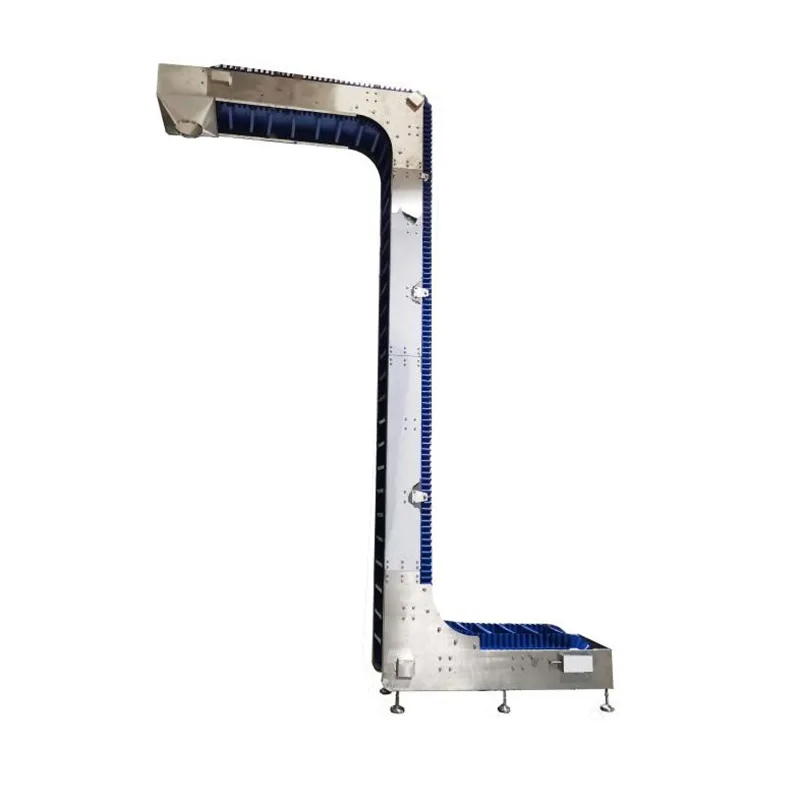
Every processing line has the same problem somewhere: the product is on the floor and the machine is at chest height, and the distance between them is where bruising, spills and back injuries live. A bucket elevator is the boring machine that solves it — a chain of small food-grade buckets scooping product at the bottom, carrying it vertical, and tipping it out at the top. It lifts without dropping, meters without asking, and earns its floor space every shift.
How it works
Buckets are mounted at close pitch on a stainless chain or belt running in a C-shape: horizontal at the bottom to scoop or receive product from a washer, sorter or floor hopper, vertical up the frame, horizontal again at the head to discharge over the lip of the next machine. Because buckets stay upright through the corner, product is never thrown — it is carried. Speed is slow by design; gentleness is the specification. Optional vibratory or rotary feeding at the inload point spreads product one layer deep so each bucket takes a measured share. At the head, buckets invert and empty by gravity, and a brush or scraper station keeps them clean on the return run.
Suitable for
Feeding washers, graders, cutters and blanchers from floor level; lifting washed product with carry-out water drainage slots in the bucket; transferring cut or delicate product — strawberry, tomato, leafy pieces — where an incline conveyor would roll or bruise; any layout where height, not distance, is the obstacle.
Not suitable for
Long horizontal distances, where a belt conveyor is cheaper per metre — elevators lift, they do not ferry; dry powders and small grains, which standard deep buckets handle but a purpose flour-duty design serves better; product that cakes or smears, where bucket release and cleanout become the limiting design problem; sites that cannot tolerate the footprint of the return leg.
Material & compliance
Frame, chain, head and tail housings in SUS304 (EN 1.4301); buckets in food-grade PP or stainless, tool-free removable; chain guides food-grade polymer. Drive and idling guarded; tensioning arrangement accessible for adjustment. Every surface product can touch must drain and open, because a bucket elevator that cannot be hosed down becomes a contamination reservoir in a wet line.
Supplied with CE declaration of conformity and DoC on request; material certificate EN 10204 3.1 available for contact parts.
Selection notes
Ask for the capacity at your product’s bulk density, not a theoretical volume — buckets fill differently with carrot dice than with spinach leaves. Ask how buckets release product and how they are cleaned; removable buckets beat fixed ones in any washdown regime. Check the corner radius — tight corners crack lettuce, wide corners bruise nothing but your floor plan. Confirm discharge height and the matching infeed height of the machine it feeds, in writing; a 200 mm mismatch at site is a steelWORK change order.
When you should not buy this machine: If the transfer is mostly horizontal, a plain inclined belt with flights is cheaper and just as gentle at low lift. And if your product is free-flowing dry stock, a simple spout or vibrating feeder does the same job without moving parts at height.
Key specifications
| Parameter | Value |
| Lift height | 2-6 m by model (TYPICAL, confirm with factory) |
| Capacity | 1-5 m³/h by bucket size and pitch |
| Bucket pitch | Close-pitch for gentle transfer |
| Buckets | Food-grade PP / stainless, removable |
| Chain | Stainless, with polymer guides |
| Frame | SUS304 (EN 1.4301), washdown |
| Power supply | 380V/3P/50Hz, 0.75-2.2 kW class |
Specification values are industry-typical ranges for this machine class and are not verified against a specific factory datasheet. Replace them with measured factory data before publication.
FAQ
Bucket elevator or incline conveyor — which do I need?
Lift over distance: bucket elevator. Distance over lift with gentle product: incline belt. Above roughly 30 degrees with delicate product, belts roll product back and buckets carry it — that is the crossover most lines meet.
Do buckets damage soft fruit?
Far less than dropping or rolling. Buckets scoop and carry; the risk points are the infeed scoop and the discharge lip, both tunable with liner and speed. Trial with your product at line speed before accepting the machine.
How is cleaning handled?
Look for tool-free removable buckets, open return run, and access to the tail housing where product residue collects. In wet lines the elevator is cleaned daily, so cleanability is a purchase criterion, not a courtesy feature.
Related equipment
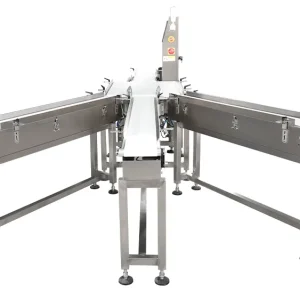
This unit is one stage of a complete processing line. For the full range of sorting and grading equipment, or to compare this model against the Inspection and Sorting Conveyor 1500 kg/h, see the complete equipment catalogue. Capacity, material grade and utility requirements can be confirmed through a quote request.
Reviews
There are no reviews yet.