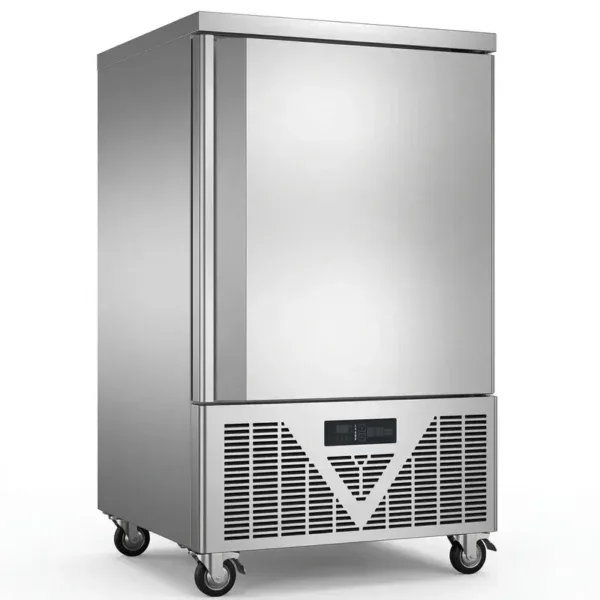
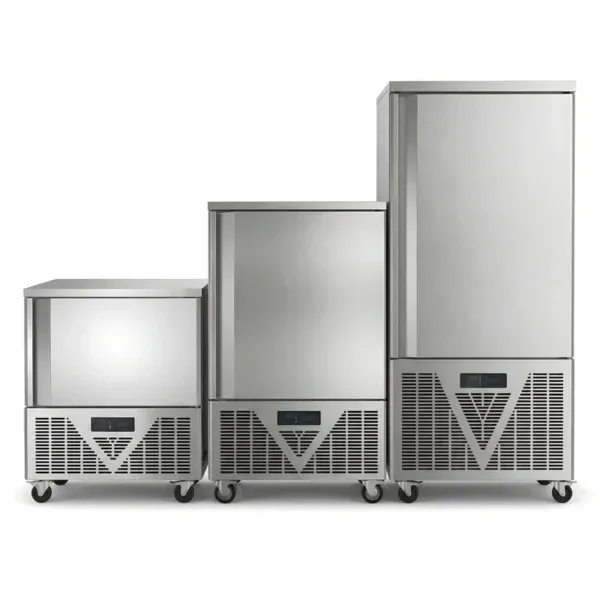
Blast Chiller Freezer 100 kg/h
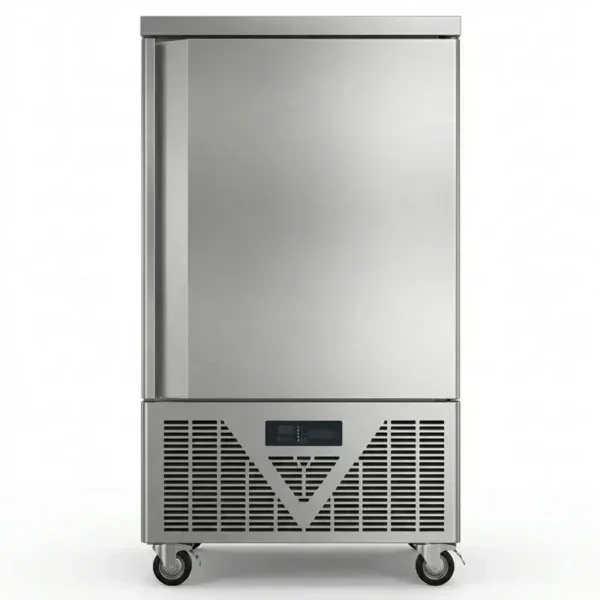
Cooked vegetables, blanched packs and cut fruit do not die from cooking — they die from the two hours afterwards, when they sit warm in the growth zone while someone waits for a cold room to reach them. A blast chiller freezer attacks that window directly: high-velocity refrigerated air across shallow pans pulls product core temperature from 70 °C to below 3 °C in 90 minutes, or continues to -18 °C when the plan is frozen storage. It is the difference between a documented HACCP curve and a hopeful one.
How it works
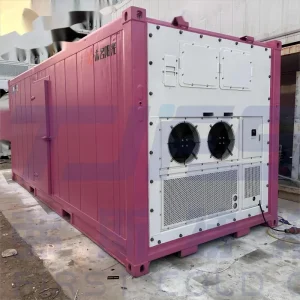
Product in shallow pans or GN trays loads onto trolley guides inside an insulated cabinet. A refrigeration coil and high-volume evaporator fans wash the product in a continuous crossflow of cold air — the air speed, not just the temperature, is what makes it a blast machine, because moving air strips the boundary layer that lets slow cabinets coast. A probe goes into a test product’s core; the controller holds fan speed and refrigerant flow until the probe crosses the target, then drops to holding mode automatically. Chill cycles end near +3 °C, freeze cycles run on to -18 °C and cut off. Cycle data — times, temperatures, product name if typed in — stores in the controller for food-safety records, and some models print or export it.
Suitable for
Central kitchens and ready-meal plants chilling cooked vegetable dishes and sauces through the danger zone on a documented cycle; cut-fruit and salad packers pulling fresh product to pack temperature before tray sealing; small freezing operations — herbs, berries, blanched vegetables in trays — whose daily volume fits a cabinet and never justified a tunnel; restaurant groups and cloud kitchens needing to hold prepared components safely across service gaps; pilot plants and product development kitchens testing frozen formulas before committing to line-scale freezing.
Not suitable for
True IQF on loose product — a cabinet freezes trays, not single berries, and pieces in a pan weld into a block; high-volume continuous lines, where a cabinet’s batch rhythm becomes the bottleneck; bulk product in deep containers, because core probes and air wash cannot reach the centre of a full bin; and buyers without three-phase power or ventilation for heat rejection — a blast cabinet moves serious heat into the room it stands in.
Material & compliance
Cabinet, interior, pans and guides in SUS304 (EN 1.4301) with food-grade door gaskets; controller with probe logging and alarm history as standard, because the paper trail is half the purchase. Door heaters and night curtains optional in humid sites where coils ice. Condensate management designed for washdown.
Supplied with CE declaration of conformity and DoC on request; material certificate EN 10204 3.1 available for contact parts.
Selection notes
Ask for the chill curve, not the brochure claim — the honest question is how long 70-to-3 °C takes on your product, your pan depth, your load weight, and request the test in writing. Ask what the capacity assumes: shallow layers or full trolleys, because the numbers halve with pan depth. Check the probe count and whether cycles log automatically or need an operator to press record. Check heat rejection — the kitchen pays for that heat twice. Confirm service support for the refrigeration circuit in your region; a blast cabinet is a refrigeration appliance first, and a distant dealer is a long downtime.
When you should not buy this machine: If your volume has reached more than a few hundred kilos a day of freezing, buy the tunnel — a stack of cabinets is the expensive way to fake a line. And if your product only needs holding at 0-4 °C, a proper cold room with airflow does that job for less; the blast machine earns its price on speed through the danger zone, not on storage.
Key specifications
| Parameter | Value |
| Capacity | 50-200 kg per batch by model (TYPICAL, confirm with factory) |
| Chill cycle | 70 to +3 °C in ≤90 min on tested load (TYPICAL) |
| Freeze cycle | To -18 °C core in 3-4 h (TYPICAL) |
| Cabinet | Reach-in, 20-40 GN 1/1 pan trolley capacity |
| Airflow | High-velocity evaporator fans, crossflow wash |
| Controls | Core probe, auto cycle cut-off, data log/export |
| Contact material | SUS304 (EN 1.4301) |
| Power supply | 380V/3P/50Hz, 2-8 kW class |
Specification values are industry-typical ranges for this machine class and are not verified against a specific factory datasheet. Replace them with measured factory data before publication.
FAQ
Can it freeze loose berries individually?
No — in a pan they freeze into the shape of the pan. Spread berries in a single layer on trays and you approach IQF quality, but the machine’s honest format is trays and pans. For genuine single-quick-freeze at volume, the IQF tunnel in this catalogue is the right machine.
What is the difference between a blast chiller and a blast freezer?
The cycle end point and dwell. A chiller stops near +3 °C to take product straight to chilled holding; a freezer continues to -18 °C core. One machine does both by cycle selection, which is why they ship as one product — pick the cycle per product, not per kitchen.
Does the documentation really matter for certification?
Yes — HACCP auditors ask how cooked product crossed 60-to-10 °C and want times. A controller that logs each cycle turns that audit from reconstruction to printout, and on two failed audits most buyers agree the logger justified the machine by itself.
Related equipment
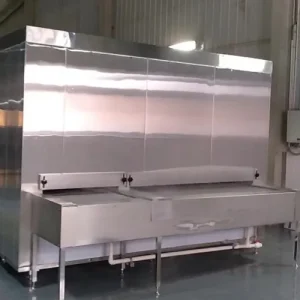
This unit is one stage of a complete processing line. For the full range of freezing equipment, or to compare this model against the IQF Fluidized Bed Freezer 1000 kg/h, see the complete equipment catalogue. Capacity, material grade and utility requirements can be confirmed through a quote request.
Reviews
There are no reviews yet.