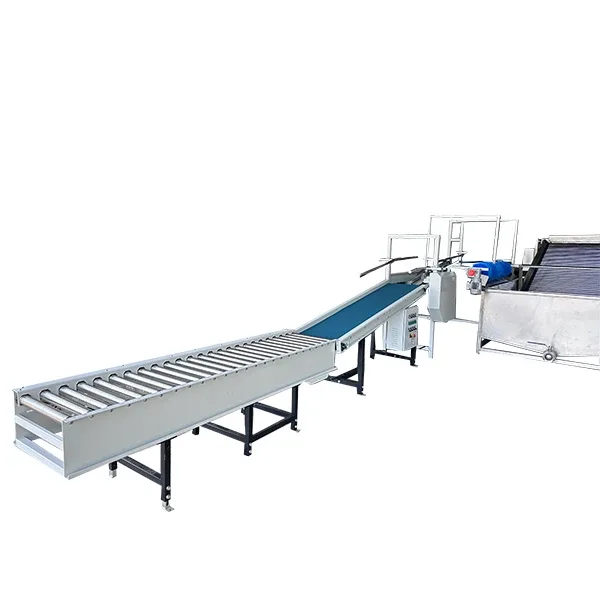
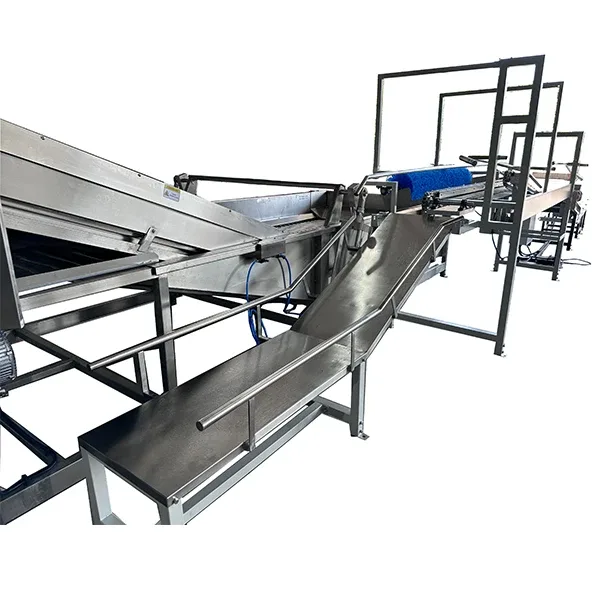
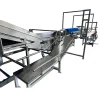
Bin Dumper Machine 300 kg
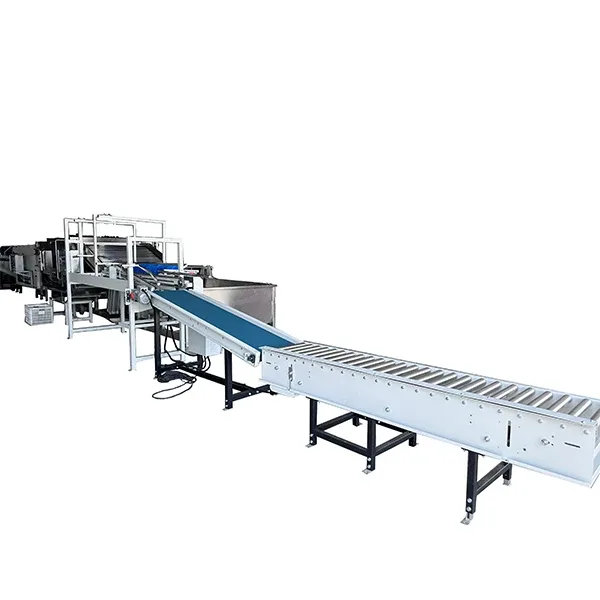
Every processing line starts with the same笨 problem: the product is in a bin at floor level and the line wants it at infeed height, gently and now. Moving it by hand is slow, wet and hard on backs; moving it by forklift is a dance of forks and pallets at the one spot where everyone walks. A bin dumper machine resolves the moment — the bin rolls or forks onto the dumper’s cradle, the cradle lifts and rotates through a controlled arc, and the contents slide into the washer, elevator or hopper below without a dropped corner or a second lift. It is the least glamorous machine on the line and one of the few that pays for itself in a single season of labour and lost time.
How it works
The bin rolls onto the dumper platform by pallet jack, hand or forklift, and locates against stops. A start command engages the lift — hydraulic, chain or screw drive by model — raising the cradle through its arc on guided rails; the rotation is speed-controlled so the product tumbles out over the dump lip at a rate the downstream machine can take, not an avalanche. Hold-down pads or chains keep the bin itself from sliding during rotation. At cycle end the cradle returns to loading height, and the empty bin rolls off. Cycle time runs 30-60 seconds, and the controller’s dump-speed setting is tuned per product — berries slow, roots fast — so the infeed below stays flooded, not buried.
Suitable for
Vegetable and fruit lines feeding washers, destoners and elevators straight from field bins; packhouses emptying harvest crates onto grading and washing lines; freezer and cold-store operations tipping frozen blocks or bins into thawing and processing infeed; root-crop stations feeding peeling lines at a steady rhythm; any plant where the first thirty metres of the line currently run on forklift courage and manual lifting.
Not suitable for
Single-crate kitchens — a dumper needs bin volume and floor space to earn its footprint; product that cannot tolerate any drop, since even a controlled dump is a drop onto a surface below; and sites expecting it to wash or sort — the dumper moves product, and the machine it feeds does the work.
Material & compliance
Frame, cradle and product-contact surfaces in SUS304 (EN 1.4301) designed for washdown; drive components guarded with safety interlocks on the dump arc; control pendant or button station with emergency stop; bin locators sized to the customer’s bin drawings.
Supplied with CE declaration of conformity and DoC on request; material certificate EN 10204 3.1 available for contact parts; bin cradle built to the specified bin or crate standard.
Selection notes
Measure your actual bin — footprint, height, weight loaded and rim style — before comparing quotes, because the cradle and locators are specific and a mismatch shows up as a daily workaround. Ask for the dump arc and discharge height matched to your washer’s infeed, and confirm the cycle time at your heaviest real bin, not the brochure bin. Check the safety package: guards, interlocks and where an operator stands during the arc. If bins vary, ask whether the cradle handles the full range or one standard. And plan the floor: the dumper needs approach room for whatever brings the bin, and that metre is where installations usually pinch.
When you should not buy this machine: If your line starts from small totes an operator can pour by hand, the dumper is capacity you do not have. And if the product genuinely cannot take a controlled drop — premium intact berries come to mind — look at bin-tipper-elevator combinations with water-assisted discharge instead of a dry dump.
Key specifications
| Parameter | Value |
| Bin capacity | 200-500 kg by cradle model (TYPICAL, confirm with factory) |
| Cycle time | 30-60 s load to return (TYPICAL) |
| Dump arc | Controlled rotation, speed-adjustable |
| Drive | Hydraulic / chain / screw, guided rails |
| Contact material | SUS304 (EN 1.4301), washdown design |
| Power supply | 380V/3P/50Hz, 2-4 kW class |
Specification values are industry-typical ranges for this machine class and are not verified against a specific factory datasheet. Replace them with measured factory data before publication.
FAQ
Will it bruise the product?
Less than the forklift-and-shovel routine it replaces: the dump speed is set per product and the fall is one controlled drop onto the infeed surface, whereas manual tipping is an uncontrolled one. Soft-fruit plants usually pair it with a water-cushion infeed; ask about that option if bruise points are your metric.
Can one dumper handle different bin sizes?
Within the cradle’s design range, yes — adjustable locators and hold-downs cover a family of bins. Give the supplier your full bin list before ordering, and make the largest and heaviest bin the design case.
Does it need a pit or platform?
Not necessarily — most units sit on the floor with the discharge height matched to the downstream machine by cradle geometry. Where infeed heights are unusual, a low platform or pit solves it, and the layout conversation belongs before the order.
Related equipment
This unit is one stage of a complete processing line. For the full range of washing and peeling equipment, or to compare this model against the Bubble Washing Machine 2000 kg/h, see the complete equipment catalogue. Capacity, material grade and utility requirements can be confirmed through a quote request.
Reviews
There are no reviews yet.