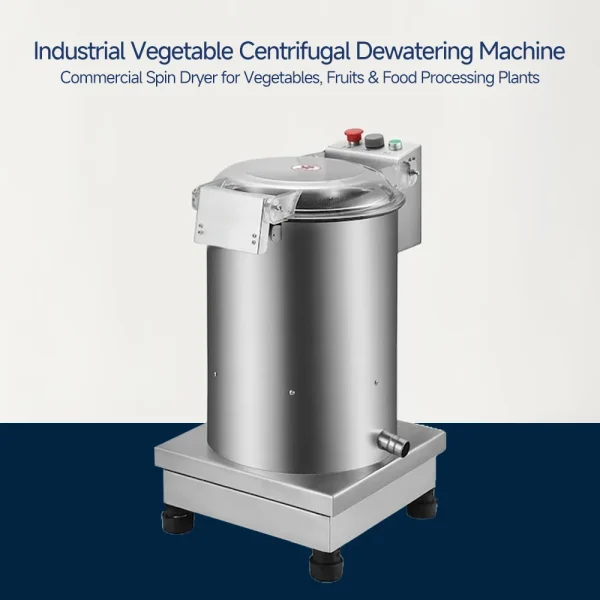
Centrifugal Dewatering Machine
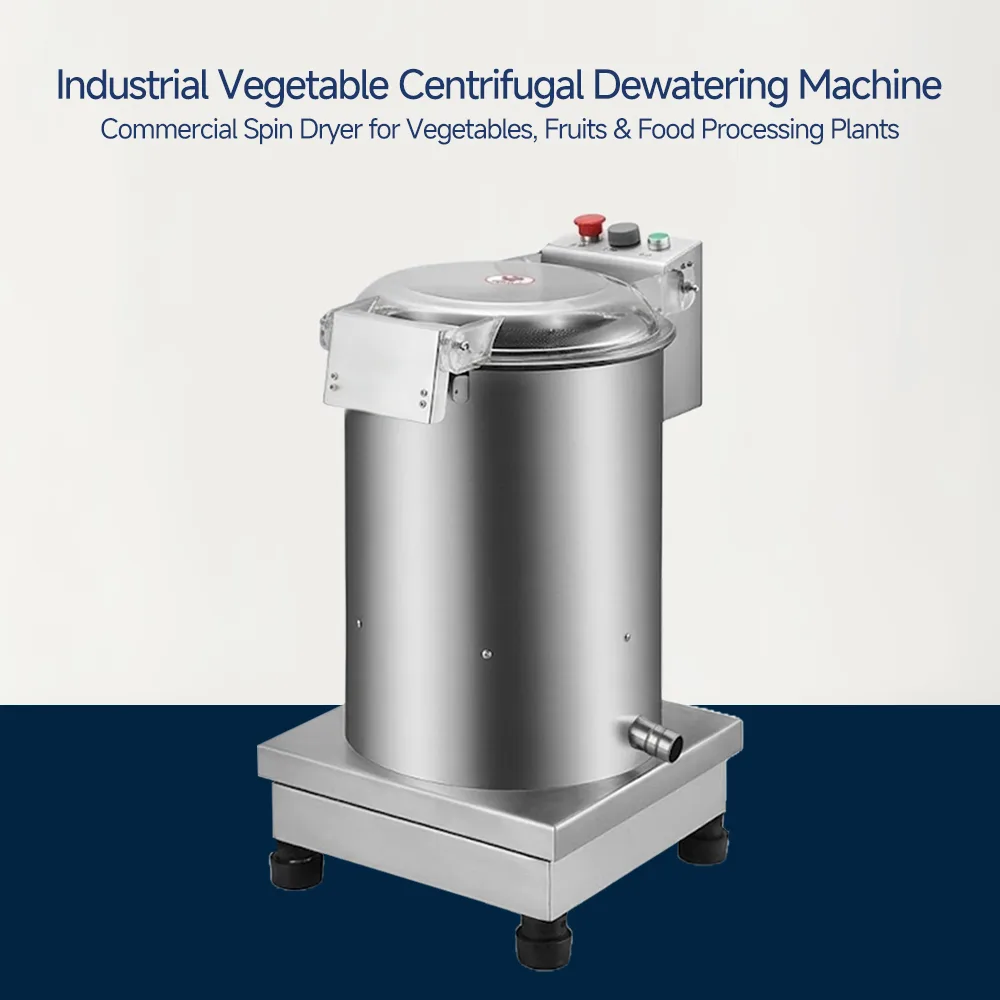
Batch or continuous centrifuge that removes free surface water from washed product by spinning it, so that product leaves the washer dry enough to pack, freeze or further process.
How it works
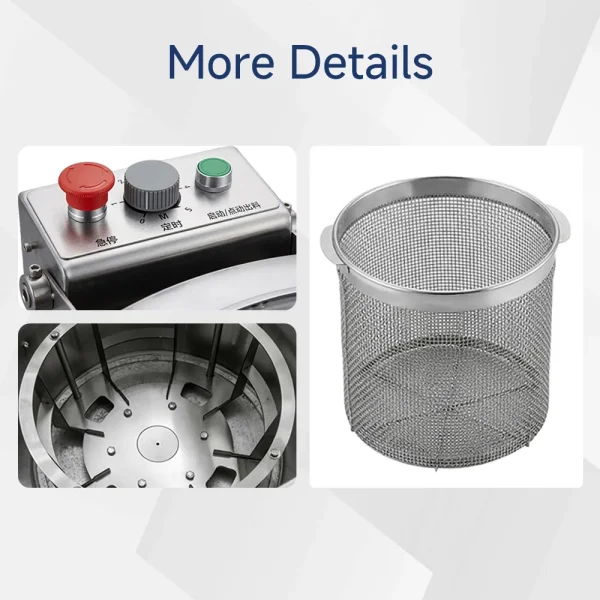
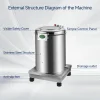
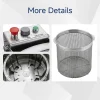
Product is loaded into a perforated basket or a rotating drum. The basket accelerates to speed, and centrifugal force drives the water film and the water held between pieces outward through the perforations, where it is caught by an outer shell and drained away. When the cycle ends the basket decelerates, a brake stops it, and the product is discharged by tilting, by a bottom-opening door, or by an unloader that lifts it out.
The force applied is a multiple of gravity set by speed and basket radius, which is why a centrifuge removes water that air alone cannot move — but also why delicate product can be damaged if the cycle is run too hard.
Suitable for
Leafy greens and salad mixes after washing, where surface water causes spoilage in the pack; shredded and cut vegetables before drying or frying; product going into IQF freezing where surface ice would glue pieces together; herbs and spinach; any product where mechanical dewatering is faster than air drying.
Not suitable for
Product damaged by the g-force — soft berries, ripe fruit and delicate leaf will bruise; whole firm product where there is little surface water to remove; product where the water is inside rather than on the surface; very small pieces that pass the perforations or pack into a solid cake against the basket wall.
Material & compliance
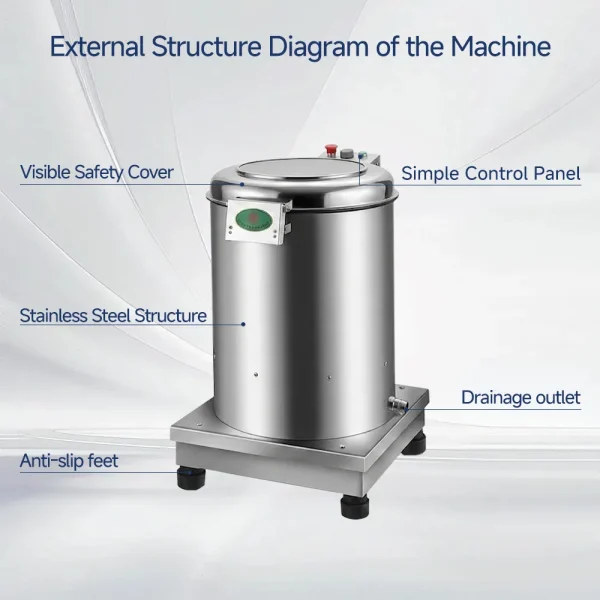
Basket, shell, lid and discharge chute in SUS304 (EN 1.4301); basket perforations sized to the product. Lid interlocked so the machine cannot start open and cannot be opened while rotating; brake and guard documented. Basket removable or cleanable in place; shell drained and sloped.
Supplied with CE declaration of conformity and DoC on request; material certificate EN 10204 3.1 available for contact parts.
Selection notes
Ask for a measured residual moisture figure on your own product at a stated cycle, not a basket speed — speed means nothing without knowing the product and how wet it arrives. Check how the product is discharged, because unloading is usually where delicate leaf is damaged and where labour actually goes. Confirm whether the machine is batch or continuous: batch suits variable product and moderate volumes, continuous suits a steady line with one product.
When you should not buy this machine: If your product is soft fruit or delicate leaf that bruises under load, a vibrating deck or an air knife will treat it far more gently. Also skip it if your washer already delivers product dry enough — a centrifuge earns its place by removing water that nothing else can, and if you do not have that problem it is an extra machine, an extra operator and an extra washdown.
Key specifications
| Parameter | Value |
| Capacity | 300-5000 kg/h by model (TYPICAL, confirm with factory) |
| Basket speed | 600-1200 rpm by model (TYPICAL) |
| Cycle time | 1-3 min per batch (TYPICAL) |
| Residual moisture | Product dependent, test required (TYPICAL) |
| Motor power | 2.2-7.5 kW (TYPICAL) |
| Contact material | SUS304 (EN 1.4301) |
| Power supply | 380V/3P/50Hz or 415V/3P/50Hz, customizable |
Specification values are industry-typical ranges for this machine class and are not verified against a specific factory datasheet. Replace them with measured factory data before publication.
FAQ
Centrifuge or air knife — which dries better?
A centrifuge removes far more water and does it faster; an air knife is gentler and leaves more moisture behind. The usual answer is centrifuge first for bulk removal, then air knife only if the specification still is not met.
Will it damage leafy salad?
It can. Damage comes from g-force, cycle length and how the product is unloaded. Run a trial at your target residual moisture and inspect for bruising before committing to a cycle.
How do I know if the cycle is long enough?
By weighing product before and after, not by time. Residual moisture is the specification; cycle time is whatever it takes to reach it on your product.
Related equipment
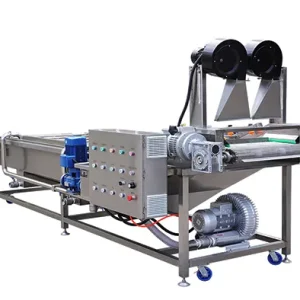
This unit is one stage of a complete processing line. For the full range of washing and peeling equipment, or to compare this model against the Vibrating Dewatering Machine 2000 kg/h, see the complete equipment catalogue. Capacity, material grade and utility requirements can be confirmed through a quote request.
Reviews
There are no reviews yet.