Citrus Grading Machine 3 t/h
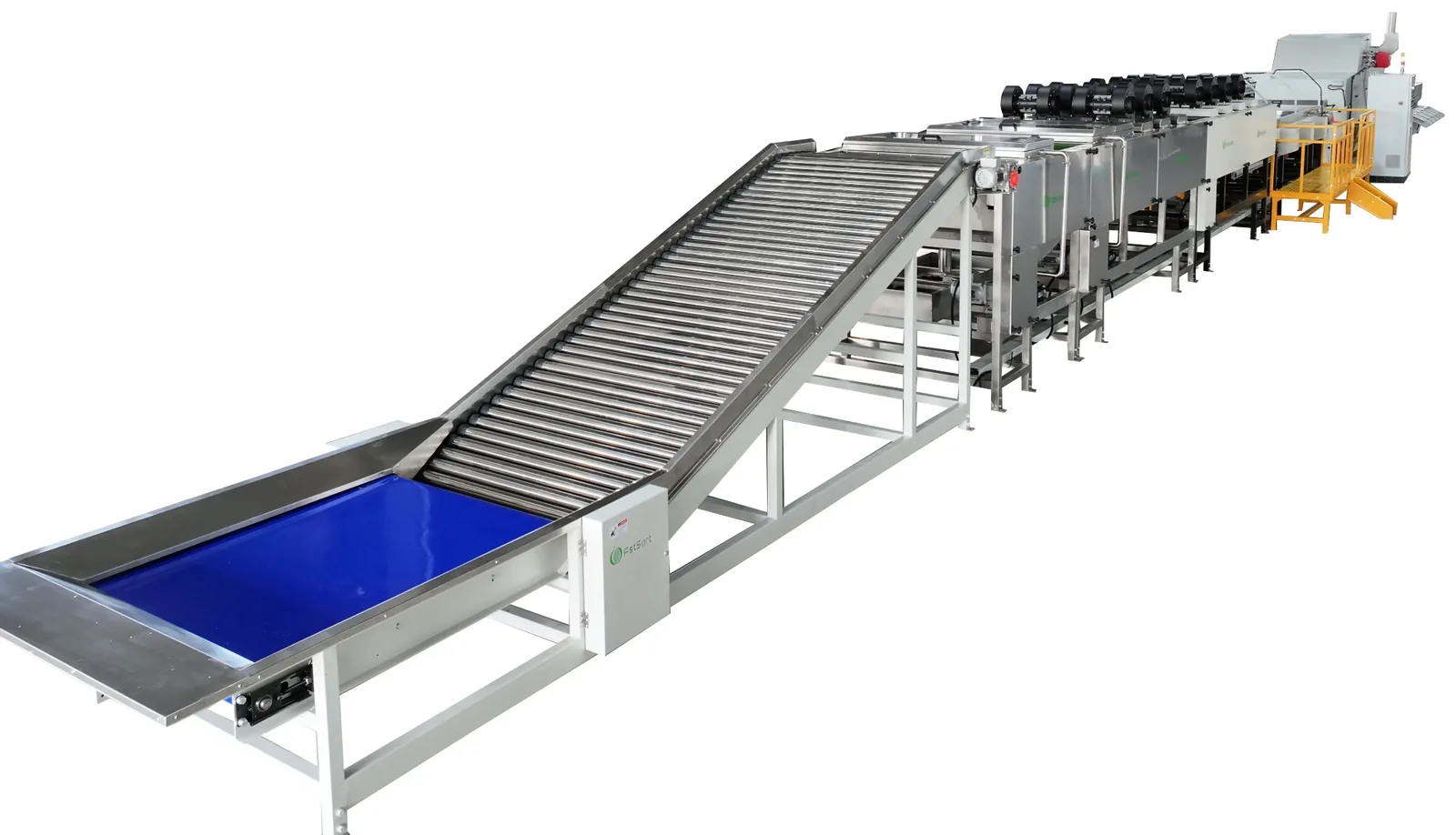
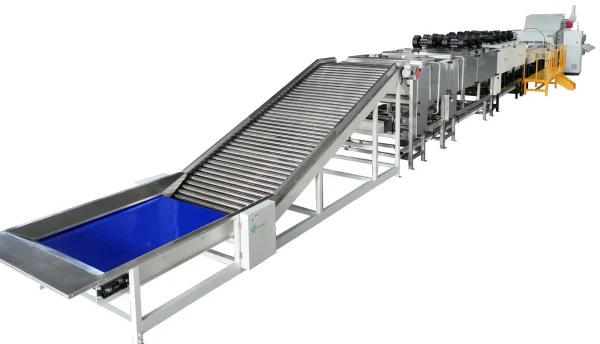
Citrus sells by count, not by lump. A 4×5 carton of oranges is a promise that every fruit in the layer is the same size, and mixed-diameter fruit repacks into discounts at the buyer’s dock. The citrus grading machine keeps that promise at line rate — it lifts a washed, waxed harvest onto carriers or rollers that present each fruit to sizing gaps, and drops it into diameter classes from small to jumbo without a bruise that the wax job cannot hide.
How it works
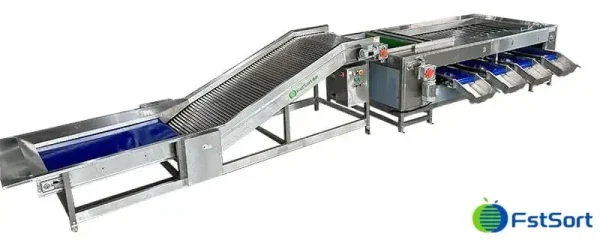
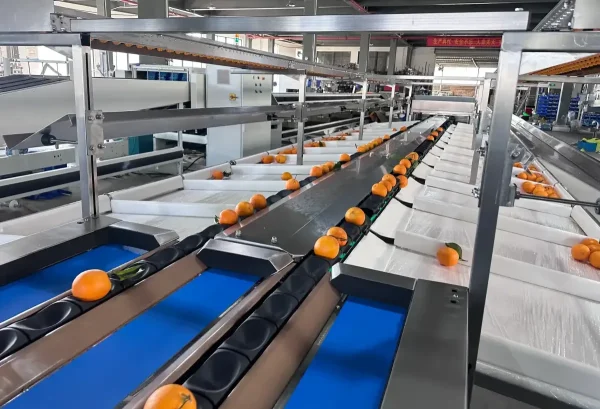
Fruit feeds singly onto a grading bed built from rotating rollers, moving carriers or expanding gap chains. Two principles dominate: roller grading, where fruit rides between opposing rotating rollers whose gap widens along the bed, so each fruit drops through at the diameter where the gap equals it; and carrier grading, where fruit sits in cups or saddles on belts whose spacing widens stage by stage. Either way the fruit touches only rotating, cushioned surfaces, rolls rather than slides, and exits through drop chutes into bins or onto takeaway belts per class. Machine length and class count set the resolution — a five-class grader resolves sizes finer than a three-class one, and speed is capped by the feeding layer staying single-file at the head.
Suitable for
Citrus packhouses sizing washed fruit into retail count classes for cartons and bags; mandarin and easy-peel lines where the class bands are tight and the skin is easily bruised; lemon and lime graders feeding both fresh market and processing splits; co-operatives aggregating member fruit into uniform buyer lots; any washed-citrus stream where manual sizing rings have become the shift’s bottleneck.
Not suitable for
Dirty fruit — the grader assumes washing upstream, and leaves and sand through the bed cost more cleaning time than they save; fruit grading by weight for value-per-piece contracts, which is a weigher’s job, not a sizer’s; soft or damaged fruit that needs an optic to reject, since diameter grading passes rot straight through; and operations under a few hundred kilos an hour, where hand rings and a sorting table cost almost nothing.
Material & compliance
Frame, bed and chutes in SUS304 (EN 1.4301) or food-grade coated contact surfaces; fruit-contact rollers and carriers food-grade with cushioning; washdown motors and sealed bearings, because citrus wax and juice build up fast; gap adjustment per class with position indication so settings repeat between lots.
Supplied with CE declaration of conformity and DoC on request; food-contact material declarations for rollers and carriers.
Selection notes
Start from the fruit, not the machine: bring your diameter range, skin condition and class plan, and ask which bed principle the factory recommends — rollers shed debris better, carriers treat thin skins more gently, and the wrong choice shows up as bruise claims. Confirm class count and how the band edges are set, because the bands are the product. Ask what the capacity assumes at feed — single-layer presentation is everything, and a grader fed two-deep grades nothing. Check drop heights into chutes; citrus bruises on falls more than on rollers, and a 200 mm drop repeated per class is a damage budget. And ask about wax and juice cleaning — a weekly strip-down that takes two people half a day is a real cost the quote will not show.
When you should not buy this machine: If your volumes are small and your buyer accepts field-run fruit, manual sizing is cheaper and more flexible. And if your real problem is rot or blemish rejection, buy an optic or fix the orchard supply first — a sizer makes uniform boxes of whatever you feed it, including defects.
Key specifications
| Parameter | Value |
| Capacity | 2000-5000 kg/h single-layer feed (TYPICAL, confirm with factory) |
| Grading classes | 3-7 diameter bands, adjustable (TYPICAL) |
| Bed principle | Roller-gap or carrier-belt, cushioned fruit contact |
| Fruit range | 40-120 mm diameter by bed model (TYPICAL) |
| Discharge | Per-class drop chutes to bins / takeaway belts |
| Contact material | SUS304 frame, food-grade rollers |
| Power supply | 380V/3P/50Hz, 2-5 kW class |
Specification values are industry-typical ranges for this machine class and are not verified against a specific factory datasheet. Replace them with measured factory data before publication.
FAQ
Diameter or weight grading — which do buyers want?
Fresh citrus trade mostly buys by count per carton, which is a diameter promise, so sizers dominate. Weight grading appears in specific value-per-fruit contracts and pre-pack; check your buyer’s spec sheet before choosing, because the two machines sort different things.
Will it bruise waxed fruit?
Not if drops and bed speed are matched to the fruit — cushioned carriers and short drops are exactly why mechanical citrus grading works. Ask for bruise-test references on your fruit type, and walk the discharge chutes during the factory demo.
Can it grade other round fruit?
Yes within the diameter range — apples, peaches and stone fruit run on similar beds, though delicate fruit may need gentler carriers. Confirm with a trial on your second crop before buying one machine for two seasons.
Related equipment
This unit is one stage of a complete processing line. For the full range of sorting and grading equipment, or to compare this model against the Fruit Washing Machine 2000 kg/h, see the complete equipment catalogue. Capacity, material grade and utility requirements can be confirmed through a quote request.
Reviews
There are no reviews yet.