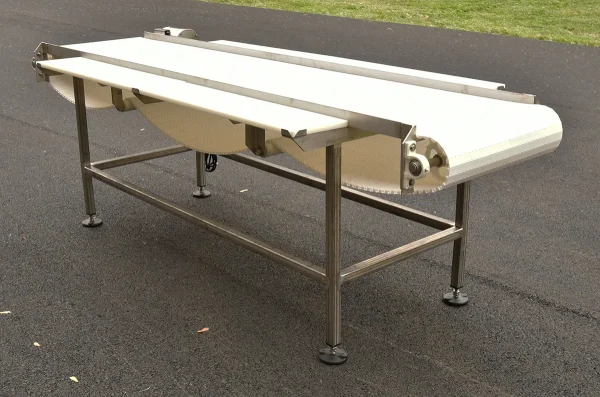
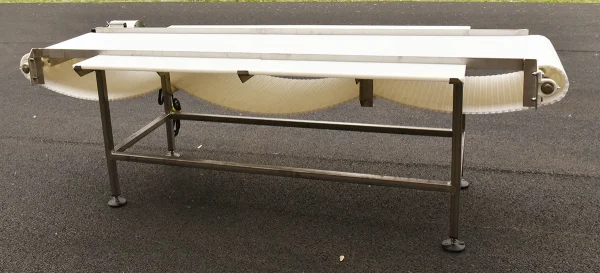
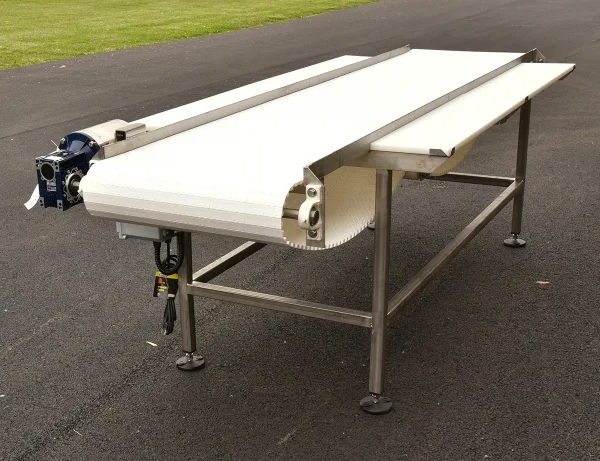

Inspection and Sorting Conveyor
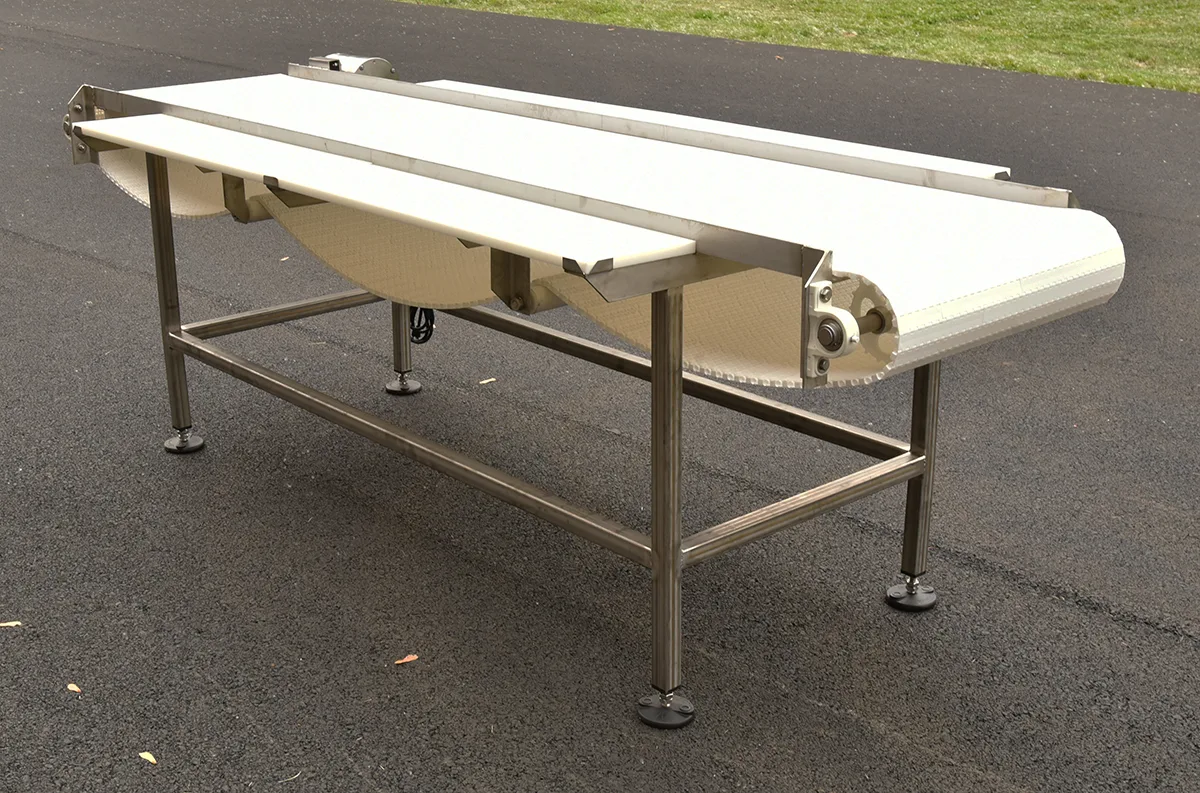
Belt inspection table where operators remove defects, foreign material and off-grade pieces by hand, at a speed the line can actually sustain.
How it works
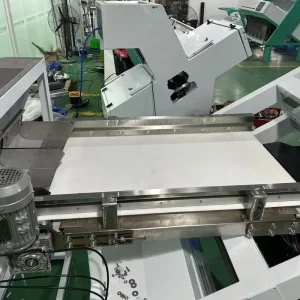
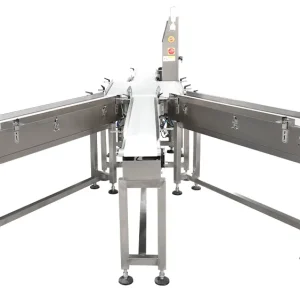
Product is spread in a single layer onto a food-grade belt that runs between two working sides. Operators stand along the belt and pick off rejects into a waste chute, a side belt, or a collection bin. Belt speed is inverter-controlled, so the table can be slowed when the incoming product is poor and speeded up when it is clean. Many lines use two passes with a product turn between them so that all faces are seen.
Lighting drives performance: inspection accuracy falls sharply under poor or coloured light, and this is the cheapest thing to get right.
Suitable for
Whole or cut fruit and vegetables where defect removal is visual; product after washing and before cutting or freezing; berries and soft fruit that machines damage; lines where an optical sorter is not justified, or as a final check after one.
Not suitable for
High-throughput lines where labour cost dominates; defects that are internal or invisible; product that must be graded by weight or dimension, which needs a grader; applications with strict traceability on every reject.
Material & compliance
Frame, side guides and chutes in SUS304 (EN 1.4301); food-grade PU or PVC belting. Belt removable without tools for washdown; waste chutes sloped and drainable.
Supplied with CE declaration of conformity and DoC on request; material certificate EN 10204 3.1 available for contact parts.
Selection notes
Size the table on inspection load, not throughput — a dirty incoming stream needs more operator positions and slower belt speed than a clean one. Ask how the belt is released for cleaning, because a belt that needs tools will not be cleaned between shifts. Specify lighting separately: neutral white, even, and glare-free at the belt surface.
When you should not buy this machine: If your defect rate is high and your volume is large, labour will cost more than an optical sorter within a season. Also skip a manual table as the only control point for a food-safety critical defect — use it as a check, not as the barrier.
Key specifications
| Parameter | Value |
| Capacity | 500-4000 kg/h by length and staffing (TYPICAL, confirm with factory) |
| Belt width | 600-1200 mm (TYPICAL) |
| Belt speed | Adjustable by frequency inverter (TYPICAL) |
| Operator positions | 4-8 per side by length (TYPICAL) |
| Motor power | 0.55-1.5 kW (TYPICAL) |
| Contact material | SUS304 (EN 1.4301), food-grade belting |
| Power supply | 380V/3P/50Hz or 415V/3P/50Hz, customizable |
Specification values are industry-typical ranges for this machine class and are not verified against a specific factory datasheet. Replace them with measured factory data before publication.
FAQ
How many operators do I need?
It depends on belt width, belt speed and the defect rate of the incoming product. Work out the inspection load — pieces per minute that need attention — rather than kg/h, and staff to that.
Can an inspection table replace an optical sorter?
For low volume and visible defects, yes. At higher volume the labour cost and inconsistency of manual picking overtake a sorter quickly. Many lines run both: sorter first, table as final check.
Why do defects still get through?
Usually bed depth or lighting. Product more than one layer deep hides defects underneath, and poor light hides surface defects. Slow the belt and spread the product thinner before adding any technology.
Related equipment
This unit is one stage of a complete processing line. For the full range of sorting and grading equipment, or to compare this model against the Weight Grading Machine 3000 kg/h, see the complete equipment catalogue. Capacity, material grade and utility requirements can be confirmed through a quote request.
Reviews
There are no reviews yet.