
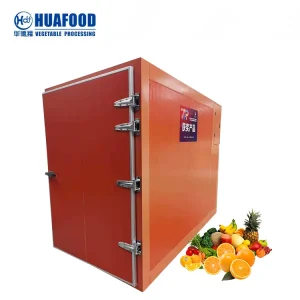
Carrot Drying Machine 400 kg/h
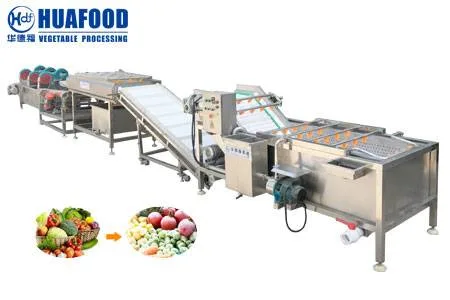
Carrot is a dense, sugary root, and that combination decides its drying: sugar holds water, density slows migration, and heat that is too aggressive caramelises the surface into a seal that traps moisture inside. A carrot drying machine manages that curve with staged hot air — faster surface drying early, gentle finishing later — and turns washed, cut carrots into the shelf-stable dice, slices and granules the ingredient trade buys by the container. For drying lines already running onion, garlic or herbs, carrot is the natural next crop on the same air.
How it works
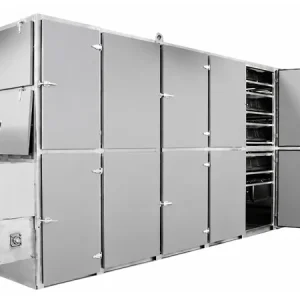
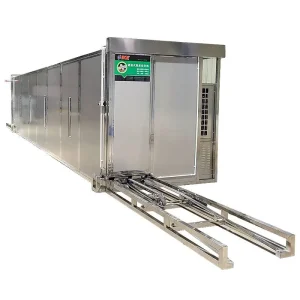
Washed, peeled and cut carrot — dice, slices, strips or grated — loads onto trays or a multi-layer belt and passes through staged drying chambers. Early zones run warmer air to strip surface moisture; middle zones hold moderate temperature while interior water migrates out through the dense flesh; final zones finish cooler and drier to target moisture, typically 8-12% for dice, without case-hardening. Airflow passes across and through the product bed; humidity is exhausted and partially recirculated; belt speed or trolley advance sets residence — typically 5 to 10 hours for dice by cut and load depth. Outlet product cools and conditions before grading and packing, because drying finishes as moisture equalises in the bin.
Suitable for
Dried-carrot producers cutting and drying dice, slices and granules for soup, sauce and snack ingredients; vegetable dehydrators adding carrot to an onion-and-garlic profile on existing hot-air lines; frozen-prep plants conditioning blanched carrot before freezing; juice-pulp side streams dried for fibre ingredients; any region or season where field drying is unreliable and the ingredient contract demands a moisture spec.
Not suitable for
Fresh-market carrot handling, which is washing, polishing and storage — a different line entirely; products targeting freeze-dried texture, since hot-air carrot comes out leathery and dense by design; lines without cutting and blanching discipline upstream, because dryer capacity multiplies whatever arrives; and buyers expecting hours-fast drying like leafy herbs — carrot’s density sets a longer, slower curve that the layout must respect.
Material & compliance
Chambers, belts and trays in SUS304 (EN 1.4301) food-grade finish; airflow sections designed for washdown, because carrot residue sugars up surfaces the way tomato does; staged temperature control with recording per zone for process documentation; optional blanching integration upstream where colour lock matters to the spec.
Supplied with CE declaration of conformity and DoC on request; material certificate EN 10204 3.1 available for contact parts.
Selection notes
Ask for a drying curve on your cut, not a capacity headline: fresh-input kilos an hour depends on dice size, load depth and target moisture, and the honest number is usually half the brochure. Confirm zone count and independent control — colour and rehydration quality live in the finishing zones, and single-zone dryers buy colour complaints. Check cleaning access for sugary deposits; a dryer that strips quickly stays efficient, one that does not quietly loses airflow. Price energy per kilo of water removed at your utility rates, and ask about heat recovery if your volumes justify it. And align the inlet spec — cut size and blanch — with your upstream line in writing, since the dryer multiplies what arrives.
When you should not buy this machine: If your carrot volume is seasonal and small, co-packing or shared drying capacity beats owning a chamber that idles ten months. And if your target product is freeze-dried or powder, this is the wrong dryer class — price the right one before committing the building.
Key specifications
| Parameter | Value |
| Fresh input | 200-800 kg/h by cut and target moisture (TYPICAL, confirm with factory) |
| Drying temperature | 55-75 °C staged zones (TYPICAL) |
| Residence | 5-10 h for dice by load depth (TYPICAL) |
| Zones | 3-5 stages with independent control |
| Contact material | SUS304 (EN 1.4301) belts / trays |
| Power supply | 380V/3P/50Hz, 8-25 kW class plus heat source |
Specification values are industry-typical ranges for this machine class and are not verified against a specific factory datasheet. Replace them with measured factory data before publication.
FAQ
Why does carrot dry slower than onion or herbs?
Density and sugar: water migrates slowly through dense flesh, and sugars hold moisture to the end. The staged profile — warm early, cool late — is what prevents case-hardening, and the finishing hours are where rehydration quality is won or lost.
Does carrot need blanching before drying?
For most ingredient specs, yes — blanch locks colour and shortens drying. Unblanched carrot dries darker and rehydrates differently. Confirm your buyer’s colour and rehydration requirements, then fix the pretreat; the dryer itself does not care, but the market does.
Can the same line dry other root crops?
Yes — parsley root, beet, sweet potato dice all run adjusted profiles, though each brings its own sugars and stickiness. Ask the factory to validate your second crop’s curve before promising the buyer two products from one chamber.
Related equipment
This unit is one stage of a complete processing line. For the full range of drying and dehydration equipment, or to compare this model against the Belt Hot Air Dryer 1 t/h 30 kW, see the complete equipment catalogue. Capacity, material grade and utility requirements can be confirmed through a quote request.
Reviews
There are no reviews yet.