Fruit Drying Machine 500 kg/h
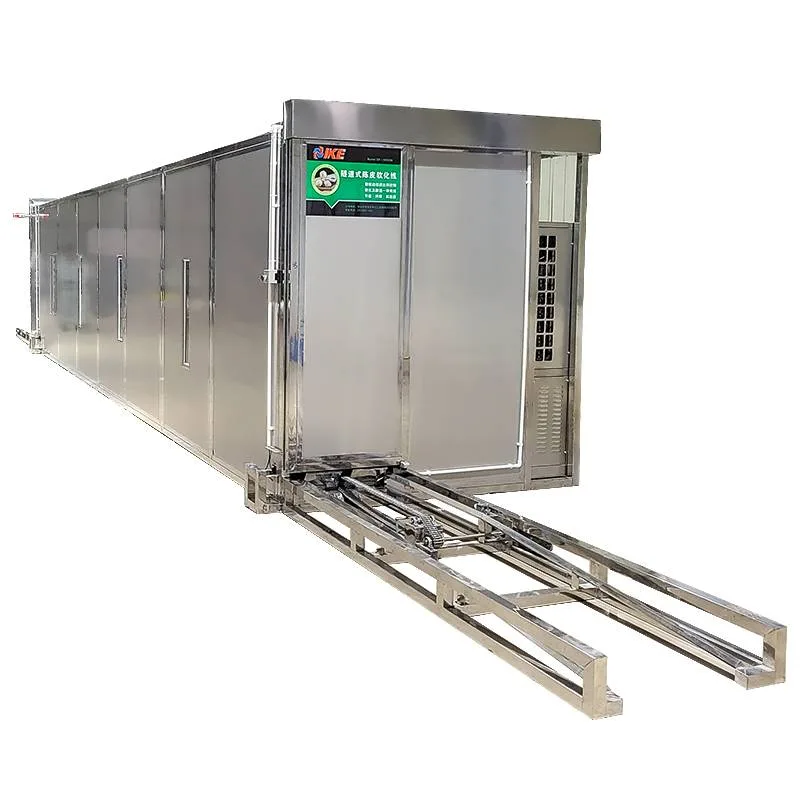
Dried fruit is fruit with the water taken out gently. The colour, the sugar concentration and the sourness that makes a dried mango worth buying are all decided in the drying profile: hot enough to move water, cool enough to keep the fruit from caramelising into brown leather. A fruit drying machine is a staged-temperature tunnel built around exactly that balance.
How it works
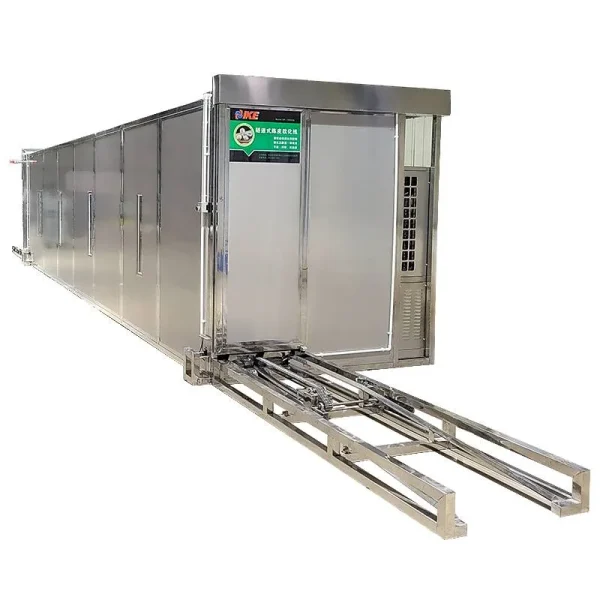
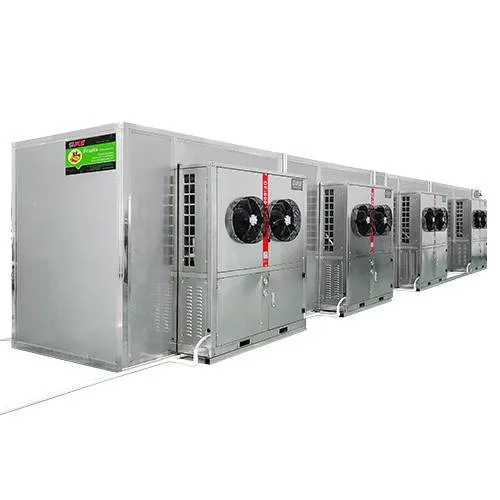
Prepared fruit — sliced, dipped or pre-treated according to the fruit — feeds onto a mesh belt and travels through the drying tunnel’s temperature zones. Early zones run warm air over the wet fruit to drive off surface moisture; middle zones hold moderate temperature while internal water migrates to the surface; final zones finish at the lowest temperature, bringing the fruit to its target moisture without browning. Airflow reverses between sections to even the dry, and exhaust air leaves with the moisture load. Total residence runs two to six hours depending on fruit, sugar content and cut thickness — sugar slows water migration, which is why thick mango dries slower than thin apple. At discharge the fruit cools before packing; warm fruit in a bag condenses its own moisture and undoes the drying.
Suitable for
Dried apple, banana, mango, apricot, pear and similar fruit snack production; baking-grade dried fruit ingredients for cereal and confectionery; farm and co-operative processing adding shelf-stable value to fresh fruit; producers moving from sun-drying to controlled drying, where colour, hygiene and season independence all improve at once.
Not suitable for
Fruit leather and purée products, which dry on trays or drums rather than a product belt; freeze-dried fruit, which is a different technology with a different price and a different product; very high sugar fruits without pre-treatment, which stick to belts and caramelize; anyone buying the machine before securing a market for the dried output — dried fruit margins live in the sales channel, not the dryer.
Material & compliance
Belt, chamber, guides and discharge in SUS304 (EN 1.4301); all heated surfaces insulated. Heating by gas, electric or steam coil with over-temperature protection. Belt speed adjustable per zone; exhaust fans sized to the moisture load. Belt access and cleaning design matter here — fruit sugars are sticky, and a dryer that cannot be cleaned between fruit types carries flavours and risks fermentation.
Supplied with CE declaration of conformity and DoC on request; material certificate EN 10204 3.1 available for contact parts.
Selection notes
Ask for the recommended temperature profile per fruit and confirm each zone is independently controlled. Ask for energy consumption per kilogram of finished dried fruit — over a season this dominates the cost per tonne. Check the belt surface against your fruit: sugary slices stick, and some suppliers offer coated or PTFE belts. Check cleaning access between fruit types. Check discharge cooling arrangement. And ask what final moisture the profile is tuned to hit, and whether it matches your buyer’s spec.
When you should not buy this machine: If your volumes are small and seasonal, a cabinet tray dryer does the same job smaller — the continuous belt earns its cost at volume. And if your fruit intake is unsorted and unripe-heavy, fix the intake first; a dryer cannot make good dried fruit from bad fresh fruit.
Key specifications
| Parameter | Value |
| Fresh input capacity | 200-1000 kg/h by belt area (TYPICAL, confirm with factory) |
| Drying zones | 3-5 with independent temperature control (TYPICAL) |
| Temperature range | 50-85 °C staged profile (TYPICAL) |
| Final moisture | 12-18 % fruit snacks, 3-5 % ingredients (TYPICAL) |
| Residence time | 2-6 h by fruit and cut (TYPICAL) |
| Heating | Gas, electric or steam coil |
| Contact material | SUS304 (EN 1.4301) |
| Power supply | 380V/3P/50Hz or 415V/3P/50Hz, customizable |
Specification values are industry-typical ranges for this machine class and are not verified against a specific factory datasheet. Replace them with measured factory data before publication.
FAQ
What moisture should dried fruit reach?
Snack-grade dried fruit typically lands at 12-18 % moisture — chewy, shelf-stable, pliable. Baking ingredients and long-shelf-life product go drier, 3-5 %. Match the target to your buyer’s spec; drying past it costs energy and yield.
Why do zones need separate temperature control?
Because the fruit’s sensitivity changes as it dries. Wet fruit tolerates warm air; nearly-dry fruit browns under it. Staged profiles dry fast early and finish gently — that is how colour and flavour survive, and single-zone dryers cannot do both.
Can it handle sugary fruits like mango?
Yes with preparation — slice thickness, possibly a pre-treatment dip, and often a coated or textured belt surface to prevent sticking. Check the belt specification against your stickiest product before purchase.
Related equipment
This unit is one stage of a complete processing line. For the full range of drying and dehydration equipment, or to compare this model against the Belt Hot Air Dryer 1 t/h 30 kW, see the complete equipment catalogue. Capacity, material grade and utility requirements can be confirmed through a quote request.

Reviews
There are no reviews yet.