Plum Grading Machine 3 t/h
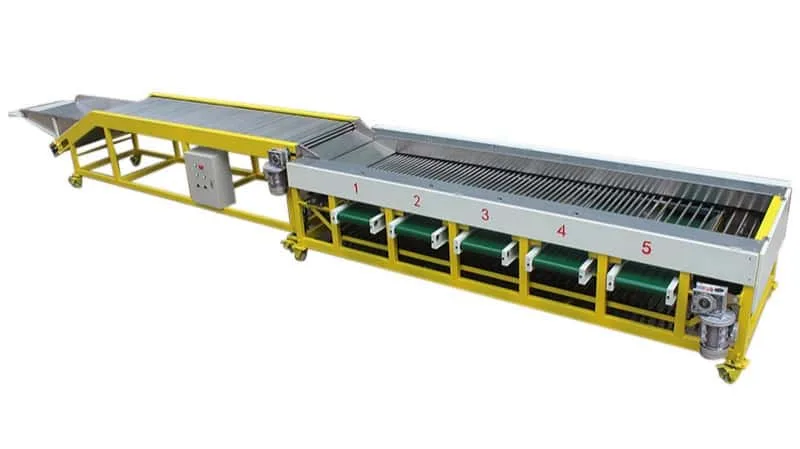
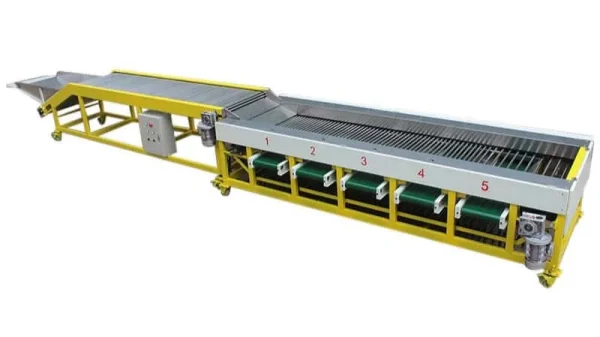
Plums carry two properties that punish clumsy grading: a delicate wax bloom that is the visual signature of quality, and flesh that bruises at pressures other fruit shrug off. Size them by hand and the table becomes the bottleneck; run them through harsh machinery and the bloom wipes off and bruise counts climb. A plum grading machine walks that line — roller or carrier systems that rotate fruit gently through widening gaps, so classes sort by diameter while the fruit never squeezes, drags or drops.
How it works
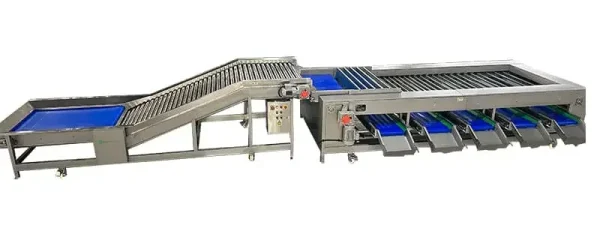
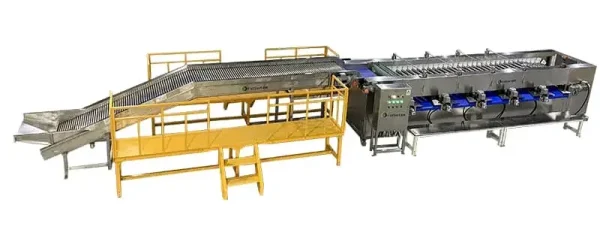
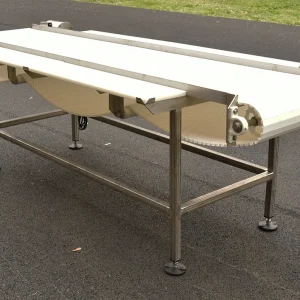
Binned plums feed onto a grading bed where rotating soft rollers or belted carriers present each fruit to a widening gap. The principle is roller-gap sizing: opposing rollers spaced progressively wider along the bed let each plum drop through at its diameter, into cushioned lanes below. Roller rotation matches fruit surface speed so plums roll rather than drag — the contact detail that preserves bloom and keeps bruise counts low. Class boundaries are set by gap adjustment at each stage, marked and repeatable, and the last class typically runs to a packing table or bin filler. Peach and apricot share the same grading physics, which is why stone-fruit lines standardise on one bed across the season.
Suitable for
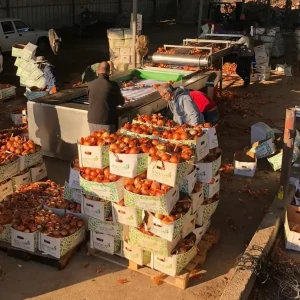
Stone-fruit packers sizing plums, peaches and apricots into retail count classes; orchard co-operatives combining member fruit into uniform buyer lots; processing intake splitting fruit by size before pitting or drying lines; export packers meeting strict diameter specs per carton; seasonal packhouses that re-grade between crops with gap adjustment.
Not suitable for
Dirty or wet field fruit — drying and cleaning come first, and wet fruit rides rollers unpredictably; quality grading — colour, rot and internal defects need inspection or optics, and the sizer sorts size only; soft, overripe fruit below any roller’s bruise tolerance, which belongs in processing; and tiny farm-gate volumes where sizing rings and a table remain the honest tools.
Material & compliance
Frame, rollers and chutes in SUS304 (EN 1.4301) or food-grade contact surfaces; fruit-contact rollers in food-grade soft compound with cushioned drops; sealed washdown bearings and drives; class settings mechanically marked for repeatable setup between shifts.
Supplied with CE declaration of conformity and DoC on request; food-contact declarations for roller materials.
Selection notes
Tune the bed to your fruit diameter range: plums span from 30 mm Japanese varieties to 70 mm $prune-class fruit, and gap ranges that fit one miss the other. Ask for the bruise audit — a factory trial should count bruise and bloom damage per tonne at your fruit’s firmness, because that number is what retail actually grades you on. Confirm class count and changeover speed between stone-fruit species; a season is a sequence of crops, and a bed that re-gaps in an hour earns its keep weekly. Check drop heights and lane cushioning against your softest variety, and verify the discharge fits your packing format, whether trays, bins or boxes.
When you should not buy this machine: If your stone-fruit volume is a few hundred kilos a day through a short season, sizing rings and trained hands at pack tables cost less than any bed this side of many seasons. And if your buyer takes field-run fruit ungraded, the machine solves a problem nobody is paying you to solve.
Key specifications
| Parameter | Value |
| Capacity | 2000-5000 kg/h by fruit size and bed length (TYPICAL, confirm with factory) |
| Fruit range | 25-80 mm diameter by gap set (TYPICAL) |
| Classes | 3-6 outlets (TYPICAL) |
| Contact | Soft food-grade rollers, cushioned drops |
| Frame material | SUS304 (EN 1.4301) |
| Power supply | 380V/3P/50Hz, 2-4 kW class |
Specification values are industry-typical ranges for this machine class and are not verified against a specific factory datasheet. Replace them with measured factory data before publication.
FAQ
Will grading rub off the bloom?
Roller-speed matching is the design answer — fruit that rolls wears bloom far less than fruit that drags. Inspect trial output against hand-graded samples under the light your buyers use; the comparison settles it in minutes.
Can one bed grade plums, peaches and apricots?
Yes — the physics is shared, and gap settings change between crops. The watch items are firmness at grading and drop heights: peaches bruise easier than plums, so cushioning settings matter more. Confirm both in the factory trial.
Does it grade ripeness or colour?
No — size only. Colour sorting needs optical equipment and ripeness needs experience or NIRS. Many lines place an inspection table upstream of the sizer so defects leave before fruit is committed to classes; that layout usually costs less than optics and covers the worst losses.
Related equipment
This unit is one stage of a complete processing line. For the full range of sorting and grading equipment, or to compare this model against the Roller Size Grading Machine 3000 kg/h, see the complete equipment catalogue. Capacity, material grade and utility requirements can be confirmed through a quote request.
Reviews
There are no reviews yet.