
Vibrating Screen Grader
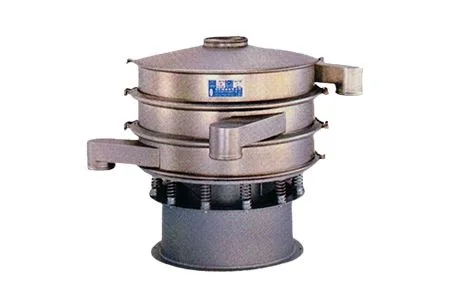
Multi-deck vibrating screen that separates cut product, small whole vegetables and berries into size fractions by passing them over interchangeable apertures.
How it works
Product is fed onto the top deck of a screen box driven by vibratory motors. Pieces smaller than the aperture fall through to the deck below; the rest travel to the end and discharge as an oversize fraction. With two or three decks of decreasing aperture, the machine produces that many fractions plus a final oversize in one pass. Aperture is set by the screen panel, and ball trays or brush cleaners are often fitted underneath to stop apertures blinding on wet or sticky product.
Blinding is the practical failure mode: wet fines lodge in the aperture, the effective open area falls, and grading accuracy drifts through the shift.
Suitable for
Peas, beans and sweetcorn; diced and sliced vegetables after cutting; small whole product such as berries and cherries; product where size fraction determines destination or price; removing fines and broken pieces before freezing or packing.
Not suitable for
Product requiring grading by weight, colour or internal defect; large whole fruit that needs a roller or diameter grader; sticky or high-sugar product that blinds the screen rapidly; product damaged by vibration.
Material & compliance
Screen panels, frames and discharge chutes in SUS304 (EN 1.4301); food-grade screen media. Panels removable without tools for changeover and washdown; frame sloped to drain.
Supplied with CE declaration of conformity and DoC on request; material certificate EN 10204 3.1 available for contact parts.
Selection notes
Specify the fraction sizes you will actually sell, then confirm the panels exist — screens are usually quoted in standard apertures, and a non-standard size means a custom panel. Ask how the screens are cleaned and how long a changeover takes. Check whether anti-blinding devices are included: on wet cut product they are the difference between stable grading and a screen that slowly closes up.
When you should not buy this machine: If the product is sticky or sugary, expect to clean screens constantly — a roller grader or an optical sorter may serve better. Also skip it if the grade is defined by weight rather than dimension: a screen sorts geometry, and buyers paying by weight will not accept it.
Key specifications
| Parameter | Value |
| Capacity | 500-6000 kg/h by deck area (TYPICAL, confirm with factory) |
| Decks | 1-3 screens, aperture by grade (TYPICAL) |
| Screen aperture | Interchangeable, product dependent (TYPICAL) |
| Motor power | 0.4-1.5 kW per deck (TYPICAL) |
| Contact material | SUS304 (EN 1.4301) |
| Power supply | 380V/3P/50Hz or 415V/3P/50Hz, customizable |
Specification values are industry-typical ranges for this machine class and are not verified against a specific factory datasheet. Replace them with measured factory data before publication.
FAQ
Why does grading accuracy drift during a shift?
Screen blinding. Moist fines lodge in the apertures and reduce open area, so pieces that should fall through ride over instead. Fit ball trays or brush cleaners and schedule screen washing.
Can one machine produce three grades?
Yes with three decks, giving three undersize fractions plus a final oversize. Each extra fraction adds discharge handling, so specify only the grades you sell.
How do I choose aperture sizes?
From your product specification, measured on your own product rather than from a chart. Pieces near the aperture size are the problem: they wedge rather than pass. Test at two apertures before committing.
Related equipment
This unit is one stage of a complete processing line. For the full range of sorting and grading equipment, or to compare this model against the Roller Size Grading Machine 3000 kg/h, see the complete equipment catalogue. Capacity, material grade and utility requirements can be confirmed through a quote request.
Reviews
There are no reviews yet.