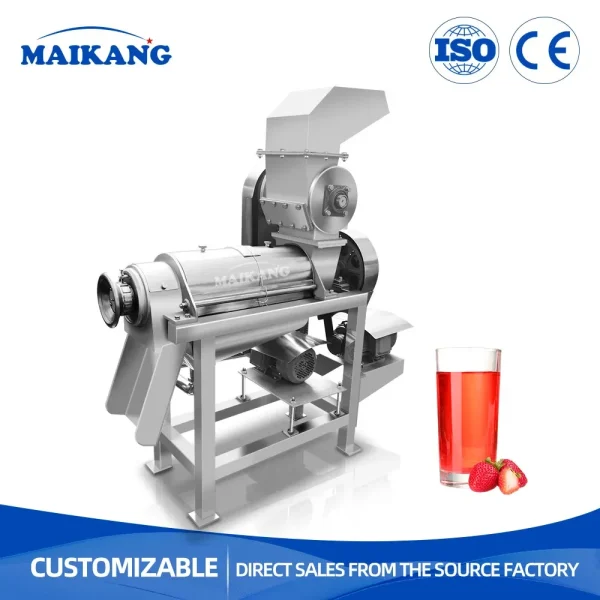
Grape Crushing Machine 2 t/h
Winemaking and grape juice both begin with the same controlled violence: berries must burst to release juice, but stems must leave whole, seeds uncracked, and skins opened — not shredded. Hand crushing cannot hold that order at line rate, and an ordinary fruit crusher smashes stems and seeds into the must, adding the green tannins buyers taste instantly. A grape crushing machine is purpose-built for that balance — destemming first, then bursting berries — so the must that reaches tank or press is clean, ordered and repeatable.
How it works
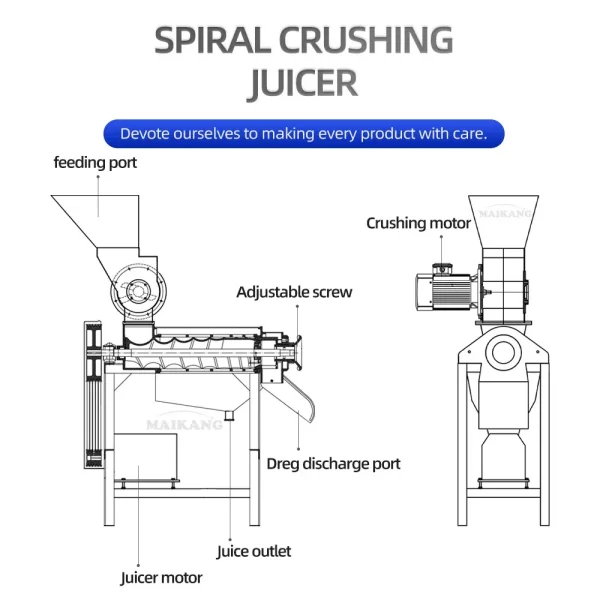
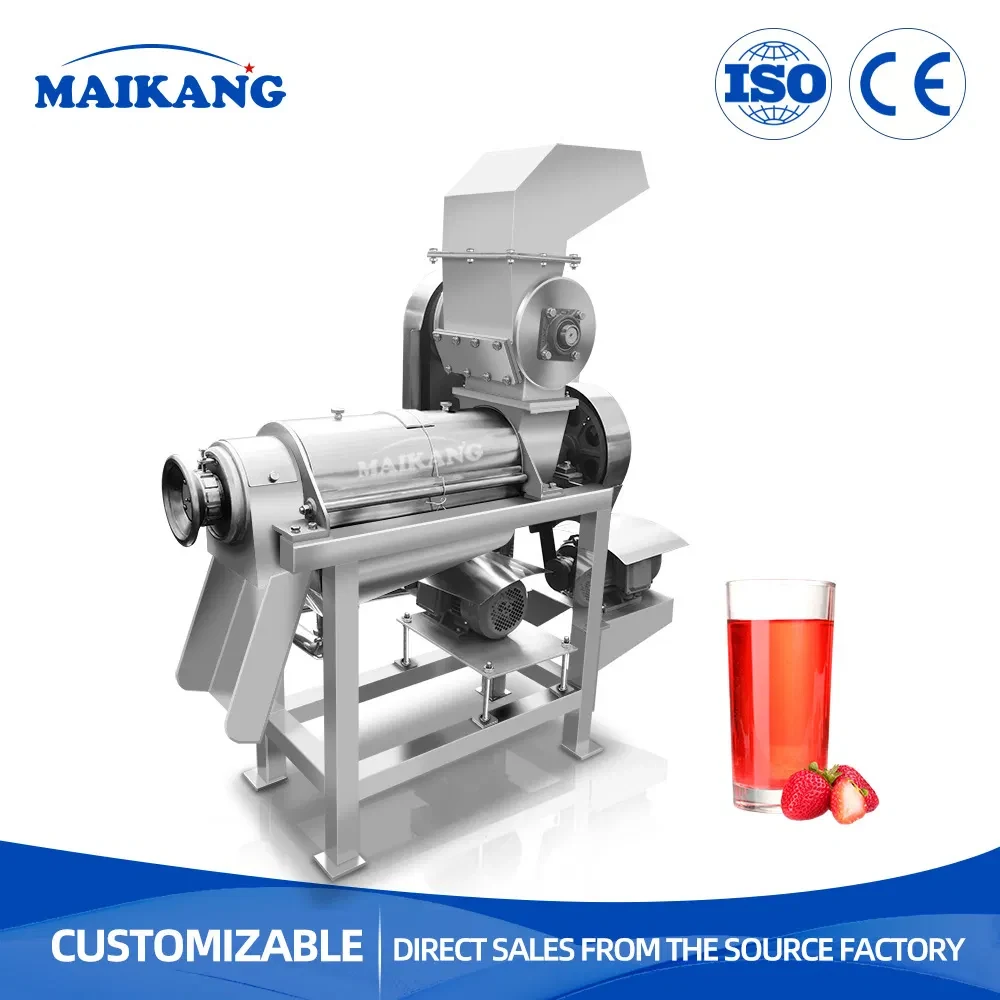
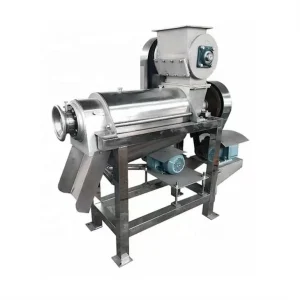
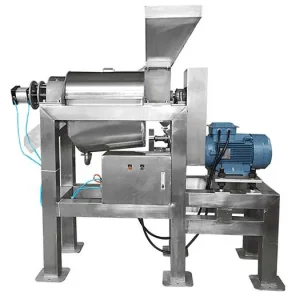
Grapes feed into a destemming drum, a perforated cylinder with internal paddles that whip berries from stems; stems travel the drum’s axis and exit whole out the end while berries and juice fall through the screen. The berry stream then passes a crushing stage — fluted rollers set to a gap that splits skins and releases pulp without cracking seeds. Must drains to the collection pan; skins and pulp continue to fermentation or press as the process directs. Roller gap and drum speed are the controls — wider gaps for whole-berry styles, tighter for maximum release — and everything is stainless washdown, because the machine sits at the head of a hygiene-critical chain.
Suitable for
Winery lines preparing red and white must for fermentation; grape juice and NFC plants feeding presses with clean crushed berries; vinegar and kombucha producers using grape must at volume; raisin and processing cooperatives splitting intake between drying and juice; research and pilot plants needing repeatable must preparation.
Not suitable for
Table-grape packing, which wants whole berries and no crushing capital; other small fruit without changeover thought — soft berries need gentler paddles and may pass the destemmer poorly; very small batch winemaking, where a manual crusher-destemmer serves a decade; and buyers without the downstream press or tank — the machine’s output is must, which spoils on a schedule.
Material & compliance
Drum, paddles, rollers, screens and pan in SUS304 (EN 1.4301) food-grade finish; food-grade screen and roller surfaces with sealed washdown drives; interlocked access to rotating paddles and rollers; hygiene design for daily strip-down during crush season.
Supplied with CE declaration of conformity and DoC on request; material certificate EN 10204 3.1 available for contact parts.
Selection notes
Bring your grape variety and style: tight-clustered and table varieties destem differently from loose clusters, and whole-berry fermentation demands a gentler gap than press-ready juice. Ask for the stem-free and seed-crack rates on your variety — the two numbers that define must quality. Confirm roller gap range and adjustment speed, since styles change across the crush. Check the screen’s perforation against your berry size; juice loss through the screen with stems is the hidden yield leak. And verify strip-down time — crush season runs daily, and a machine that takes an hour to clean eats the margin the season runs on.
When you should not buy this machine: If your crush is a few hundred kilos a year for hobby or farm-gate wine, a manual crusher-destemmer costs a fraction and lasts decades. And if your volume is juice at industrial scale, the destemmer-crusher is one head of a full pressing line — price the line as a plant, not the stage as a machine.
Key specifications
| Parameter | Value |
| Capacity | 1000-4000 kg/h by grape condition (TYPICAL, confirm with factory) |
| Destemming | Paddle drum with perforated screen (TYPICAL) |
| Crushing | Fluted roller pair, gap adjustable (TYPICAL) |
| Berry range | 10-25 mm by screen set (TYPICAL) |
| Contact material | SUS304 (EN 1.4301) |
| Power supply | 380V/3P/50Hz, 2-5 kW class |
Specification values are industry-typical ranges for this machine class and are not verified against a specific factory datasheet. Replace them with measured factory data before publication.
FAQ
Does it handle both red and white grape processing?
Yes mechanically — the difference is downstream: red must ferments on skins, white must presses immediately. The crusher’s settings change (gap, speed) between styles, but the machine serves both. Confirm the adjustment speed if you switch styles within a crush day.
Will it crack seeds?
Roller gap controls it — set correctly, skins split and seeds pass whole; set tight for maximum yield, seeds crack and tannins rise. Ask for the seed-crack rate at each gap setting on your variety, and taste the must; the difference is immediate.
How clean must the grapes be before crushing?
Free of mud, leaves and large debris — a wash or at least a sorting pass upstream protects the screen and keeps must clean. The destemmer removes stems, not dirt. Plan an inspection or washing stage ahead; it is cheap insurance on every litre that follows.
Related equipment
This unit is one stage of a complete processing line. For the full range of pulping and juicing equipment, or to compare this model against the Fruit Crusher 3000 kg/h, see the complete equipment catalogue. Capacity, material grade and utility requirements can be confirmed through a quote request.
Reviews
There are no reviews yet.