
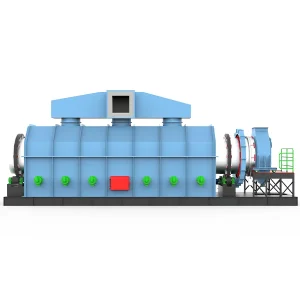
Mushroom Drying Machine 200 kg/h
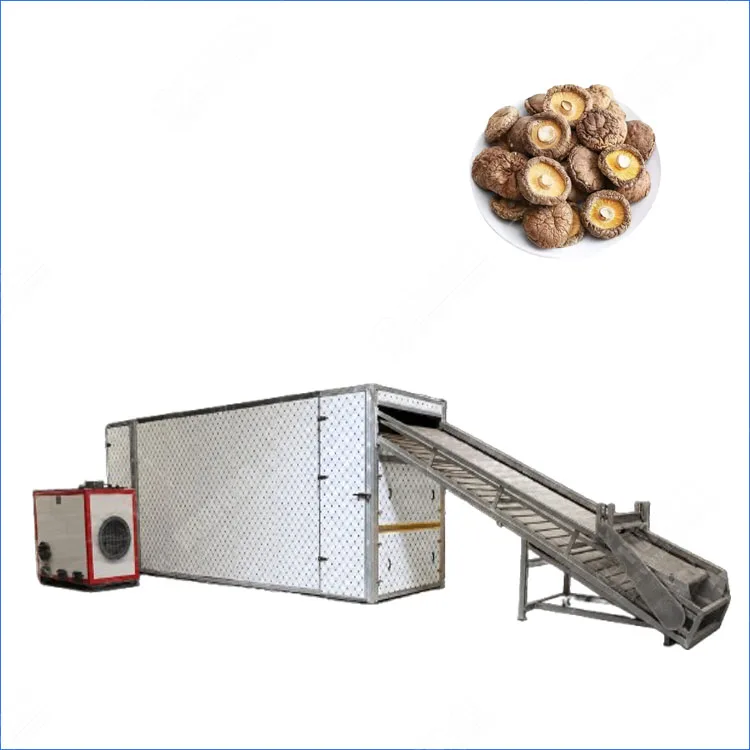
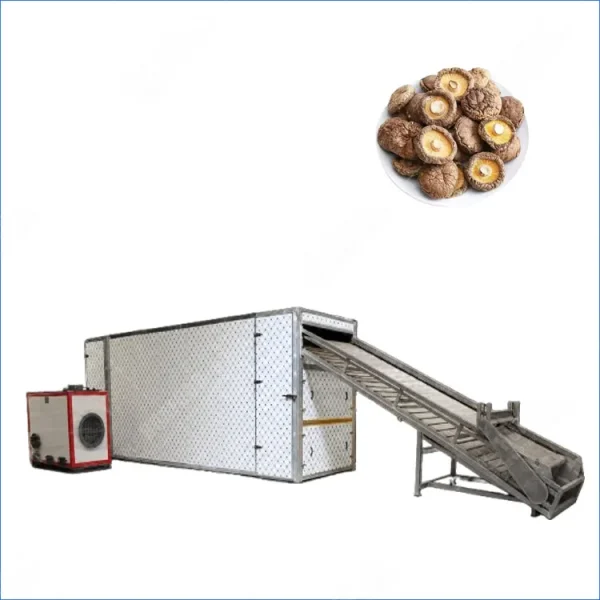
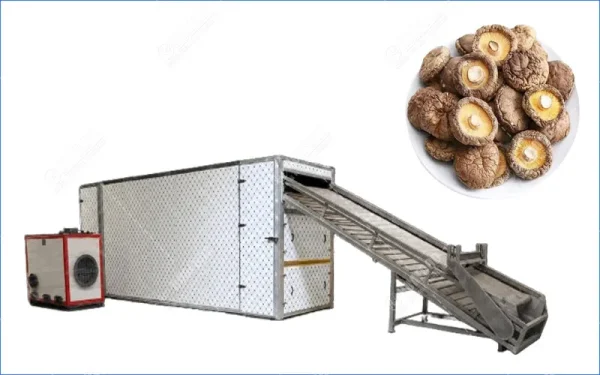
Mushrooms are mostly water wrapped in a delicate structure — dry them hard and the slice collapses into a brown, brittle scrap; dry them gently and unevenly and the batch spoils in the bag. A mushroom drying machine manages that balance on a conveyor: staged hot-air zones that pull surface water softly, finish the centre slowly, and exit slices at uniform low moisture with colour, rehydration and aroma intact — the three properties dried-mushroom buyers actually test.
How it works
Washed, sliced mushrooms spread in a single even layer onto a mesh belt that carries them through a multi-zone drying chamber. Early zones run moderate temperature and airflow that remove surface moisture without case-hardening the thin flesh; later zones run warmer, drier air that finishes the centre along the gradient the early stages prepared. Air passes through the product bed, and humidity purges to exhaust while heat recirculates. Belt speed sets dwell; exit moisture is the specification — typically below 10% for shelf stability — and zone settings are logged per batch. Slice thickness upstream decides everything downstream: even slices dry even; uneven slices become the batch’s wet spots.
Suitable for
Dried mushroom slice producers supplying retail, soup and seasoning chains; mushroom powder mills needing crisp, low-moisture feed; health-food and extract processors drying at volume; farms converting seasonal flushes into shelf-stable product; lines sharing drying duty across mushrooms, sliced roots and herbs with zone changes.
Not suitable for
Freeze-dried mushrooms, whose premium market runs an entirely different process; whole-button drying without slicing, which needs far longer dwell than belt dryers price in; tiny farm volumes where a cabinet tray dryer holds the economics; and buyers without moisture-barrier packing — dried slices reabsorb humidity fast, and packing is part of the drying spec.
Material & compliance
Chamber, belt and contact surfaces in SUS304 (EN 1.4301) food-grade finish; food-grade mesh belt with sealed washdown drives; zoned heaters and fans with instrumented control; hygiene access for belt and chamber cleanout between crops.
Supplied with CE declaration of conformity and DoC on request; material certificate EN 10204 3.1 available for contact parts.
Selection notes
Size by fresh-input tonnes and water load: mushrooms are over 90% water, so evaporative duty — not belt length — sets the real rate. Ask for the zone profile validated on your slice thickness, since thin slices case-harden under hot entry air. Confirm exit-moisture uniformity across the belt width; wet edges are the spoilage seed. Compare energy options against your utilities — electric, gas and steam-heated variants price differently to run. And verify cleanout between crops, since mushroom debris and spores build in corners, and the hygiene design earns its price at changeover and audit.
When you should not buy this machine: If your mushroom volume is a few hundred kilos a season, a cabinet tray dryer holds the economics at a fraction of the capital. And if your target product is freeze-dried slices for premium export, the hot-air belt is the wrong process entirely — price the freeze dryer honestly before buying the cheaper machine for the wrong market.
Key specifications
| Parameter | Value |
| Capacity | 100-400 kg/h fresh input by slice thickness and zones (TYPICAL, confirm with factory) |
| Drying zones | 3-5 temperature stages (TYPICAL) |
| Exit moisture | Below 10% by spec (TYPICAL) |
| Heating | Electric / gas / steam options |
| Contact material | SUS304 (EN 1.4301) |
| Power supply | 380V/3P/50Hz, 8-25 kW class by heating type |
Specification values are industry-typical ranges for this machine class and are not verified against a specific factory datasheet. Replace them with measured factory data before publication.
FAQ
What slice thickness should we dry at?
Three to five millimetres is the working range — thick slices hold moisture in the centre, thin ones crisp into powder on the belt. Choose the thickness your buyer specifies and hold the slicer to it; dryer settings cannot compensate for uneven slicing upstream.
Why did our trial batch turn brown?
Usually entry-zone temperature too high or slices overloaded into a deep bed. Mushrooms brown enzymatically when surface air is hot before surface water is gone. Ask the factory to run the profile on your slice thickness and inspect colour at every zone, not only at exit.
Can the same dryer run other vegetables?
Yes — staged hot-air physics is shared across diced and sliced vegetables with zone and dwell changes. Confirm changeover cleaning between strong-flavoured crops, since mushroom aroma carries into the next batch if the chamber is not cleared.
Related equipment
This unit is one stage of a complete processing line. For the full range of drying and dehydration equipment, or to compare this model against the Belt Hot Air Dryer 1 t/h 30 kW, see the complete equipment catalogue. Capacity, material grade and utility requirements can be confirmed through a quote request.

Reviews
There are no reviews yet.