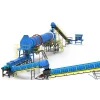
Rotary Dryer 500 kg/h
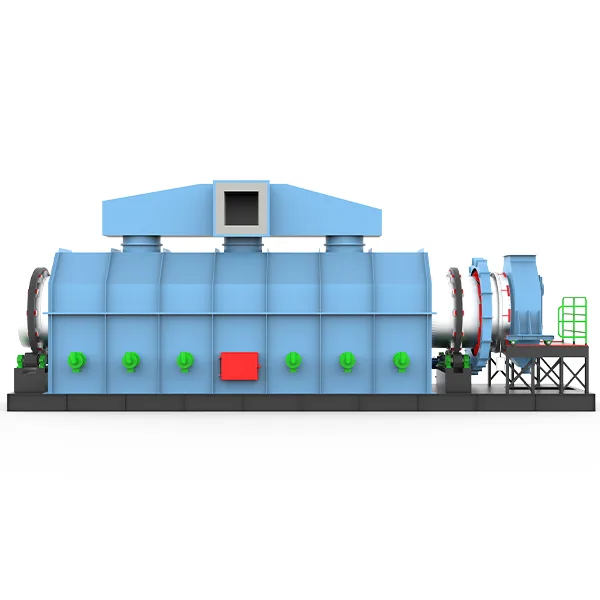
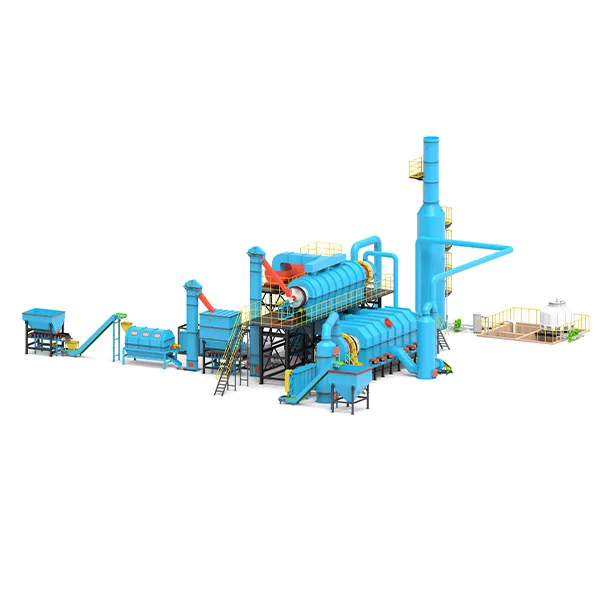
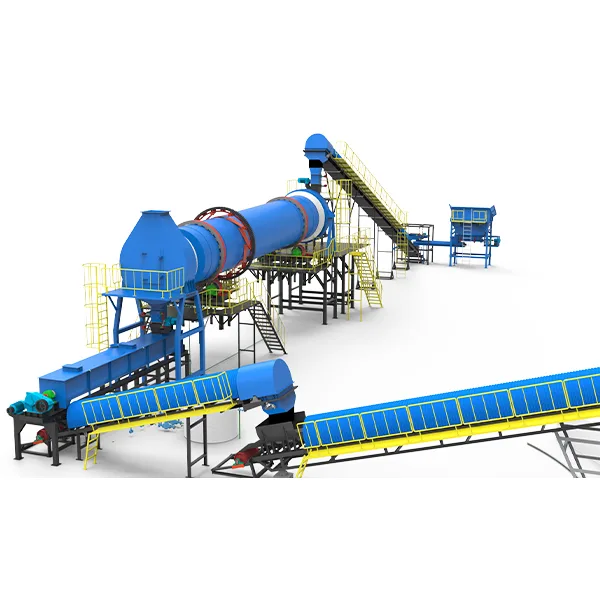
Drying unit built on tumbling. Product enters a slowly rotating drum fitted with internal flights — angled plates that lift the material and drop it through the hot-air stream as the drum turns. The flights exist so that the same piece is exposed again and again during its passage, and that repeated exposure is what makes a rotary dryer uniform at throughputs where a tray dryer would need a building.
How it works
Wet product is fed into the raised end of a drum rotating on trunnion rollers. Internal flights pick the material up as the drum turns and shower it down through the drying air, which flows either co-current — entering at the feed end and leaving at the discharge — or counter-current, where hot air meets the driest product. The drum is set at a slight angle, so the product advances by gravity as it tumbles, and residence time is set by the angle and the rotation speed.
The two decisions a buyer makes are the heating source and the air direction. Co-current drying runs hot air onto wet product, giving high initial evaporation and a gentler treatment of the finished product as the air cools; counter-current puts the hottest air on the driest material and finishes hot, which suits products where the final moisture has to go low. Most fruit and vegetable applications run co-current, because the products are temperature-sensitive and the final dryness target is moderate.
Suitable for
High-throughput dehydration of vegetable pieces, pomace, herbs and by-product streams where tray drying is too slow; continuous operations feeding from a blancher, cooker or washer; plants with an existing steam or hot-water supply that can heat the drum without new fuel infrastructure; products that tolerate tumbling, where the mechanical action is acceptable; sites where the dried product is animal feed or ingredient grade rather than retail-grade appearance.
Not suitable for
Delicate products that break up under tumbling, where the mechanical loss is unacceptable; retail-grade products where appearance is the specification, because tumbling marks the surface; sticky or sugar-laden products that build up on the flights and drum wall; operations with a low final moisture target and a tight colour specification, which usually need a belt or fluidized dryer; lines without dust handling, because the air leaving the drum carries fines.
Material & compliance
Drum, flights, feed and discharge chutes in SUS304 (EN 1.4301); drum shell on trunnion rollers with a drive that is guarded and enclosed. Seals at the drum ends designed for clean-out, because product packs into the seal gap and carbonises if left. Air path with inlet filtration and dust collection at the outlet, arranged so fines do not discharge into the workroom. Heating circuit pressure-rated and fitted with the protection appropriate to the heat source.
Supplied with CE declaration of conformity and DoC on request; material certificate EN 10204 3.1 available for contact parts.
Selection notes
Ask for evaporation capacity and final moisture at the same operating point, not one or the other — a drum is specified on water removed per hour, and the final moisture is what the residence time and air temperature deliver together. Ask how residence time is adjusted between products and how wide the range is. Check the build-up behaviour on your product, because sticky material on the flights is the failure mode that turns a continuous dryer into a stop-start one. Check the dust collection arrangement against your site and the seal design against your cleaning regime.
When you should not buy this machine: If your product is retail-grade fruit that must look like fruit, tumbling will mark it and the dryer will be blamed for what the product specification actually requires. And if your product is sticky or sugar-heavy, a belt or fluidized dryer handles it without the build-up.
Key specifications
| Parameter | Value |
| Evaporation capacity | 200-1500 kg water/h by model (TYPICAL, confirm with factory) |
| Drying temperature | 60-160 °C by product (TYPICAL) |
| Drum rotation | Slow, with internal lifting flights |
| Air flow | Co-current or counter-current by design |
| Heating | Steam, hot water or electric by site |
| Residence time | Set by drum angle and rotation speed |
| Contact material | SUS304 (EN 1.4301) |
| Power supply | 380V/3P/50Hz or 415V/3P/50Hz, customizable |
Specification values are industry-typical ranges for this machine class and are not verified against a specific factory datasheet. Replace them with measured factory data before publication.
FAQ
Why does the product come out with surface marks?
Tumbling. The flights lift and drop the material, and on soft fruit and vegetable pieces that contact leaves marks. Where the finished product is sold on appearance, this is the wrong dryer — belt and fluidized dryers tumble less or not at all.
What is the difference between co-current and counter-current?
Air direction. Co-current puts the hottest air on the wettest product and suits temperature-sensitive materials; counter-current puts the hottest air on the driest product and drives final moisture lower. Most fruit and vegetable applications run co-current.
How is residence time changed?
Drum angle and rotation speed. A steeper angle and faster rotation move product through faster and shorten drying; the trade is that residence time and throughput move together, so the setting is made against the product, not against the clock.
Related equipment
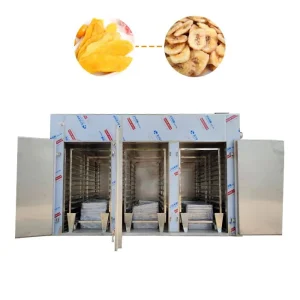
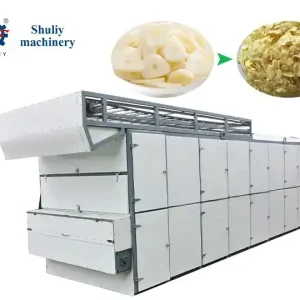
This unit is one stage of a complete processing line. For the full range of drying and dehydration equipment, or to compare this model against the Belt Hot Air Dryer 1 t/h 30 kW, see the complete equipment catalogue. Capacity, material grade and utility requirements can be confirmed through a quote request.

Reviews
There are no reviews yet.