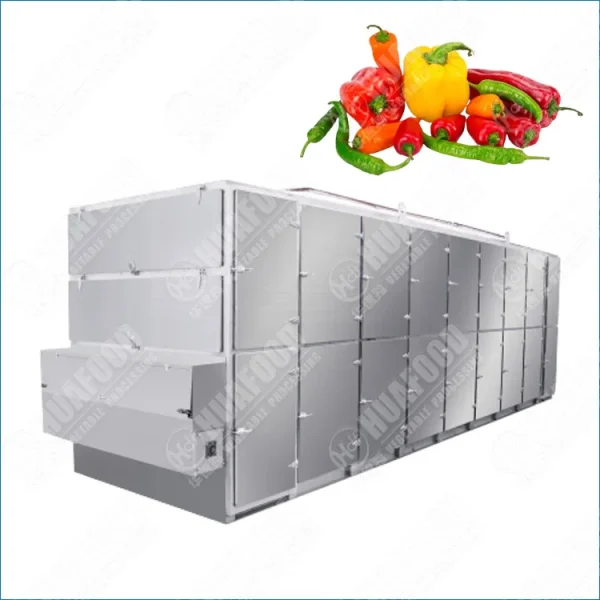

Chili Drying Machine 400 kg/h
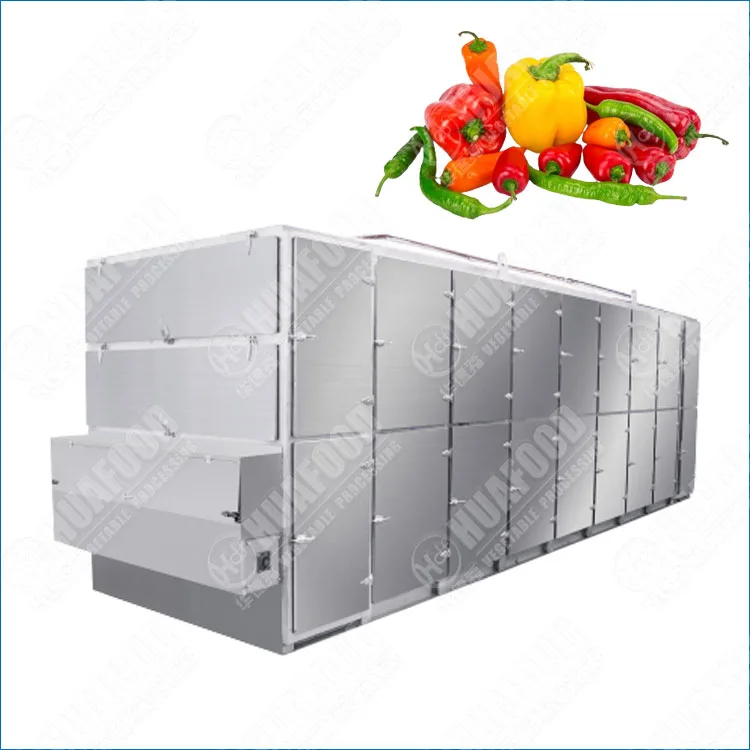
Chili’s value lives in its colour and its pungency, and both survive drying poorly when done badly. Sun-drying is cheap and slow, and it surrenders colour to UV, moisture to weather and lots to mould. A chili drying machine replaces the weather with a controlled profile: staged hot-air zones that hold skin colour, drive moisture evenly out of the waxy pod, and exit product at the moisture spec traders and mills demand — in hours, whatever the sky is doing.
How it works
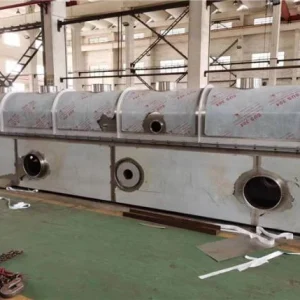
Whole or sliced chilies spread onto a mesh belt that carries them through a multi-zone drying chamber. Entry zones run moderate air that warms the pod without setting the skin; middle zones drive bulk moisture out of the flesh; final zones finish at higher temperature to hit exit moisture — typically 10-14% for whole dried chili, low enough for storage, high enough to keep pods from shattering. Air passes through the product bed, humidity purges to exhaust, and heat recirculates for efficiency. Belt speed and zone settings log per batch; pungency is unaffected by temperature in the working range, but colour is not — profiles stay below the browning threshold.
Suitable for
Chili traders and processors drying whole pods for the spice chain; chili powder mills needing consistent-moisture feed for grinding; paprika and colour-grade producers where appearance sets price; dried-chili product makers — flakes, sections, powder — feeding cutting and milling lines; co-operatives converting fresh harvest at monsoon-proof rate.
Not suitable for
Smoke-dried specialty products whose process defines the flavour; very small farm lots where sun and racks remain free; fresh-chili packing lines that ship green; and buyers without moisture management after drying — dried pods reabsorb humidity, and bagging is part of the spec.
Material & compliance
Chamber, belt and contact surfaces in SUS304 (EN 1.4301) food-grade finish; food-grade mesh belt with sealed washdown drives; zoned heaters and fans with instrumented control; dust management for capsicum-containing air, which irritates eyes and respiratory tracts in the drying hall.
Supplied with CE declaration of conformity and DoC on request; material certificate EN 10204 3.1 available for contact parts.
Selection notes
Decide whole-pod versus sliced duty first: whole pods need longer dwell and gentler air than slices, and the honest machine choice follows your dominant format. Ask for the colour audit — a factory trial should compare dried colour against your reference grade, because colour sets price in most chili trade. Confirm exit-moisture range against your storage climate; humid regions need the drier exit spec and the energy to hold it. Size by fresh-input tonnes — chilies are over 75% water and evaporative duty sets the rate. And check capsaicin dust handling in the hall layout; the machine dries chilies, but the air it exhausts carries the heat.
When you should not buy this machine: If your chili volume is a few hundred kilos a season, sun drying with raised racks and weather cover costs nothing and holds quality acceptably. And if your product is smoked or fermented chili where process flavour is the point, controlled hot air is the wrong tool regardless of its efficiency.
Key specifications
| Parameter | Value |
| Capacity | 200-800 kg/h fresh input by format and zones (TYPICAL, confirm with factory) |
| Drying zones | 3-5 temperature stages (TYPICAL) |
| Exit moisture | 10-14% whole pod by spec (TYPICAL) |
| Heating | Electric / gas / steam / biomass options |
| Contact material | SUS304 (EN 1.4301) |
| Power supply | 380V/3P/50Hz, 10-30 kW class by heating type |
Specification values are industry-typical ranges for this machine class and are not verified against a specific factory datasheet. Replace them with measured factory data before publication.
FAQ
Does machine drying reduce pungency?
Not in the working temperature range — capsaicin is heat-stable at drying profiles. What suffers at high temperature is colour, not heat. Ask for the colour audit at the profile the factory proposes; pungency follows the pod, colour follows the profile.
Whole pods or slices — which dries better on a belt?
Slices dry faster and more evenly; whole pods protect the seed and suit the whole-pod trade. Belt dryers run both, but dwell and zone settings differ — confirm the machine’s validated profile for your dominant format before committing.
How do we handle the irritating exhaust air?
Location and extraction — dryers exhaust humid, capsaicin-bearing air that stings eyes and throats. Plan the exhaust away from work areas and workers’ paths, and consider simple scrubbing or tall discharge. It is a hall-design question worth settling before installation day.
Related equipment
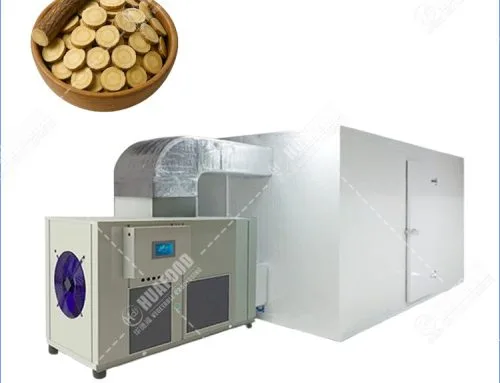
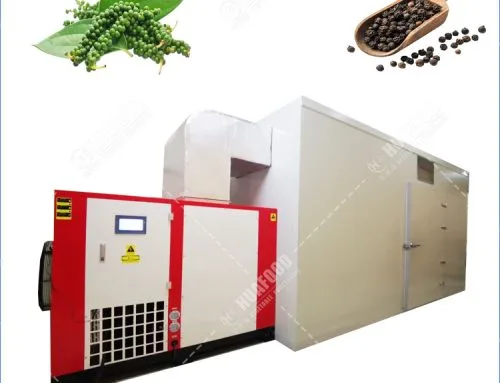
This unit is one stage of a complete processing line. For the full range of drying and dehydration equipment, or to compare this model against the Belt Hot Air Dryer 1 t/h 30 kW, see the complete equipment catalogue. Capacity, material grade and utility requirements can be confirmed through a quote request.
Reviews
There are no reviews yet.