Apple Grading Machine 5 t/h
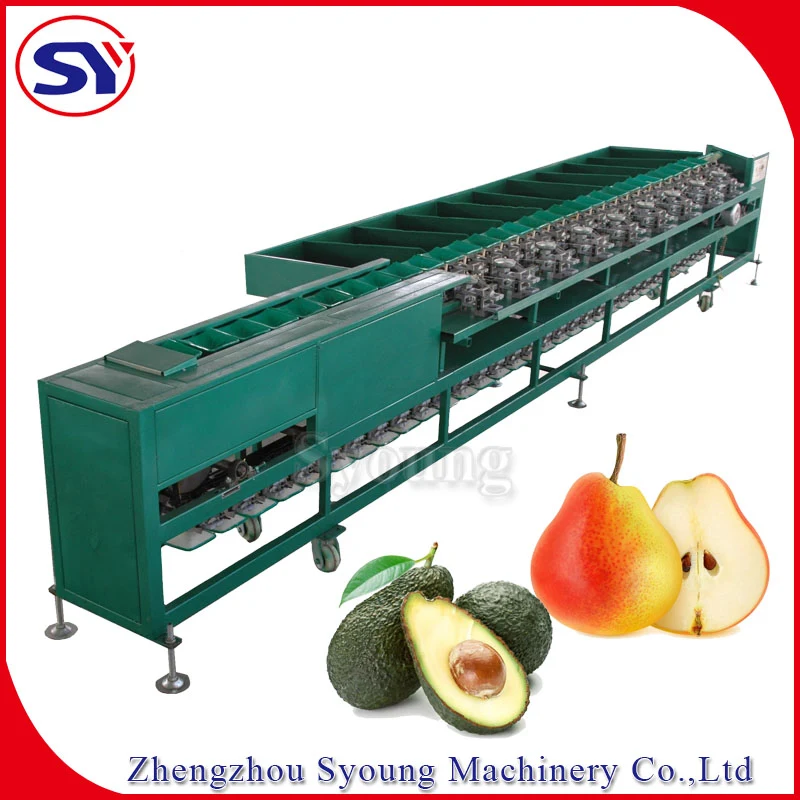
Apple buying is a exercise in trust: the buyer weighs the first bag and judges the whole pallet by it. Growers and packers who mix sizes into one class sell the pallet at the worst apple’s price. Grading fixes that economics — and apples make grading machines earn their keep, because the fruit is firm enough to machine-handle yet bruise-prone enough to punish hard drops and metal contact. A apple grading machine sizes by roller gap and weighs by cup, splitting intake into clean market classes while handling fruit at the contact physics apples tolerate.
How it works
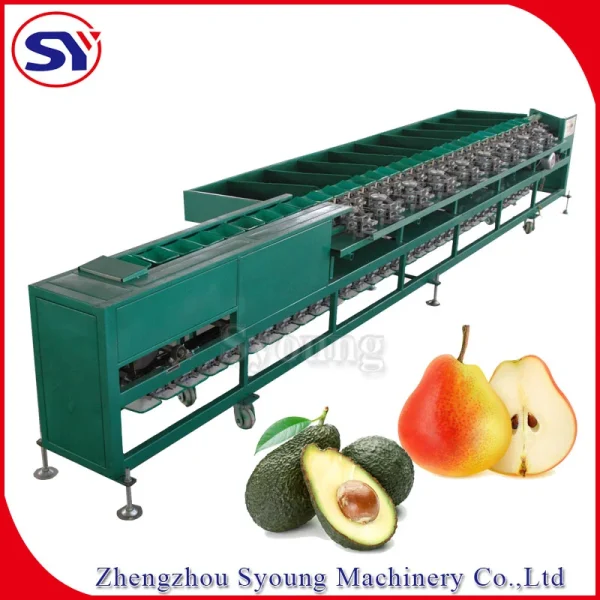
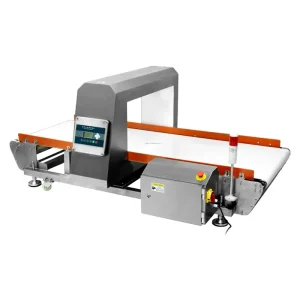
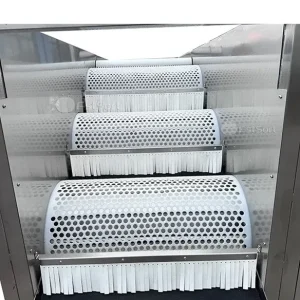
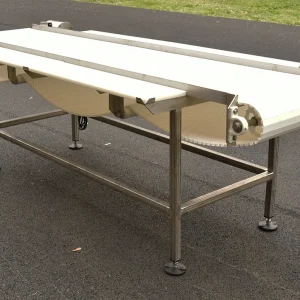
Intake fruit single-layers onto powered roller chains. Diameter grading runs first where specified: rotating rollers in widening gaps let small fruit drop early and large fruit carry on, sizing without touching fruit-on-fruit. Weight grading follows on carrying cups or rails: each apple rides a cup that tips or releases at its set weight station, dropping into a lane per class. Lane count equals grade count — typically four to eight. Soft drop liners and short fall heights protect the flesh at every discharge, and a packing-table stage collects each class for bagging or traying. Set points adjust by class throughout the season.
Suitable for
Packing sheds grading member fruit into retail classes; juice plants splitting processing-grade from fresh fruit before pressing; storage operations grading out of CA rooms at despatch; exporters building size-uniform cartons for class-based contracts; farm shops running bag-your-own classes at harvest peaks.
Not suitable for
Cherry or berry volumes — small stone fruit needs cup pitch and drop designs built for it, not adapted; orchards whose entire crop sells farm-gate ungraded by choice; surface-defect sorting, which is a vision or inspection-table job this machine only assists; and handlers without cold-chain cover behind the grader, since graded fruit waits at ambient at their cost.
Material & compliance
Frame, rollers, cups, lanes and chutes in SUS304 (EN 1.4301) or food-grade polymer contact surfaces; soft drop liners food-grade; sealed drives; guarded roller and cup trains with interlocked access.
Supplied with CE declaration of conformity and DoC on request; material certificate EN 10204 3.1 available for contact parts.
Selection notes
Decide the grading basis first: diameter, weight or both — fruit outlets in different markets buy on different measures, and dual-mode machines cost more but serve mixed contracts. Ask for the bruise audit: drop heights, liner materials and lane transfer design are where grading machines quietly damage the fruit they sort. Confirm changeover between varieties — cup sensitivity and roller pitch must move between small early and large late season apples without a shift of wrenching. Check the class count against your market’s price ladder; four lanes that match your buyers beat eight that idle. And verify hourly rating at your apple size, since throughput claims usually quote mid-season fruit.
When you should not buy this machine: If your crop is under a few hundred tonnes and one buyer, weight-and-eye grading at a packing table with a scale stays cheaper. And if your real quality lever is defect sorting — blemish, rot, colour — buy that machine first, because size grading packages fruit that inspection has already accepted.
Key specifications
| Parameter | Value |
| Capacity | 3-8 t/h by fruit size and lane count (TYPICAL, confirm with factory) |
| Grading basis | Diameter roller gaps and/or weight cups (TYPICAL) |
| Classes | 4-8 lanes by model (TYPICAL) |
| Fruit range | 55-100 mm diameter (TYPICAL) |
| Contact material | SUS304 (EN 1.4301) / food-grade polymer |
| Power supply | 380V/3P/50Hz, 3-7 kW class |
Specification values are industry-typical ranges for this machine class and are not verified against a specific factory datasheet. Replace them with measured factory data before publication.
FAQ
Diameter or weight grading — which do buyers want?
Retail chains increasingly specify count-based or weight-based classes; wholesale diameter markets still dominate in many regions. Check your contracts: if buyers pay on weight classes, cups win; if on diameter, rollers. Dual-mode machines cover both at a price premium worth paying when contracts mix.
How much bruising does machine grading add?
With correct drop liners and lane design, minimal — well under the bruising of hand-bucket handling at the same rate. Ask for the bruise audit at trial: measure damage on fruit run through the machine versus hand-graded controls, and compare against your tolerance.
Can it grade pears or other pome fruit?
Cup and roller geometry runs pear and quince with sensitivity changes, but pear’s softer flesh and shapes want gentler drops. Get per-fruit settings and bruise data from the factory before promising mixed-species duty.
Related equipment
This unit is one stage of a complete processing line. For the full range of sorting and grading equipment, or to compare this model against the Weight Grading Machine 3000 kg/h, see the complete equipment catalogue. Capacity, material grade and utility requirements can be confirmed through a quote request.
Reviews
There are no reviews yet.