Banana Slicing Machine 1200 kg/h
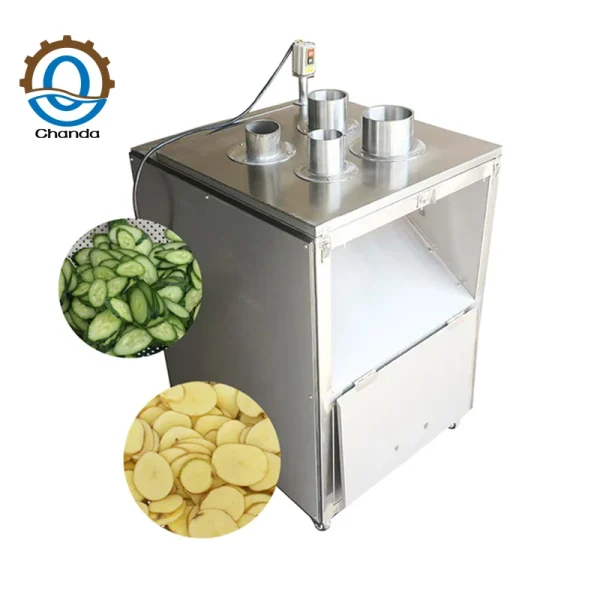
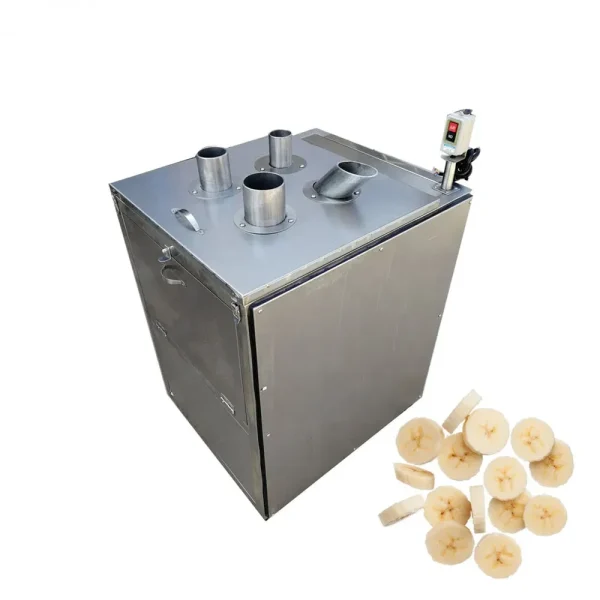
Banana is the softest fruit that industrial slicing has to face. Its flesh shears like custard, its sugars stick to blades, and every ragged cut weeps juice that browns before the slice reaches the next station. Chip makers live or die on slice geometry: a wavy or crushed disc fries unevenly, oils up and reads as seconds on the shelf. A banana slicing machine answers with sharp, clean-scissor cutting action — peeled fingers feed between cutting elements that shear discs off in one motion, at a thickness set once and held, from chip-thin to steak-thick, without the crush that hand slicing and cheap disc machines leave behind.
How it works
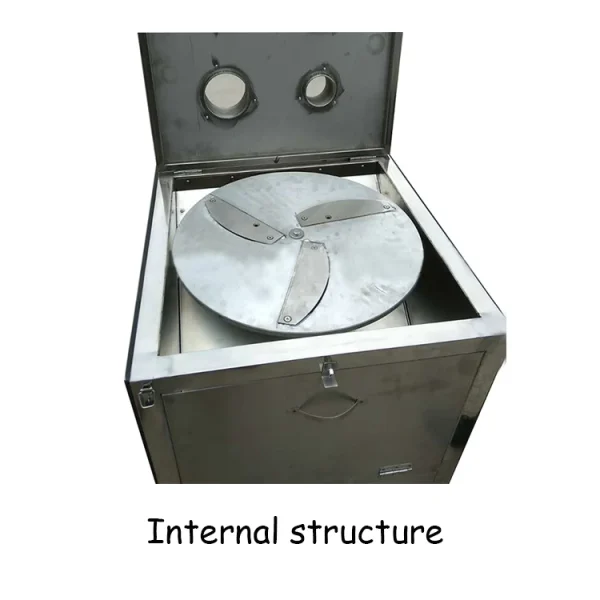
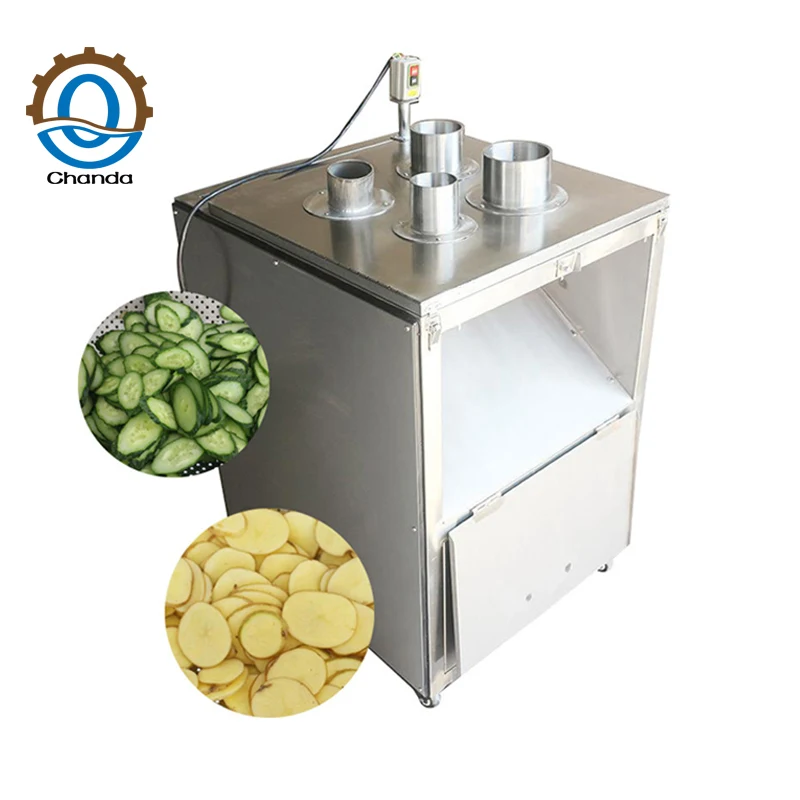
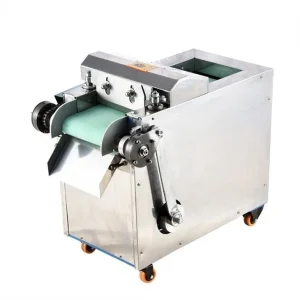
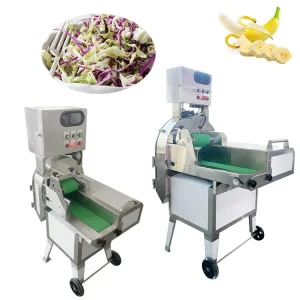
Peeled bananas load into a feed hopper or channel where pressure rollers — sprung to grip without crushing — advance the fruit into the cutting zone. A rotating or reciprocating blade set shears cross-section slices at a pitch set by the feed rate: thickness is a gearing or speed adjustment, not a blade change. Slices fall onto a perforated outfeed conveyor or directly into a wash or blanching flume; a light water spray or air knife can be fitted at the discharge to separate stuck slices and start surface cleaning. Blade access is front-loading for the daily sharpen-and-wipe cycle that banana sugar demands.
Suitable for
Banana chip producers feeding washing and frying lines; dried-banana and banana-chip snack factories; frozen banana-slice operations sizing discs for IQF; purée plants pre-cutting for faster cooking; baby-food producers needing uniform soft-fruit pieces without crush damage.
Not suitable for
Unpeeled fruit — the machine assumes clean columns, and peel fragments stop the blade field; plantain chips without a thickness and pressure check, since plantain is firmer and starchier; long cuts such as strips or lengthwise halves, which are a different machine class; and plants whose slicer sits idle most of the day because chip production is a weekly campaign.
Material & compliance
Hopper, channels, rollers, blade assemblies, chutes and frame in SUS304 (EN 1.4301) food-grade finish; blades food-grade stainless with documented sharpening interval; sealed washdown drives; interlocked blade access; tool-free conveyor removal for sanitation.
Supplied with CE declaration of conformity and DoC on request; material certificate EN 10204 3.1 available for contact parts.
Selection notes
Thickness tolerance is the product: ask for the slice distribution, not just the nominal setting, and get it demonstrated with ripe fruit at your sugar level. Sugar build-up on blades is the maintenance story — confirm the cleaning cycle, blade material and how quickly a dulled blade shows up as ragged discs. Check the roller pressure story for soft fruit; a machine tuned for potato will crush banana and no brochure admits it. Confirm outfeed geometry against your next machine — slices that free-fall into a fryer splash, and into water they stick. And if you also slice other soft fruit, get the changeover list in writing.
When you should not buy this machine: If chips are a side product under 50 kg of finished goods a day, a bench disc slicer plus good blades covers the work. And if your real volume is purée, skip slicing entirely and go straight to pulping — the cut adds nothing to a homogenized product.
Key specifications
| Parameter | Value |
| Capacity | 500-1500 kg/h by fruit firmness (TYPICAL, confirm with factory) |
| Slice thickness | 2-12 mm adjustable (TYPICAL) |
| Cut principle | Shear slicing with sprung feed rollers (TYPICAL) |
| Fruit condition | Peeled columns, culled for bruises (TYPICAL) |
| Contact material | SUS304 (EN 1.4301) |
| Power supply | 380V/3P/50Hz, 1-3 kW class |
Specification values are industry-typical ranges for this machine class and are not verified against a specific factory datasheet. Replace them with measured factory data before publication.
FAQ
What slice thickness suits banana chips?
Chip lines commonly run 2-4 mm: thin enough to crisp through without burning the sugar, thick enough to hold a bite. Thicker slices need frying-time or temperature changes. Ask the factory to demonstrate at your target thickness with fruit at your ripeness, then lock the setting.
How often do the blades need attention with sugary fruit?
Under continuous banana duty, a wipe-down every few hours and sharpening within the shift or day is common practice (TYPICAL). Sugar film dulls the shear edge invisibly fast; build the routine into the shift, and stock spare blade sets so sharpening never idles the line.
Can it slice other soft fruit like strawberry or mango?
Many models handle soft fruit with pressure and speed adjustments, but strawberry’s structure and mango’s fibre behave differently at the blade. Get per-fruit demos and the changeover procedure in writing rather than assuming one setting covers the catalogue.
Related equipment
This unit is one stage of a complete processing line. For the full range of cutting and slicing equipment, or to compare this model against the Potato Slicing Machine 1 t/h, see the complete equipment catalogue. Capacity, material grade and utility requirements can be confirmed through a quote request.
Reviews
There are no reviews yet.