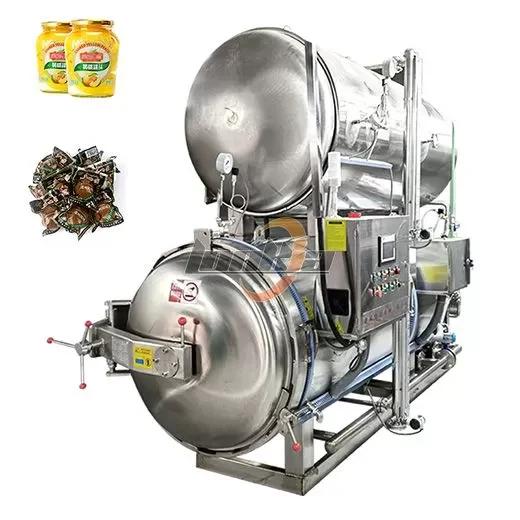
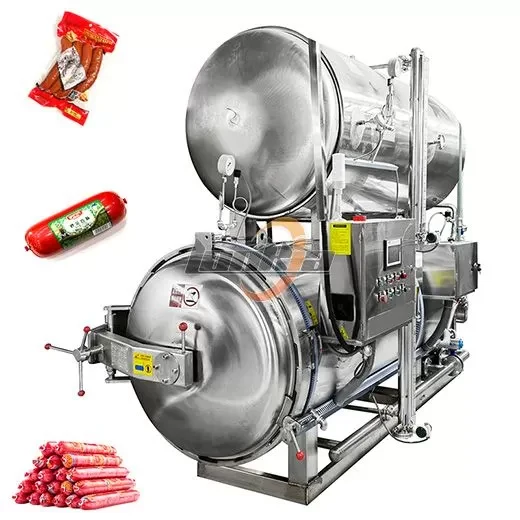
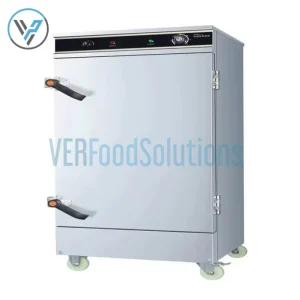
Batch Steam Cooker 300 kg/h
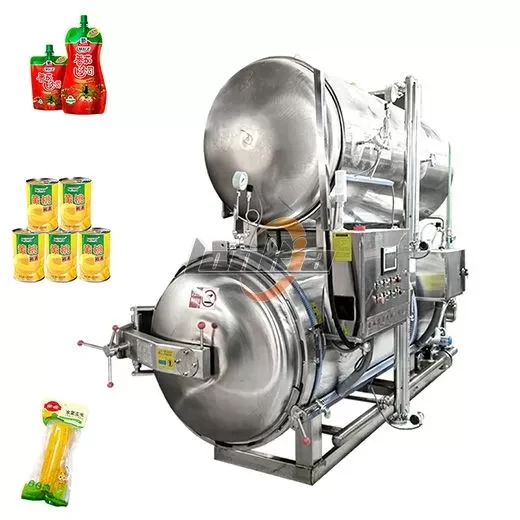
Not every plant runs one product at one rate. A central kitchen mashing potatoes at breakfast and steaming pumpkin at lunch, a fruit plant softening plums for one campaign and sweet potatoes for the next — their rhythm is batch, and a continuous tunnel serves that rhythm badly. The batch steam cooker is the flexible answer: a jacketed vessel, a steam supply, a recipe, and a cycle that ends the same way every time it is pressed.
How it works
Product loads into a perforated basket or directly into the jacketed chamber; the door seals and steam enters the jacket — and in some designs the chamber itself — raising product temperature under controlled ramp and hold phases. Recipes hold time, temperature and venting per product: potatoes to mash-soft, root vegetables to peel-soft where the skin releases after a shock chill, fruit to pulp-down for pulping lines. A probe verifies core temperature; the controller logs the cycle; the door unlocks on completion and the vessel tilts or the basket lifts for fast unloading to the next stage — ricer, pulper, peeling table or cooling. Steam condensate drains back to the boiler loop, which is where the machine’s efficiency lives.
Suitable for
Central kitchens and ready-meal plants steaming vegetable components on recipe-driven cycles with documentation; potato lines cooking for mashing, flake production or peel-assist upstream of abrasive peelers; fruit processors softening stone fruit and berries ahead of pulping; canning and jar operations pre-cooking fill components; pilot and seasonal plants whose product mix changes faster than a tunnel could be retuned.
Not suitable for
Continuous high-volume blanching ahead of a freezing line — the belt blancher’s steady state beats batch rhythm at tonnage; frying or roasting profiles, which are different heat-transfer problems; product needing water-immersion blanching for enzyme control, where the water Blancher’s leaching profile is the point; and kitchens without a steam boiler, because electric jacket versions shrink capacity and stretch cycle times.
Material & compliance
Vessel, jacket, baskets and door in SUS304 (EN 1.4301); pressure parts built and certified to pressure-equipment rules applicable in the destination market — ask for the certificate category in writing; door interlocks, two-hand or guarded opening on hot cycles; probe and logger integrated as standard, because repeatable means recorded.
Supplied with CE declaration of conformity and DoC on request; material certificate EN 10204 3.1 available for contact parts.
Selection notes
Ask for cycle data on your product — time to core temperature at your load weight, not the demo’s. Ask what boiler pressure the machine assumes and whether your plant’s steam supply matches. Check unloading design: tilt vessel versus basket lift changes the operator count downstream. Confirm pressure-equipment certification category and local registration requirements before ordering — steam vessels carry paperwork that varies by country. Ask how recipes are stored and whether cycles log automatically for HACCP. Price baskets and door gaskets — they are the consumables.
When you should not buy this machine: If your line feeds a continuous freezer with a steady tonnage, the belt blancher is the correct machine and a batch cooker is a step backwards. And if your kitchen only steams a few trays a day, a combi oven or honest pots cover it; the batch cooker earns its place between those scales.
Key specifications
| Parameter | Value |
| Capacity | 100-500 kg per batch by vessel size (TYPICAL, confirm with factory) |
| Heating | Steam jacket, optional chamber injection |
| Cycle | Recipe-held ramp/hold, probe-verified core temp |
| Cycle time | 20-60 min by product and load (TYPICAL) |
| Unloading | Tilt vessel or basket lift |
| Contact material | SUS304 (EN 1.4301) |
| Power supply | Steam supply 0.3-0.8 MPa + 380V controls |
Specification values are industry-typical ranges for this machine class and are not verified against a specific factory datasheet. Replace them with measured factory data before publication.
FAQ
Steam jacket or water immersion — which do we need?
Jacket steam cooks dry and keeps product flavour that water leaches; immersion blanches and controls enzymes at the cost of dissolved solids. If your next step is pulping or mashing, jacket steam wins; if your next step is freezing and enzyme deactivation is contractual, the water blancher is the reference machine.
Can it double as a peel-assist cooker?
Yes — root vegetables steamed then shock-chilled release skins to abrasion peeling with less flesh loss. State the intent at quotation so the cycle and basket design match; peel-assist is a common and well-supported use.
How precise is batch-to-batch consistency?
With a probe, a recipe and a log — very. Without the probe, it is a pot with opinions. Buy the instrumentation, and the machine becomes the kind of record your HACCP file wants to show.
Related equipment
This unit is one stage of a complete processing line. For the full range of cooking and blanching equipment, or to compare this model against the Jacketed Cooking Kettle 500 L, see the complete equipment catalogue. Capacity, material grade and utility requirements can be confirmed through a quote request.
Reviews
There are no reviews yet.