



Continuous Belt Blancher
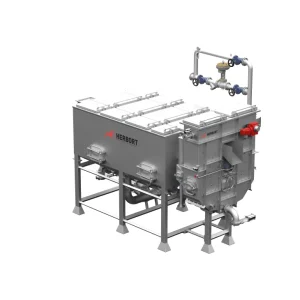
Continuous belt blancher that inactivates enzymes in vegetables before freezing or drying, with controlled temperature and residence time.
How it works
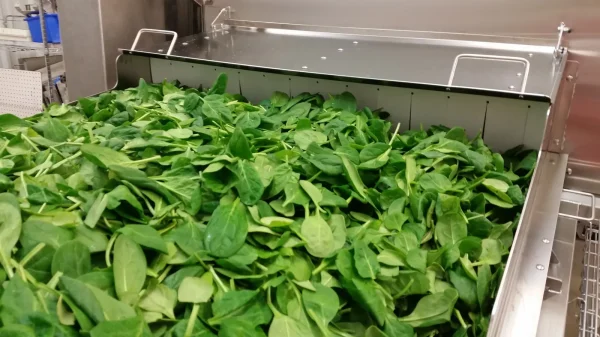
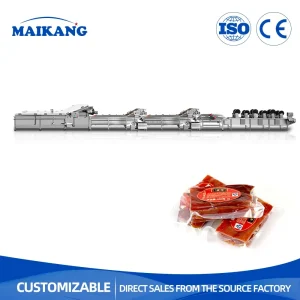
Product is spread on a perforated stainless belt and carried through a hot water (or steam) zone held at a set temperature. Residence time is controlled by belt speed. A cooling zone follows, then a dewatering section. Temperature and belt speed together determine the blanching effect, and both are recorded for process control.
Suitable for
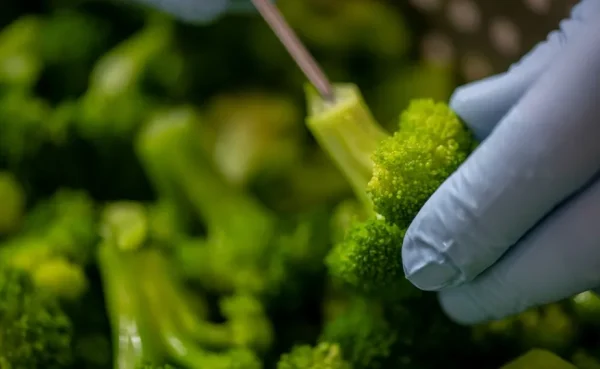
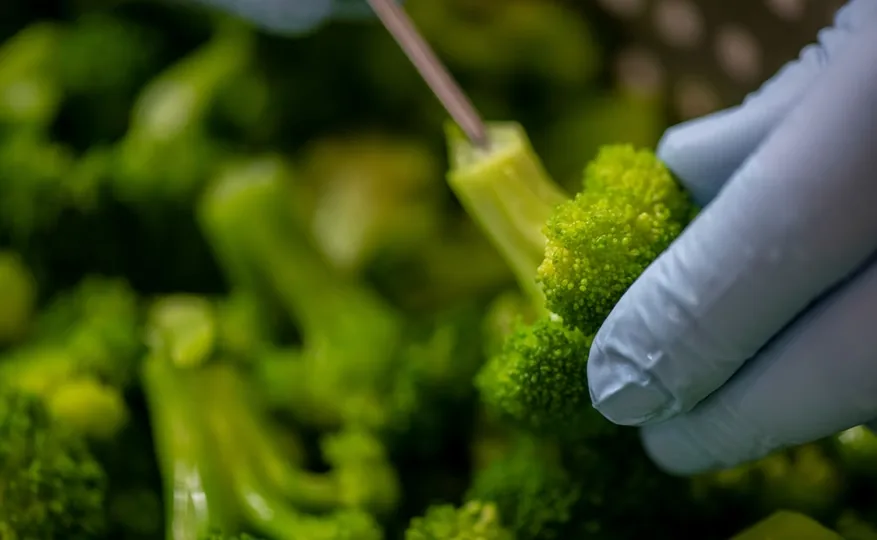
Green beans, peas, carrot, spinach, broccoli and most vegetables destined for freezing or drying.
Not suitable for
Products where blanching is not desired (fresh-cut, some fermentation processes); very small product that passes through the belt.
Material & compliance
Tank, belt and contact surfaces SUS304 (EN 1.4301); SUS316L (EN 1.4404) recommended where blanch water is salted or acidic. Contact welds Ra <= 0.8 um; insulated panels for energy efficiency.
CE declaration and DoC; EN 10204 3.1 for contact parts; temperature recording for HACCP process verification; hygienic design with CIP capability for the tank.
Selection notes
Blanching is a process-control purchase, not just a machine purchase — the ability to hold and record temperature and residence time is what protects your final product quality and your HACCP records. Check heat recovery between the blanch and cooling zones, because it is the largest energy lever.
When you should not buy this machine: Do not buy a blancher without temperature recording if you supply retail or export customers — you will not be able to demonstrate process control. Also avoid undersizing the cooling zone; poor cooling causes more quality loss than the blanching step itself.
Key specifications
| Parameter | Value |
|---|---|
| Capacity | 1000-5000 kg/h (TYPICAL, confirm with factory) |
| Blanch temperature | up to approx. 100 C for water blanching (TYPICAL) |
| Residence time | adjustable by belt speed (TYPICAL) |
| Contact material | SUS304 (SUS316L for salted/acidic water) |
| Heating | Steam or electric (TYPICAL) |
| Power supply | 380V/3P/50Hz or 415V/3P/50Hz, customizable |
| Automation | Fully automatic with PLC and temperature recording |
Specification values are industry-typical ranges for this machine class and are not verified against a specific factory datasheet. Replace them with measured factory data before publication.
FAQ
Why blanch before freezing?
To inactivate enzymes that would otherwise cause colour, flavour and nutrient loss during frozen storage. Without it, quality degrades even in a correctly frozen product.
How is the blanching effect controlled?
By temperature and residence time together. Belt speed sets residence time; both should be recorded so the process can be verified.
Can it use salted or acidulated water?
It can, but the contact material should be upgraded to SUS316L for salty or acidic conditions to avoid corrosion.
Related equipment
This unit is one stage of a complete processing line. For the full range of cooking and blanching equipment, or to compare this model against iqf fluidized bed freezer 1000 kg/h, see the complete equipment catalogue. Capacity, material grade and utility requirements can be confirmed through a quote request.
Reviews
There are no reviews yet.