Cherry Grading Machine 2 t/h
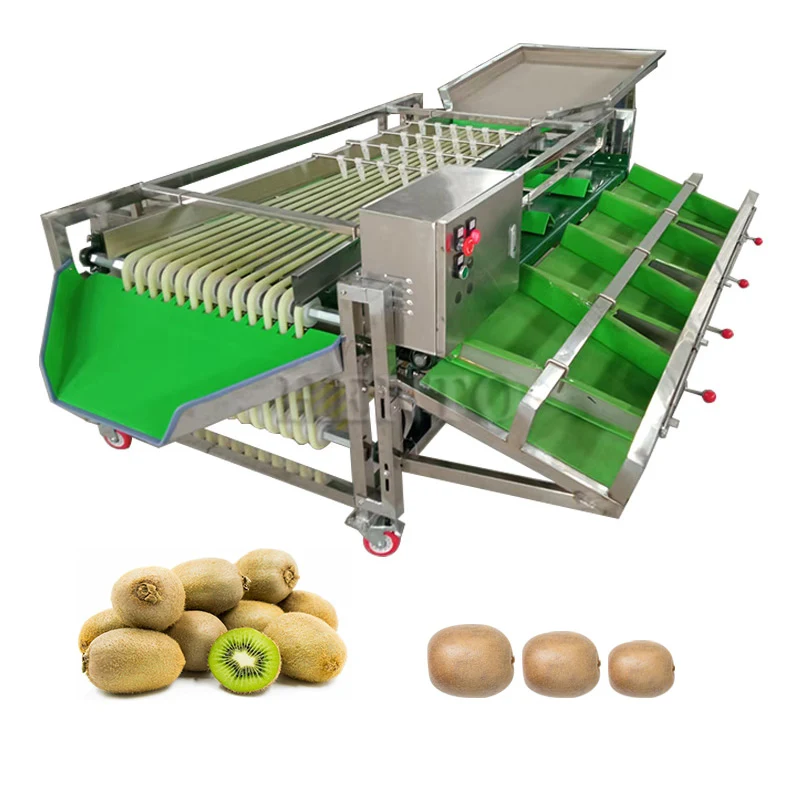
No fresh fruit prices its size classes further apart than cherry: a millimetre of diameter can move fruit between export and domestic money. And no fruit is easier to downgrade in handling — cherry bruised once, stem-pulled or pitted at a hard contact sells a class lower, silently. Hand sizing at cherry volumes is slow, expensive and inconsistent exactly when the season’s whole income moves through the shed in three weeks. A cherry grading machine sizes thousands of kilos an hour by roller gap, at drop heights and contact surfaces built for the most bruise-sensitive fruit on the line.
How it works
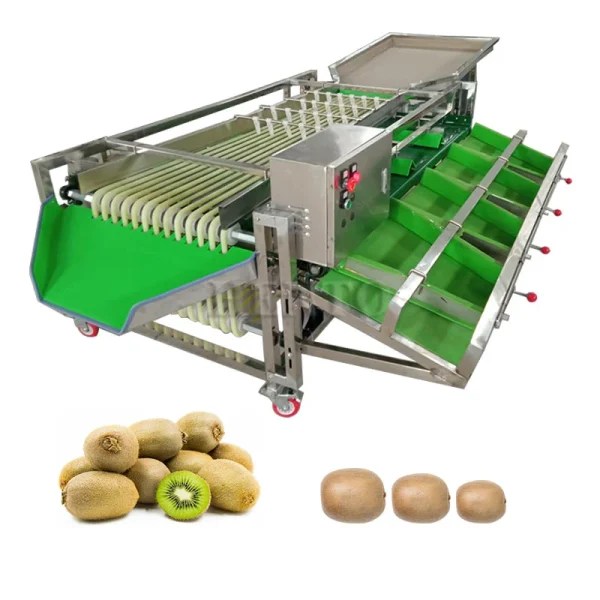
Intake fruit — usually pumped or belt-fed in water to avoid drops — single-layers onto a bed of rotating tapered rollers running in widening gaps. Small cherries drop between early narrow gaps; larger fruit carry to wider gaps and drop through in order. Each size class lands through a short, lined chute onto a takeaway belt for its lane, with fall heights measured in centimetres and liner materials chosen for cherry skin. Gap pitch and roller speed set class boundaries; water or dry dust control keeps the roller bed slipping gently rather than gripping. Output lanes feed direct to packing or back into cold water.
Suitable for
Cherry packing sheds building export classes by diameter; sweet-cherry growers splitting premium from retail fruit at despatch; sour-cherry processors separating processing-grade fruit before pitting; cooperatives grading member deliveries against pooled contracts; retail packers running size-uniform punnets and pouches.
Not suitable for
Weight-based grading — cherry classes trade on diameter, and weight cups add handling a cherry does not need; blueberry or grape volumes, whose berries want smaller cup pitch and different liner design; stem-on vs stem-off decisions, which happen upstream at de-stemming, not grading; and sheds whose bottleneck is deflection or colour sorting — those are vision and inspection jobs this machine complements, not replaces.
Material & compliance
Frame, rollers, chutes and lanes in SUS304 (EN 1.4301) or food-grade polymer contact surfaces; soft food-grade drop liners throughout; water-lubricated or dry-run roller beds per duty; guarded roller train with interlocked access.
Supplied with CE declaration of conformity and DoC on request; material certificate EN 10204 3.1 available for contact parts.
Selection notes
Bring fruit, not specs: cherry varieties differ by several millimetres in class boundaries, and the roller gap range must cover your season’s spread — ask the factory to set classes on your fruit at trial. Interrogate the bruise question with numbers: drop heights, liner materials and fruit-on-fruit contact points in the lane design, because in cherry every bruise is priced. Confirm water-handling compatibility if you feed in water — many cherry lines pump fruit, and the infeed must match. Check changeover between early and late varieties for gap settings and cleaning between blocks. And verify the class count against your actual price ladder: export, premium, retail, processing is four lanes doing real work.
When you should not buy this machine: If your cherry volume is a few tonnes across a short season with one buyer, hand sizing over a sorting table with sizing rings stays cheaper and gentler. And if quality is being lost upstream at harvesting and cooling, fix those first — a grader cannot upgrade fruit that arrives bruised.
Key specifications
| Parameter | Value |
| Capacity | 1-3 t/h by fruit size and lane count (TYPICAL, confirm with factory) |
| Grading basis | Roller gap by diameter (TYPICAL) |
| Classes | 3-6 lanes by model (TYPICAL) |
| Fruit range | 18-34 mm diameter (TYPICAL) |
| Contact material | SUS304 (EN 1.4301) / food-grade polymer |
| Power supply | 380V/3P/50Hz, 1-3 kW class |
Specification values are industry-typical ranges for this machine class and are not verified against a specific factory datasheet. Replace them with measured factory data before publication.
FAQ
Why roller sizing rather than weight cups for cherry?
Cherry markets price by diameter classes, and rollers handle fruit once with gentler contacts than cup loading and tipping. Weight cups earn their place on apple and stone fruit sold by count weight — for cherry they add handling without adding price.
How is bruising controlled?
Short lined drops, water-assisted infeed, and roller surfaces that carry rather than roll the fruit. Ask for bruise-audit numbers at trial on your variety — machine-graded versus hand-graded controls — and check they fall inside your export tolerance.
Can it grade grapes or blueberries?
Not without changes: berry crops want smaller gap pitch, different liner materials and usually water-run handling. Treat cherry machines as cherry-specific unless the factory demonstrates berry duty on your fruit with damage data.
Related equipment
This unit is one stage of a complete processing line. For the full range of sorting and grading equipment, or to compare this model against the Roller Size Grading Machine 3000 kg/h, see the complete equipment catalogue. Capacity, material grade and utility requirements can be confirmed through a quote request.

Reviews
There are no reviews yet.