
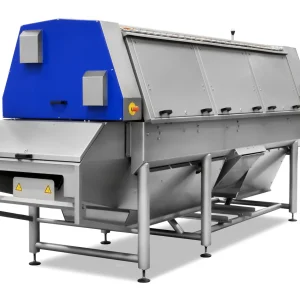
Pineapple Slicing Machine 600 pcs/h
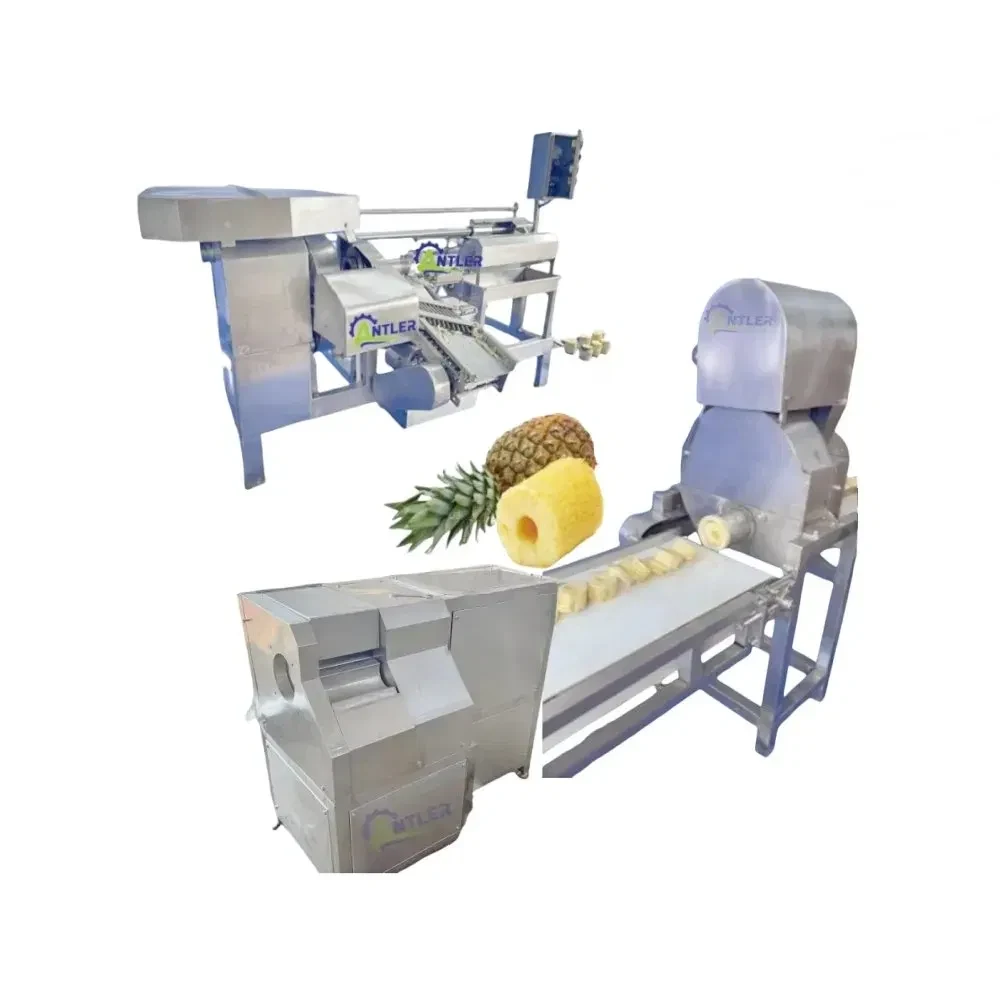
No fruit punishes hand work like pineapple. Armor skin, a fibrous core that must go, eyes that spiral the fruit and juice that enzymes everything they touch — peeling and coring by hand wastes a third of the fruit and a quarter of the shift. A pineapple slicing machine is built around exactly that geometry: it centres the fruit, strips the shell, bores the core and cuts the cylinder into rings or tidbits in one pass, at a rate and yield no cutting table reaches.
How it works
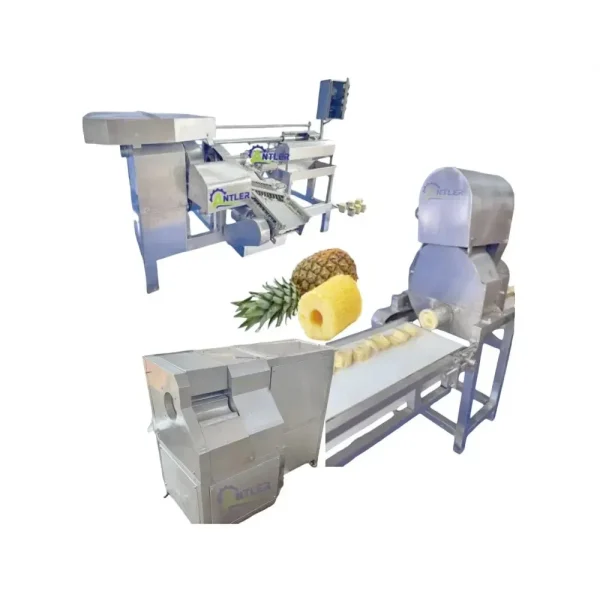
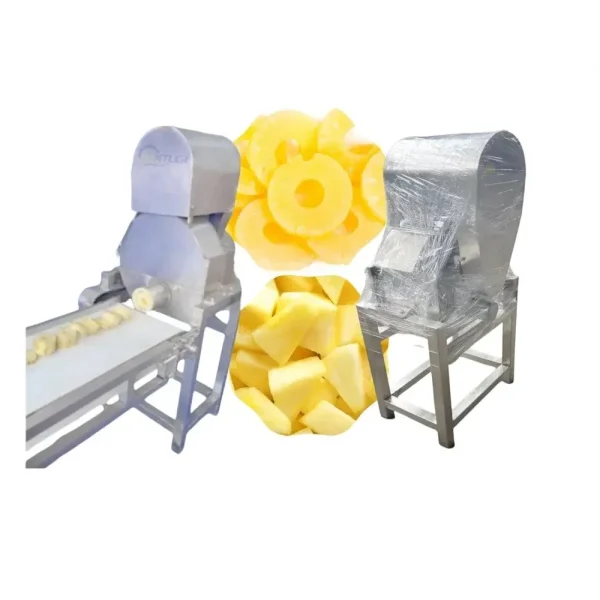
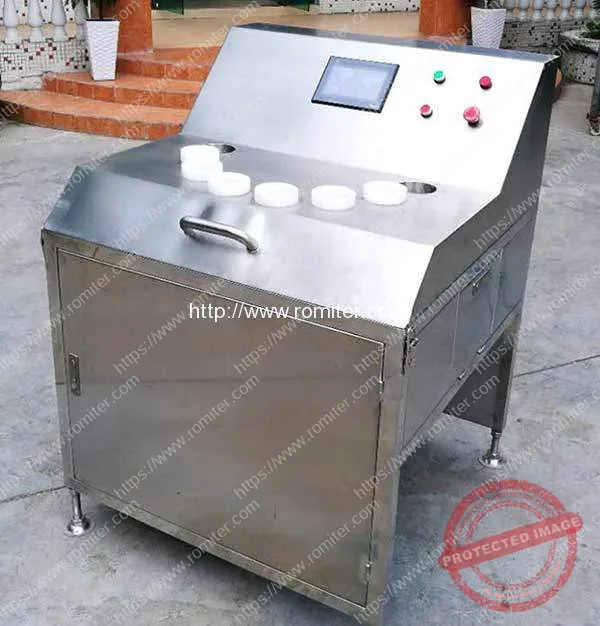
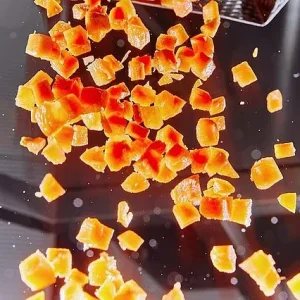
Fruit loads into indexed cups that centre each pineapple on its axis. The cutting sequence runs in stations: a peeling head follows the fruit’s contour with a profiled blade set, stripping the shell in one or two ribbons; a coring tube punches the fibrous core out the far end; and the peeled cylinder advances to a slicer — a circular blade set or knife carriage that cuts rings of set thickness, or feeds a dicing head for tidbits and chunks. Shell and core discharge separately as waste, which matters commercially: both are saleable by-products for juice and fibre, and a machine that separates them cleanly adds a revenue stream the cutting table never had. Cut thickness, cup size and station speed are set per fruit size class.
Suitable for
Canned-pineapple lines cutting rings, half-rings and tidbits to fill specification; fresh-cut processors producing retail pineapple cups and trays; juice and NFC plants feeding peeled cylinders to presses with the shell and core going to by-product extraction; dried-pineapple producers cutting uniform slices for even drying; any pineapple volume where peeling and coring labour is the bottleneck and yield loss is measured in tonnes.
Not suitable for
Mixed-fruit cutting, since the peeling and coring heads are pineapple-specific by design; tiny fresh-fruit shops, where a hand corer costs almost nothing; ungraded fruit — cup sizing assumes a diameter range, and unsorted fruit jams or loses yield, so a grader upstream is part of the layout; and buyers who cannot use shell and core by-products, who should reprice the economics without that credit before committing.
Material & compliance
Frame, cups, cutting heads and chutes in SUS304 (EN 1.4301) food-grade finish, designed for the washdown and acid exposure pineapple juice demands; blades hardened food-safe stainless with documented change procedure; waste augers separated from product flow; controls with per-station interlocks for the moving blade heads.
Supplied with CE declaration of conformity and DoC on request; material certificate EN 10204 3.1 available for contact parts.
Selection notes
Bring your fruit, not your tonnage: cup sizes, peeling-blade profiles and yield all key off pineapple size and variety, and the honest trial is on your fruit at your ripeness. Ask for the yield number — flesh recovery against whole-fruit input is the whole business case, and it varies more between machines than price does. Confirm the cut catalogue: rings, half-rings, tidbits and chunks may each need heads or inserts, and the quote should list what is included. Check waste handling — shell and core that exit mixed cost you the by-product sale and the cleaning time. And verify changeover between size classes; seasonal fruit size swings, and a day of shims per swing erodes the labour saving the machine exists to deliver.
When you should not buy this machine: If your pineapple volume is a few hundred fruit a day for fresh market, trained hand cutters with coring tools hold acceptable yield at a tenth of the capital. And if your fruit supply is ungraded or wildly mixed in size, fix the grading first — the machine only converts uniform fruit into money.
Key specifications
| Parameter | Value |
| Capacity | 300-800 pcs/h by fruit size and cut (TYPICAL, confirm with factory) |
| Fruit range | 100-160 mm diameter by cup set (TYPICAL) |
| Cuts | Rings, half-rings, tidbits by head / insert set |
| Waste | Shell and core discharged separately |
| Contact material | SUS304 (EN 1.4301) |
| Power supply | 380V/3P/50Hz, 2-5 kW class |
Specification values are industry-typical ranges for this machine class and are not verified against a specific factory datasheet. Replace them with measured factory data before publication.
FAQ
What yield should we expect against hand cutting?
Machines commonly recover noticeably more flesh than hand work because the peeling blade follows the fruit profile — but the honest number comes from a factory trial on your fruit, your ripeness, your cuts. Ask for the before-and-after on yield per tonne; it is the strongest number in the purchase file.
Does it handle the eyes as well as the core and shell?
The peeling head removes the shell; the eyes spiral deeper and are usually handled by a follow-up grooving or finishing pass — some machines integrate it, some leave it to a second head. Confirm what the quoted configuration removes and what remains, with photos of finished rings.
Can one machine serve canned and fresh-cut products?
Yes in cuts — rings for canning, chunks and tidbits for fresh-cut — but the downstream differs: canning wants brine-line pacing, fresh-cut wants washing and packing. The cutter is the shared stage; budget the two downstream flows honestly.
Related equipment
This unit is one stage of a complete processing line. For the full range of cutting and slicing equipment, or to compare this model against the Pineapple Peeling and Coring Machine 600 pcs/h, see the complete equipment catalogue. Capacity, material grade and utility requirements can be confirmed through a quote request.
Reviews
There are no reviews yet.