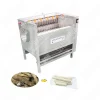
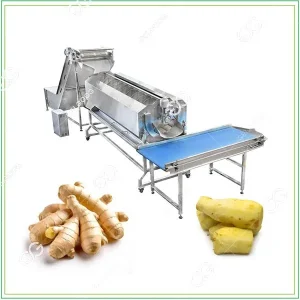
Vegetable Polishing Machine 1 t/h
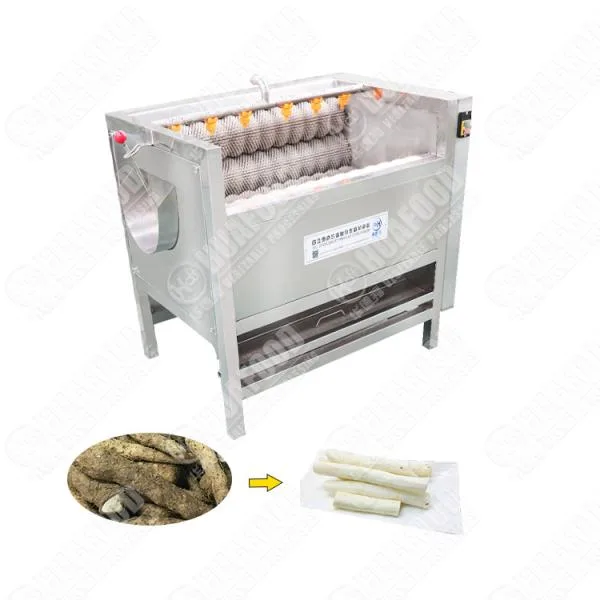
A washed potato with a wet skin looks dull, marks the bag and starts its shelf life one step behind. The last machine before packing on any serious root line is therefore not another washer but a polisher: dry soft brushes that buff the skin dry and bright, knock off flaking skin and hair roots, and hand the packer a root that photographs the way the label promises. It costs minutes of contact and returns days of shelf presentation.
How it works
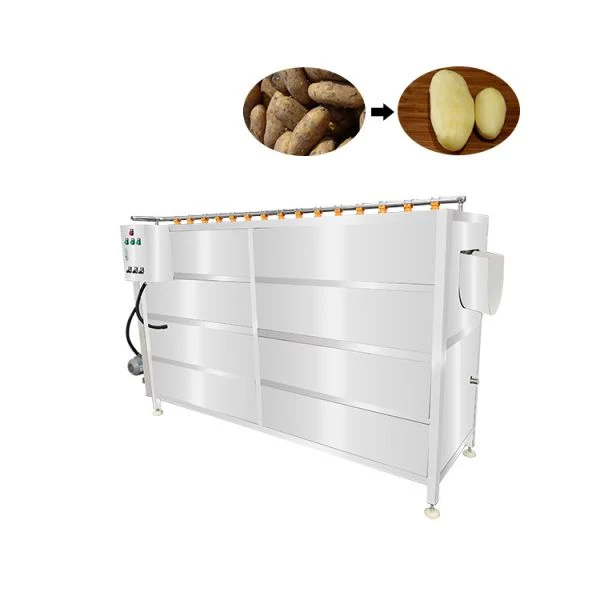
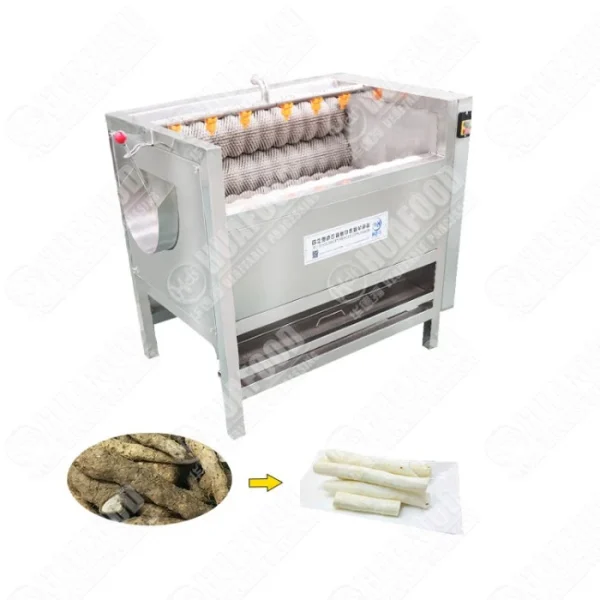
Washed, graded roots feed into a trough lined with rows of soft brush rollers turning toward each other. Product rolls on the brushes — the rotation is the point, because every surface meets a brush face — while the dry bristles absorb and throw off remaining surface water and buff the skin’s natural sheen up. Loose skin flakes, hair roots and residual debris fall through the brush gaps to a waste conveyor below; optional air knives at the discharge strip the last dampness from deep skins. Dwell time is short — seconds to a minute — because polishing works the surface, not the flesh. Brushes lift out for cleaning and wear change; some lines add a felt-pad stage for premium whole-pack presentation.
Suitable for
Potato packhouses finishing washed, graded stock for retail bags, where dry skins mean clean bags and longer shelf presentation; carrot and beet lines before punnet or poly packing; wash-line owners whose dryer stage leaves skins damp and whose customer feedback says so; farm shops and co-operatives adding a packed-grade line without adding a second wash line; and root-crop lines feeding weight-based packing, where wet skins skew every scale.
Not suitable for
Wet polishing of fragile produce — tomatoes and stone fruit want air drying, not brushes; peeling, which is a different job with harder brushes — the polisher works skin, not periderm; products with deep crevices holding water and soil, which need the washer retuned upstream; and low-volume farm stands, where towels and airflow cover the honest need.
Material & compliance
Trough, rollers, guards and discharge in SUS304 (EN 1.4301); brush filaments food-grade with documented stiffness grades — polishing brushes are soft, and a supplier who sells you peeling brushes as polishers is selling you a different machine; brush lifting and washdown access as standard because wet brushes grow what dry brushes prevent.
Supplied with CE declaration of conformity and DoC on request; material certificate EN 10204 3.1 available for contact parts.
Selection notes
Ask which brush stiffness grades ship and what a polish-grade set costs — this single spec decides whether the machine polishes or peels. Ask for a demonstration on your product straight from your washer at your wetness; the honest test is wet product, not showroom-dry. Check brush removal for cleaning — a machine that needs tools and an hour will be skipped. Ask about waste extraction below the brushes and whether an air-knife discharge option exists. Confirm throughput at your root size honestly.
When you should not buy this machine: If your packer wants wet product for a film-sealed pack, skip it — this machine’s whole value is dry, bright skins for dry-pack presentation. And if your washer’s discharge is already dry and bright, spend the budget downstream; the polisher fixes a presentation problem, and not every line has it.
Key specifications
| Parameter | Value |
| Capacity | 500-2000 kg/h by brush width (TYPICAL, confirm with factory) |
| Brushes | Soft food-grade bristle rollers, polish grade |
| Dwell | 30-60 s surface polishing (TYPICAL) |
| Options | Felt-pad finish stage, air-knife discharge |
| Waste | Under-brush waste conveyor / tray |
| Contact material | SUS304 (EN 1.4301) |
| Power supply | 380V/3P/50Hz, 1.5-4 kW class |
Specification values are industry-typical ranges for this machine class and are not verified against a specific factory datasheet. Replace them with measured factory data before publication.
FAQ
Is polishing just drying with extra steps?
It is drying plus presentation: brushes buff the skin’s natural sheen while they dry it, and knock off the flaking skin that a plain air dryer leaves stuck on. On potatoes and carrots the difference is visible across the bag — which is where the buyer sees it.
Will soft brushes damage new-season thin skins?
Polish-grade bristles on correctly set dwell, no — but worn or wrong-grade brushes will. That is why the stiffness grade and brush condition belong in your maintenance schedule, not in the brochure only.
Where does it sit in the line?
Last before packing, after washing and grading — a damp root polishes badly, so the washer’s discharge and any intermediate dryer set the polisher’s results. Ask the factory to review your line order; the machine is cheap and the sequence mistake is cheaper to avoid than to fix.
Related equipment
This unit is one stage of a complete processing line. For the full range of washing and peeling equipment, or to compare this model against the Potato Washing Machine 2000 kg/h, see the complete equipment catalogue. Capacity, material grade and utility requirements can be confirmed through a quote request.

Reviews
There are no reviews yet.