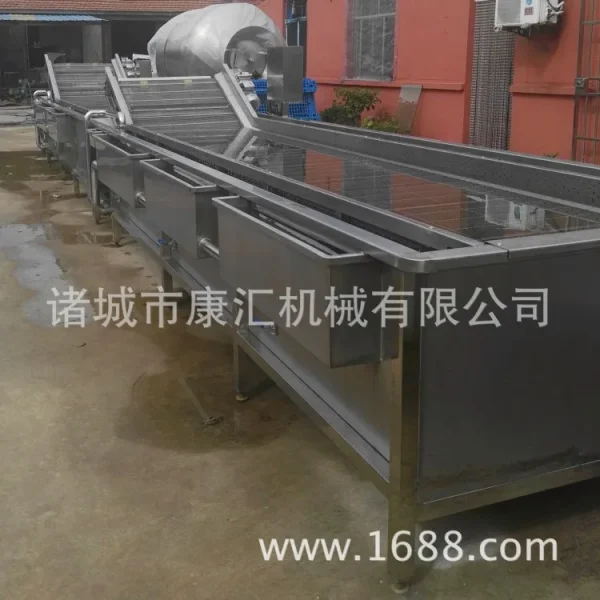
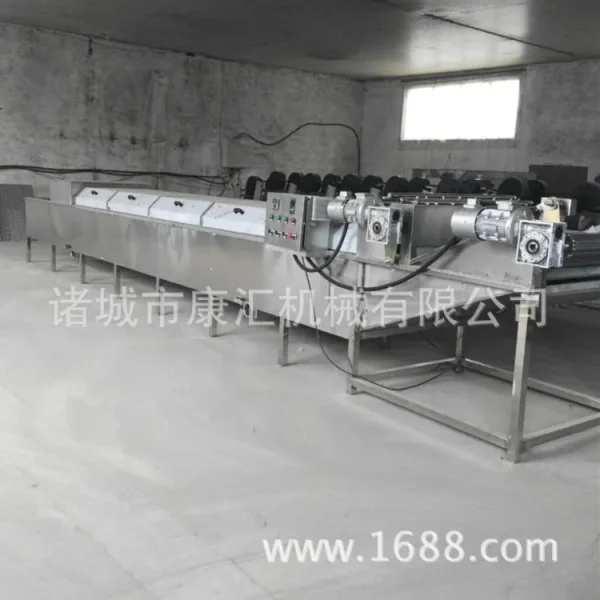
Water Immersion Thawing Machine 1 t/h
Every frozen processing line pays for thawing, and most pay too much. Ambient air thawing is slow and unpredictable — overnight blocks that are still frozen at the core by morning grind as ice-and-meat mixtures; microwave thawing is fast but cooks edges while centres lag, and the damage shows up as purge loss and texture complaints. Water immersion splits the difference properly: water transfers heat many times better than air, circulation keeps the boundary fresh, and tight temperature control holds the water below the point where surfaces cook. The result is thawed product on schedule, at temperature, with yield intact.
How it works
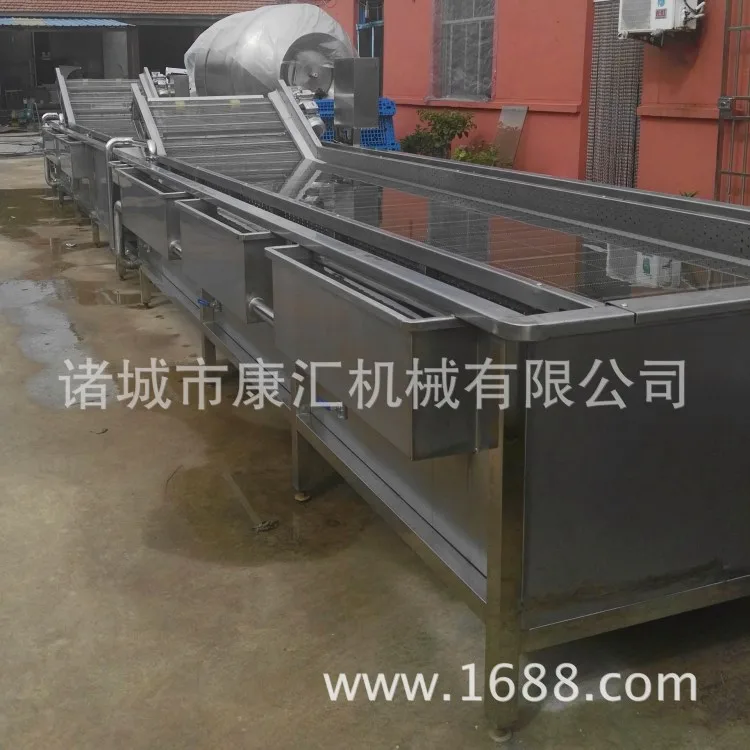
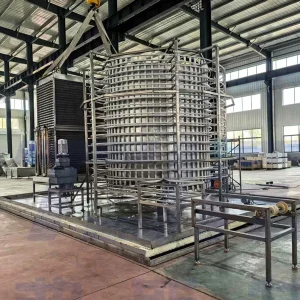
Frozen blocks or totes load into an insulated, jacketed tank of circulating potable water held at a set point typically between 5 and 20 °C depending on product and downstream timing. Pumps move water across the product continuously, sweeping the cold boundary layer that slows natural thawing; some designs agitate product baskets for the same reason. Product core temperature is tracked by probe, and the cycle ends at a target — often just below 0 °C for tempering duty or a few degrees above for full thaw. Water is exchanged or disinfected per schedule, and the tank drains for sanitation between products.
Suitable for
Meat and seafood block thawing ahead of grinding, dicing and further processing — as part of frozen-input protein lines; IQF fruit and vegetable tempering before peeling, slicing or pulping; ready-meal factories synchronising frozen ingredients to line start times; cold-break juice plants tempering fruit blocks for pressing; cold stores adding thaw capacity without floor space for air thawing rooms.
Not suitable for
Products where water contact is unacceptable — pastry, coated items and some pre-fried components; retail pack thawing, where packaging rules and label claims differ; tempering to exact slicing firmness for premium charcuterie, where microwave tempering systems hold tighter windows; and sites without hot water, drainage and effluent handling for the tank exchange schedule.
Material & compliance
Tank, baskets, pumps and plumbing in SUS304 (EN 1.4301) food-grade finish; insulated shell; potable-water circuit with disinfection dosing option; sealed washdown drives; temperature probes and cycle controller with logging; interlocked access.
Supplied with CE declaration of conformity and DoC on request; material certificate EN 10204 3.1 available for contact parts.
Selection notes
Define your target state first — full thaw and tempered-for-cutting are different cycles with different water temperatures and times, and the tank that does one fast may overshoot the other. Ask for cycle-time data on your block size and product: water immersion typically thaws in a third to a fifth of air time, but block geometry dominates. Confirm hygiene design — basket handling, drain speed and disinfection dosing decide whether the tank is an asset or a risk at audit. Check water consumption per cycle against your utilities. And verify the controller logs to your HACCP system, because thawing records are part of every frozen-product audit trail.
When you should not buy this machine: If your volumes are small and irregular, thawing in walk-in chill space on racks costs nothing and works — schedule earlier instead. And if your process needs slicing-grade tempering precision on premium products, put the budget into microwave tempering systems rather than forcing immersion to do a job it cannot hold.
Key specifications
| Parameter | Value |
| Capacity | 500-2000 kg/h per cycle by block size (TYPICAL, confirm with factory) |
| Water temperature | 5-20 °C controlled (TYPICAL) |
| Cycle time | 2-8 h by block geometry (TYPICAL) |
| Tank volume | 500-3000 L by model (TYPICAL) |
| Contact material | SUS304 (EN 1.4301) |
| Power supply | 380V/3P/50Hz, 3-10 kW class |
Specification values are industry-typical ranges for this machine class and are not verified against a specific factory datasheet. Replace them with measured factory data before publication.
FAQ
How much faster is water than air thawing?
Typically three to five times, because water’s heat transfer coefficient far exceeds air’s — and circulation widens the gap further. The honest number for your product comes from block size and geometry, so ask for cycle data on blocks like yours, not class averages.
Does the product lose yield to the water?
Immersion thawing loses little if any — surface leaching is small at thaw temperatures, and reduced purge at downstream cutting often nets yield ahead of air thawing. Confirm with a yield trial on your product; salted or cured items behave differently.
How do we keep the water hygienic?
Scheduled water exchange, disinfection dosing, and full tank drainage between products. The machine’s design should make those steps fast — basket lifts, sloped floors and accessible pumps — because a thaw tank that is awkward to clean becomes an audit finding.
Related equipment
This unit is one stage of a complete processing line. For the full range of freezing equipment, or to compare this model against the Air Blast Thawing Room 5 t/batch, see the complete equipment catalogue. Capacity, material grade and utility requirements can be confirmed through a quote request.
Reviews
There are no reviews yet.