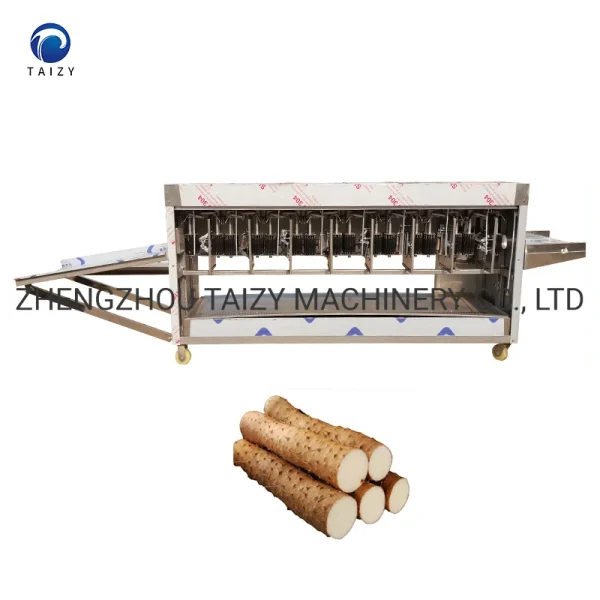
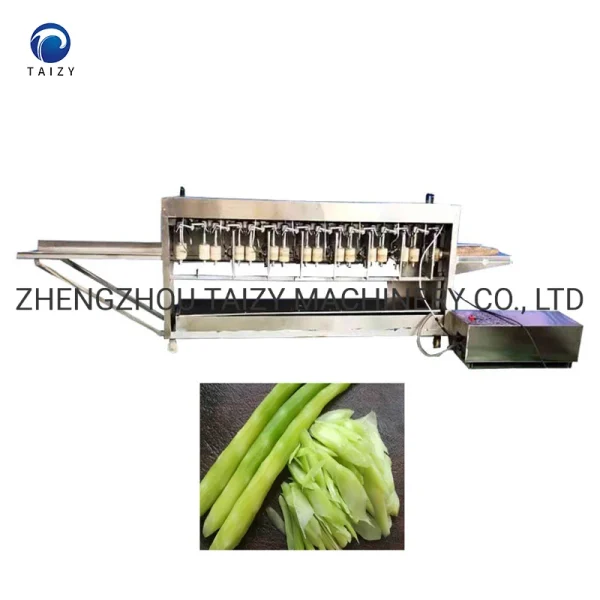
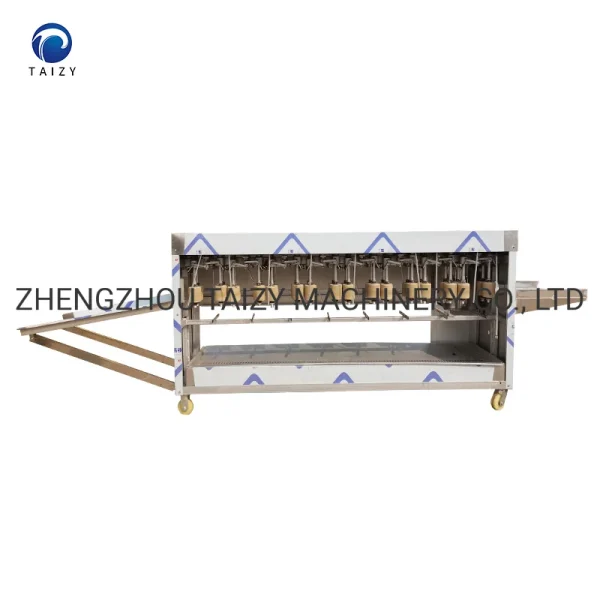
Yam Peeling Machine 800 kg/h
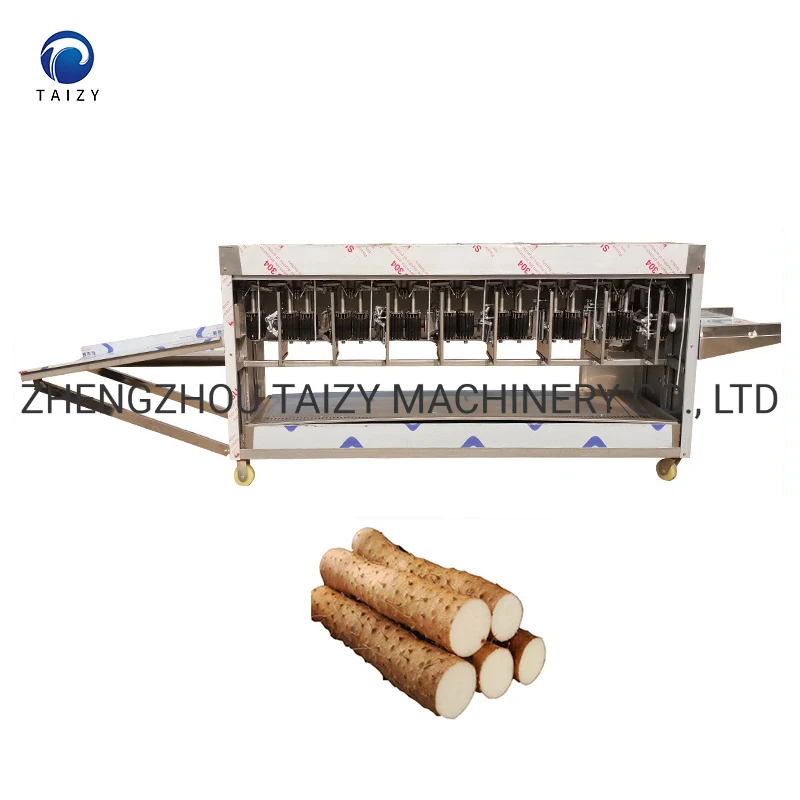
Chinese yam defeats ordinary peelers. The root is slender, often half a metre long, irregularly curved, covered in a thin but stubborn skin, and its flesh exudes a mucilage that irritates bare hands — which is why yam peeling is among the most hated knife jobs in vegetable processing. A yam peeling machine mechanises that job around the root’s awkward geometry: abrasive contact that follows irregular surfaces, dwell long enough for the thin skin, and throughput that keeps a washing-peeling-cutting line fed.
How it works
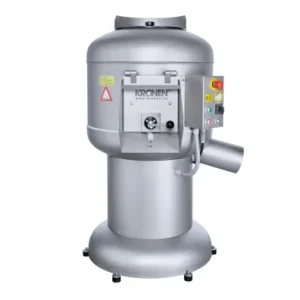
Washed roots feed into a peeling chamber lined with abrasive surfaces — carborundum-lined drums, cylinders or rotating discs whose grit strips skin by friction while roots tumble or roll through. The chamber geometry is the engineering: slender roots need contained channels that keep them moving end-on rather than balling up, so continuous models use rotating abrasive rollers or a screw flight inside an abrasive-lined tube that advances roots while every surface stays in contact. Water spray flushes loosened skin and mucilage out continuously. Dwell time — the main quality control — sets how much peel depth follows; overrun eats yield, underrun leaves skin patches.
Suitable for
Fresh-cut yam stick and slice producers feeding washing-peeling-cutting lines; dried yam chip and powder plants needing peeled input at continuous rate; pharmaceutical and health-food processors using yam at volume; frozen yam lines where peeled cylinders feed slicing or dicing; co-operatives consolidating member yam into processed value product.
Not suitable for
Mixed root peeling without changeover thinking — abrasive settings for yam differ from potato and taro, though some machines serve all three with adjustment; potatoes and other round roots at high volume, where drum peelers are faster and cheaper per tonne; farm-gate volumes where a hand peeler and gloves remain the honest tools; and buyers who cannot handle the wastewater — peeling slurry carries skin fragments and mucilage that drains must manage.
Material & compliance
Chamber, rollers and chutes in SUS304 (EN 1.4301) food-grade finish; abrasive liners food-safe bonded grit with documented replacement interval; spray and drain plumbing for continuous flush; sealed washdown drives.
Supplied with CE declaration of conformity and DoC on request; material certificate EN 10204 3.1 available for contact parts.
Selection notes
Bring roots, not weight claims: yam varies from pencil-slim to arm-thick by variety, and channel geometry that suits one jams on the other. Ask for the yield number — abrasive peeling removes skin plus some flesh, and a point of yield across your annual tonnage is real money. Confirm the abrasive liner life and replacement cost; it is the consumable that defines your cost per tonne peeled. Check flush water handling for mucilage, which is slippery and blocks undersized drains. And verify batch-to-batch consistency at your diameter range, since mixed-diameter harvest is the norm, not the exception.
When you should not buy this machine: If your yam volume is a few hundred kilos a day for fresh market, gloves and hand peelers at trained pace remain cheaper than any capital this side of a decade. And if your line is really a potato line with occasional yam, buy a drum peeler and run yam carefully through it — a yam-specific channel you use one day a week is dead capital.
Key specifications
| Parameter | Value |
| Capacity | 400-1200 kg/h by root diameter and dwell (TYPICAL, confirm with factory) |
| Root range | 20-60 mm diameter by channel set (TYPICAL) |
| Peeling method | Abrasive rollers / lined chamber with water flush |
| Yield | Set by dwell; typical peel loss 8-15% (TYPICAL) |
| Contact material | SUS304 (EN 1.4301) |
| Power supply | 380V/3P/50Hz, 2-5 kW class |
Specification values are industry-typical ranges for this machine class and are not verified against a specific factory datasheet. Replace them with measured factory data before publication.
FAQ
Does it work for both Chinese yam and tropical yams?
Chinese yam’s slender straight geometry is the design centre; tropical yams — Dioscorea alata and relatives — are larger, rounder and woodier, and need different channel and dwell settings. Some machines handle both with changeover, some honestly do not. Trial your variety before buying.
How is yield controlled?
By dwell time and abrasive grit. The operator tunes dwell to peel depth — skin gone with minimal flesh — and the yield number is a logged, repeatable setting, not an accident. Ask the factory for the yield-versus-dwell curve on fruit your size.
Does the mucilage cause sanitation problems?
It is slippery, starch-rich and dries hard. Machines designed for yam include generous flush water and smooth drain paths; sanitation schedules need the extra rinse built in. Undersized drains are the most common retrofit complaint — size them from day one.
Related equipment
This unit is one stage of a complete processing line. For the full range of washing and peeling equipment, or to compare this model against the Brush Roller Peeling Machine 800 kg/h, see the complete equipment catalogue. Capacity, material grade and utility requirements can be confirmed through a quote request.
Reviews
There are no reviews yet.