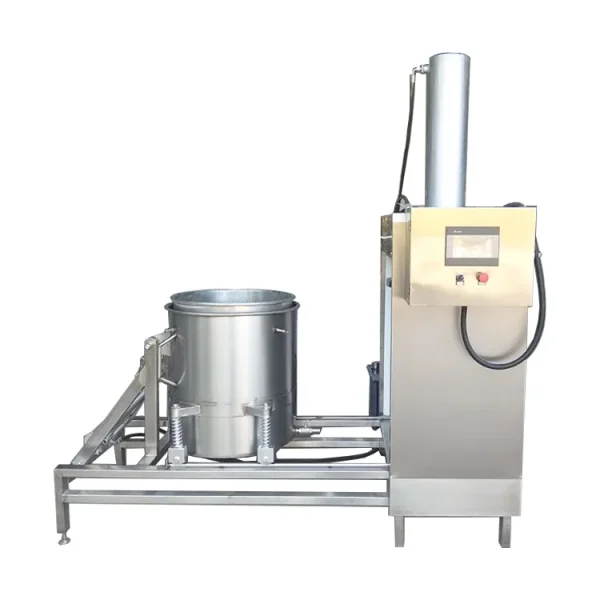
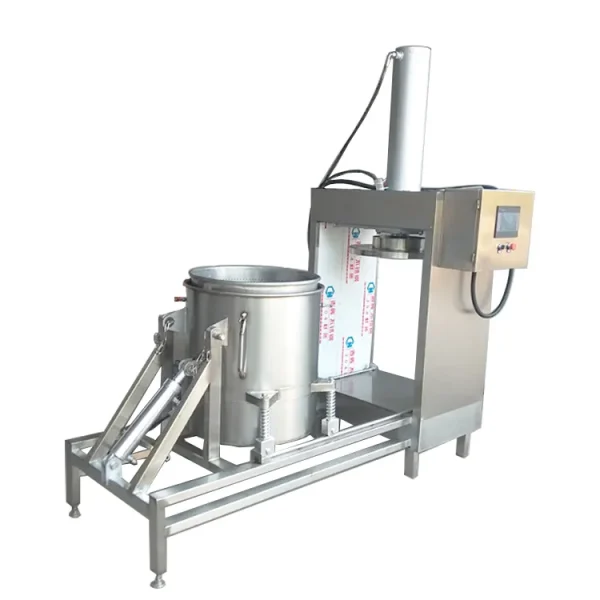
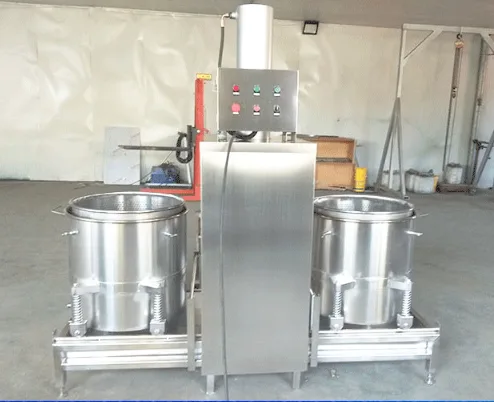
Hydraulic Juice Press 1000 kg/batch
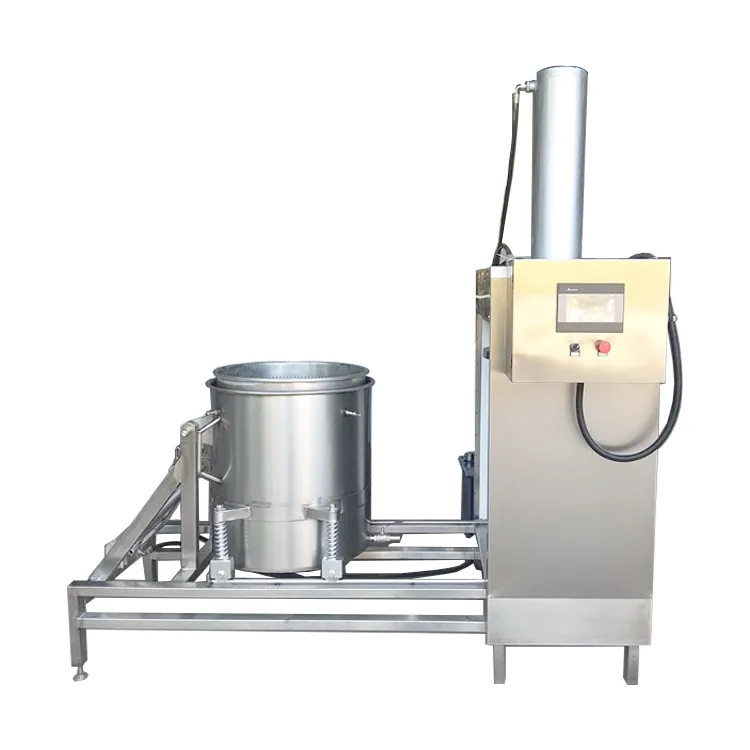
Batch pressing unit for the classic juice question: how much of the fruit can be turned into juice. A hydraulic press answers with the highest yield of any press type, and pays for it in batch operation — fill, press, drain, empty, repeat. It is the right machine when yield is the specification and throughput is not the constraint.
How it works
Milled fruit mash is loaded into pressing cloths laid over rack boards, or into a perforated cage, depending on the design. A hydraulic ram closes the stack or drives the cage piston, and pressure builds in stages: a low-pressure stage lets free juice run, then increasing stages squeeze the pomace progressively. Pressure profiles matter because crushing the pomace at full pressure straight away squeezes out solids with the juice and blinds the cloth.
At the end of the cycle the ram withdraws, the pomace is emptied — dry and consolidated into a cake — and the next batch is filled. Juice leaves by gravity to a tray and trough beneath the press. The whole cycle typically runs 30-60 minutes including handling.
Suitable for
Apple, pear and berry juice where maximum yield on clear juice is the target; premium juice operations where gentle, staged pressing is part of the quality story; plants running batch processes — tank fermentation, batch pasteurising — where a batch press matches the rhythm; operations pressing high-value product where the yield difference funds the labour; pilot and small-volume pressing of any soft fruit.
Not suitable for
High-throughput continuous lines, where a belt or screw press runs unattended around the clock; cloudy or pulpy juice, where the high pressure also presses out fine solids and changes the product; fibrous or very firm fruit that needs a screw press’s continuous action; plants without the labour for cloth handling — the cloths are washed between cycles, and that labour is part of the machine, not an accessory.
Material & compliance
Press cage, ram, trays and juice troughs in SUS304 (EN 1.4301); pressing cloths in food-grade textile rated for the service, as a consumable. Hydraulic system separated from the product zone with drip protection, because hydraulic oil over juice is the contamination case; guards on the ram with two-hand or interlocked operation.
Supplied with CE declaration of conformity and DoC on request; material certificate EN 10204 3.1 available for contact parts.
Selection notes
Ask for the yield at a defined pressure profile on your fruit, because yield figures quoted without a profile are not comparable. Check the cloth handling: how many cloths, what the washing arrangement is, and whether the cloth size suits your mash. Check the hydraulic safety provisions and the guards — a ram press is a real hazard if interlocks are optional extras. Check the juice route from tray to tank for hygiene, because open juice collection is where airborne contamination enters.
When you should not buy this machine: If your line needs continuous throughput, the batch rhythm will cap the whole plant no matter how high the yield is. And if your product is cloudy juice sold on body, maximum pressure removes exactly what you are selling — a gentler press type is the correct call.
Key specifications
| Parameter | Value |
| Batch capacity | 400-1500 kg mash per cycle (TYPICAL, confirm with factory) |
| Pressing pressure | Up to 20-40 MPa hydraulic (TYPICAL) |
| Cycle time | 30-60 min including fill and empty (TYPICAL) |
| Juice yield | High; among the highest for clear juice (TYPICAL) |
| Operation | Batch; mash loaded in cloths or cage |
| Contact material | SUS304 (EN 1.4301) |
| Power supply | 380V/3P/50Hz or 415V/3P/50Hz, customizable |
Specification values are industry-typical ranges for this machine class and are not verified against a specific factory datasheet. Replace them with measured factory data before publication.
FAQ
Why is hydraulic yield higher than a screw press?
Pressure and control. The ram reaches pressures a screw press cannot, and the staged profile squeezes progressively instead of shearing continuously, so fewer solids enter the juice and the pomace drains more completely.
How much labour does the batch cycle need?
More than a belt press, honestly quoted. Filling cloths, pressing, emptying pomace and washing cloths are manual operations on most machines. Count that labour in the business case — the yield premium is what pays for it.
What is the pomace like?
Dry and consolidated into a cake, which makes it easy to handle, compost or sell on. That dry cake is one of the practical reasons operators prefer hydraulic presses on clear juice.
Related equipment
This unit is one stage of a complete processing line. For the full range of pulping and juicing equipment, or to compare this model against the Screw Press Juice Extractor 3000 kg/h, see the complete equipment catalogue. Capacity, material grade and utility requirements can be confirmed through a quote request.
Reviews
There are no reviews yet.