Fruit Pulp Finisher 2 t/h
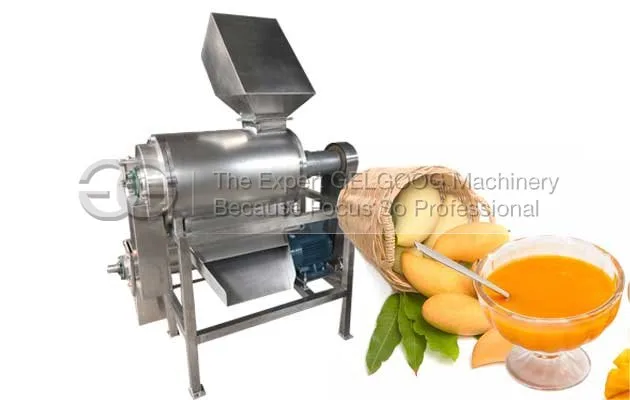
A pulper makes fruit into mash; a finisher makes mash into product. The difference is a fine screen, a set of paddles and the discipline to hold one texture for every batch. Whether the buyer expects silky mango puree, clean tomato passata or a seedless berry coulis, the fruit pulp finisher is the machine that writes the final texture — and the machine whose screen choice quietly decides your yield.
How it works
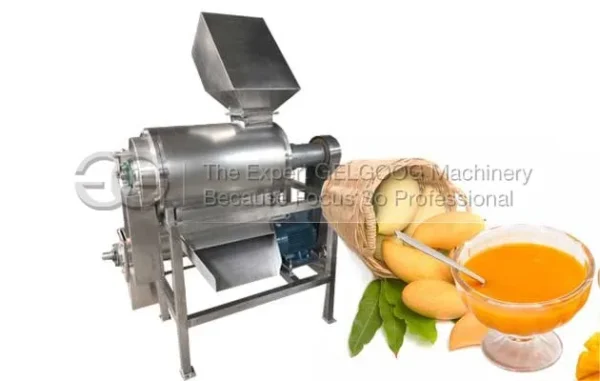
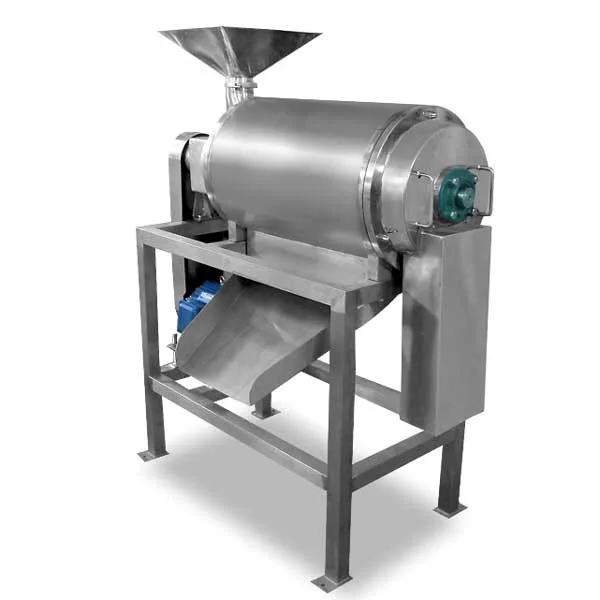
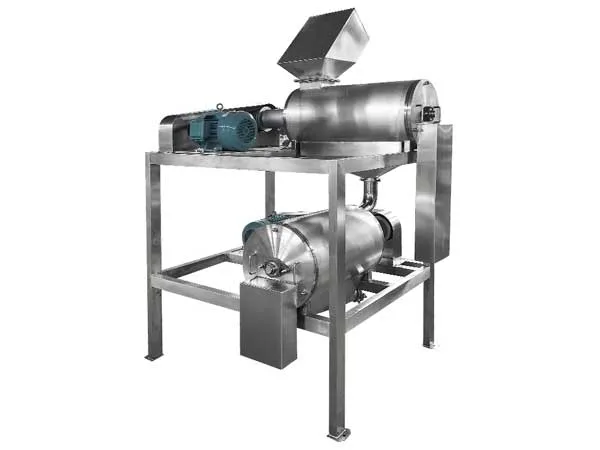
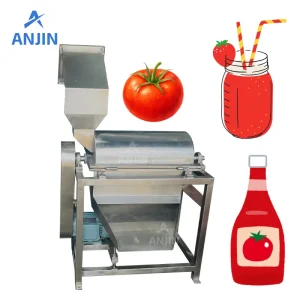
Crushed, pre-pulped fruit enters a cylindrical chamber lined with a fine perforated screen — typically 0.5 to 1.2 mm aperture. Beater paddles or brushes rotate just clear of the screen, sweeping pulp against it and forcing the soft fraction through; skins, seeds and coarse fibre travel axially to a separate discharge, kept moving by the paddle angle so the screen never blinds. Two-stage machines run a coarse screen first and a fine screen behind it, raising yield without overloading the fine mesh. Rotor speed, paddle-to-screen clearance and screen aperture are the texture controls; a tighter clearance and finer screen give a smoother puree at a lower yield, and every product finds its own point on that curve.
Suitable for
Mango, guava and tropical puree lines defining a smooth single-grade product for dairy and beverage buyers; tomato processing to passata and paste where skin flecks are a defect; berry coulis and seedless purees; baby-food-grade fruit purees where texture specification is contractual; apple sauce lines finishing after the pulper; and any pulping plant that currently sells everything at one texture because it lacks the machine to make two.
Not suitable for
Juice with the fibre intentionally left in — cloudy juice wants a different screen philosophy; whole-fruit peeling or destoning, which happen upstream; products with high hard-seed load, which belong through a seed-removing machine first so the finisher handles soft tissue only; and very small batches, where a pulper-finisher combo unit is the honest purchase.
Material & compliance
Chamber, screen, paddles and discharge in SUS304 (EN 1.4301); screens stainless with food-grade welds and spare stock, since screens are both texture and consumable; paddles food-grade with adjustable clearance. Clean-in-place or full-open access so screens change between products without tools.
Supplied with CE declaration of conformity and DoC on request; material certificate EN 10204 3.1 available for contact parts.
Selection notes
Ask for yield and throughput at your fruit on two screen apertures — the yield-versus-texture curve is the whole buying decision and it differs by fruit maturity and variety. Ask whether the machine is single or two-stage and what the second stage adds on your product. Check paddle wear parts: clearance adjustment should be tool-free, and wear parts priced before you buy. Confirm motor sizing for your densest cold mash, not the demo room’s ripe fruit. Ask how the reject discharge stays wet and continuous — a reject flow that stalls packs fibre against the screen and kills capacity.
When you should not buy this machine: If your pulper already finishes acceptably for your one product and no buyer asks for a texture change, a second machine is inventory, not capability. And if your plan is juice not puree, size the screen philosophy accordingly or you will filter out the fibre your customer is buying.
Key specifications
| Parameter | Value |
| Capacity | 1-5 t/h by model (TYPICAL, confirm with factory) |
| Screen aperture | 0.5-1.2 mm interchangeable (TYPICAL) |
| Stages | Single or double-stage configuration |
| Rotor speed | Variable, paddle clearance adjustable |
| Yield | Product-dependent, quoted per fruit on test (TYPICAL) |
| Contact material | SUS304 (EN 1.4301) |
| Power supply | 380V/3P/50Hz, 3-7.5 kW class |
Specification values are industry-typical ranges for this machine class and are not verified against a specific factory datasheet. Replace them with measured factory data before publication.
FAQ
What is the difference between a pulper and a finisher?
Coarseness and purpose. A pulper breaks fruit down and takes out skin and seed on a relatively open screen; the finisher takes the pulp and sets the final texture on a fine screen. Two-stage pulper-finisher lines use both; if you buy one machine, match it to whether your input is whole fruit or mash.
How do I choose the screen aperture?
From the buyer’s texture spec backwards, then verify yield on your fruit. Mango and baby-food products run 0.5-0.8 mm; tomato passata and general purees run 0.8-1.2 mm. Run both on your mash during the factory test — the yield difference is often 5-10 points and pays or costs real money per tonne.
Why does my finished puree change texture between batches?
Fruit maturity first, then rotor speed drift, then screen wear. Control maturity at intake, lock the speed setting per product, and audit the screen — a worn screen is a different product wearing the same name.
Related equipment
This unit is one stage of a complete processing line. For the full range of pulping and juicing equipment, or to compare this model against the Fruit Pulper & Refiner 2000 kg/h, see the complete equipment catalogue. Capacity, material grade and utility requirements can be confirmed through a quote request.
Reviews
There are no reviews yet.